MAM
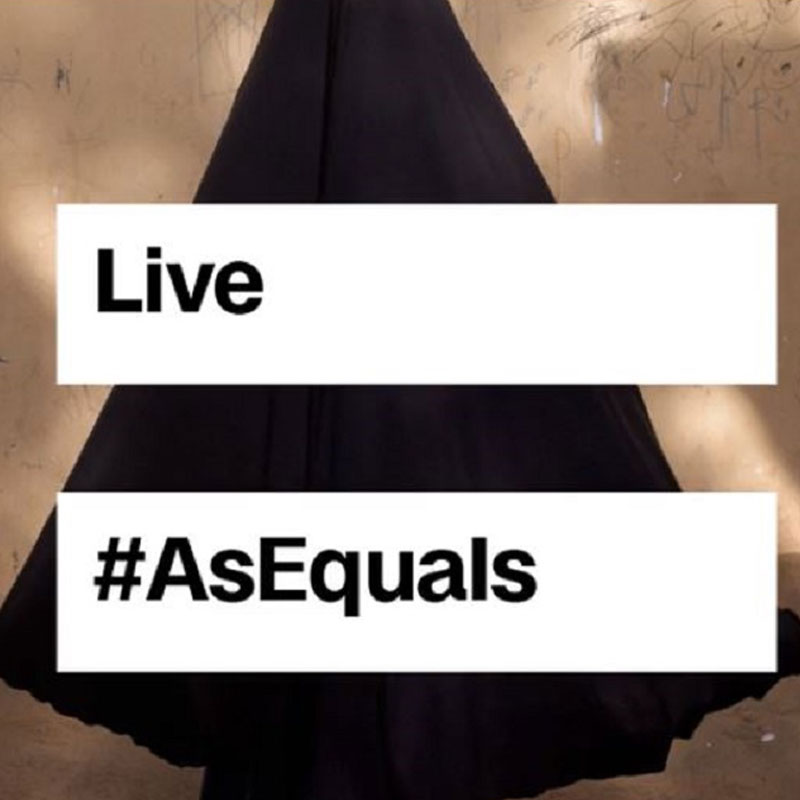
CNN’s As Equals series expands with new three-year grant
MUMBAI: CNN’s award-winning As Equals series is expanding with a new three-year grant from the Bill & Melinda Gates Foundation. This grant will support CNN’s reporting on gender inequality with a particular focus on the world’s least-developed countries and increased programming about the adversities women and girls around the world endure every day.
As Equals was launched in January 2018 to underscore the acute inequalities and injustices facing women and girls from countries in the global south. Its reporting has prompted real-life impact including the commuted death sentence of teenage bride Noura Hussein and Rwandan opposition politician Diane Rwigara’s release from jail.
CNN will form a dedicated team, including six new hires, to work exclusively on gender inequality for As Equals and build out a global network with key regional partners to tell these stories from around the globe.
Women and girls are often the biggest casualties of crises. Already, Covid2019 has led to spikes in gender-based violence and restrictions in access to family planning, while warnings have been issued about the large numbers of girls who may not return to school and the corresponding increase in child marriages that will likely come from that. As the crisis continues, As Equals will keep the spotlight firmly on women’s issues as part of the global recovery efforts, including their involvement in decision making.
Through an unwavering commitment to elevate underrepresented voices and empower women journalists, the series has received accolades recognizing its stand-out work in advancing taboo subjects, innovative presentation and impactful storytelling affecting change. The compelling reporting that’s been honoured includes an investigation that revealed the Kenyan government’s pledge to send a mission to investigate substantial allegations of abuse and wrongdoing in the country’s Beirut consulate, and an interactive calculator to understand period poverty.

Brands
Hyundai and TVS Motor partner to develop electric three wheelers
Joint development pact targets last mile mobility with localisation push
MUMBAI: Three wheels, one big ambition and a charge towards the future. Hyundai Motor Company and TVS Motor Company have signed a joint development agreement to co-create electric three-wheelers (E3Ws), aiming to crack India’s complex last-mile mobility puzzle. The collaboration moves beyond concept talk into execution mode, building on the E3W prototype first showcased at the Bharat Mobility Global Expo 2025. The goal now is clear, design, develop and commercialise a purpose-built vehicle tailored to Indian roads, riders and realities.
Under the agreement, Hyundai will lead design and co-development, bringing its global R&D muscle and human-centric engineering approach to the table. TVS Motor, meanwhile, will anchor the product on its electric platform, leveraging deep three-wheeler expertise and local market insight. It will also handle manufacturing and sales in India, with an eye on exports down the line.
The timing is strategic. India remains the world’s largest three-wheeler market, where affordability, durability and adaptability often outweigh sheer innovation. The upcoming E3W aims to strike that balance combining advanced technology with practical features such as adaptive ground clearance for monsoon-hit roads, improved thermal management for tropical climates, and flexible interiors suited for passengers, cargo or emergency use.
A key pillar of the partnership is localisation. Major components will be sourced and manufactured within India, a move expected to strengthen the domestic supply chain, create jobs, lower costs and improve after-sales support.
The shift from prototype to production will involve rigorous testing, certification and refinement to meet regulatory standards and consumer expectations. Dedicated cross-functional teams from both companies are already in place to accelerate timelines.
At a broader level, the tie-up reflects a growing trend in mobility, global players partnering with local specialists to navigate emerging markets. For Hyundai and TVS, the bet is that combining scale with street-level insight could unlock a new chapter in sustainable urban transport, one that runs not just on electricity, but on relevance.