MAM
Clive Davis: The man with the golden ears has stopped listening
The lawyer-turned-hitmaker who built an $850 million empire on instinct alone and gave music television its best nights, died at 94 — and the industry he invented gave him the send-off of the century.


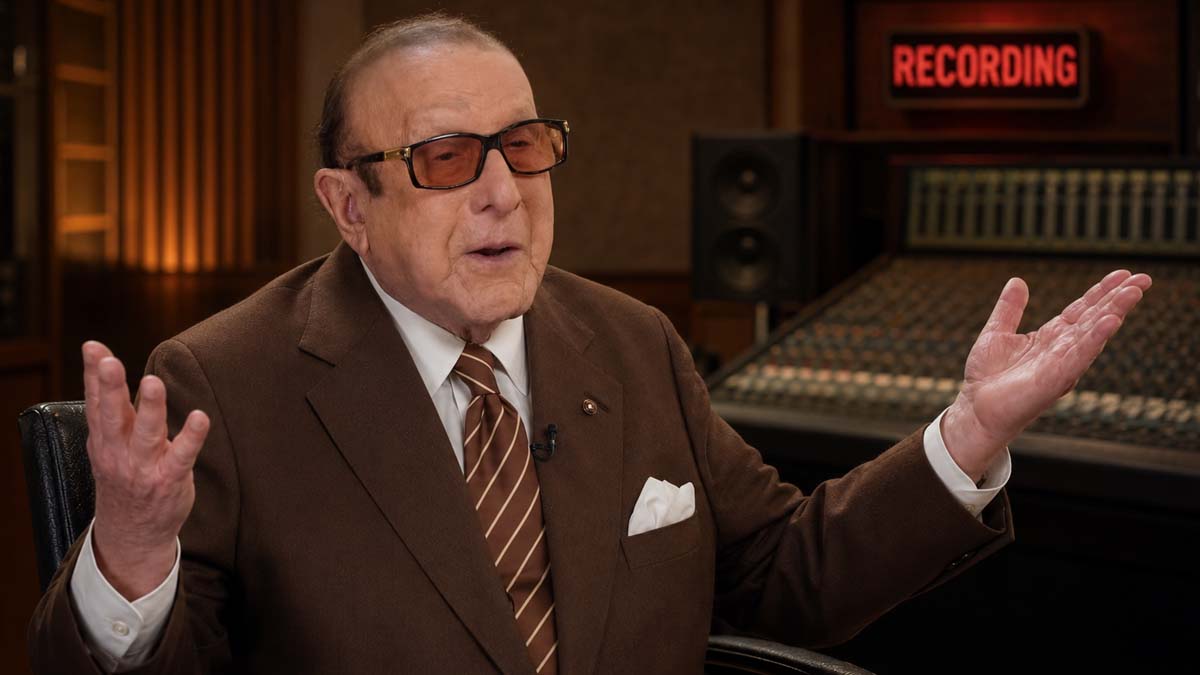
MUMBAI: He never learned an instrument, never wrote a lyric, and by his own admission never quite understood rap. And yet Clive Davis spent six decades telling music what it wanted before music knew it itself. Last week the man they called “the golden ears” died at his Manhattan home, aged 94. This week, the industry he built, brick by brilliant brick, buried him like a rock star.
Davis’s origin story reads less like a music biopic and more like an accountant’s fever dream. Orphaned young, a Harvard Law graduate, he was drafting contracts for a Manhattan law firm when a client called CBS pulled him sideways into its subsidiary, Columbia Records. By 1967 he was president, a lawyer running a label that didn’t yet know it needed him. It didn’t take long to find out. Davis signed Janis Joplin, Donovan, and went on to build Columbia’s rock-era roster with Santana, Bruce Springsteen, Billy Joel, Chicago, Earth, Wind & Fire and Aerosmith, dragging a stuffy old label kicking and screaming into the counterculture and out the other side, richer.
Then came the fall: sacked in 1973 amid allegations of misused company funds including, reportedly, his son’s bar mitzvah Davis pleaded guilty to a tax charge, paid a fine, and by most predictions should have been finished. Instead, he rebuilt. He took over a flailing Bell Records, renamed it Arista after his old school honour society, and turned it into the biggest comeback story the record business had seen: Barry Manilow, Aretha Franklin, Patti Smith, Dionne Warwick and, in 1983, a 19-year-old named Whitney Houston, whose self-titled debut minted three number ones and rewrote what a pop star could be.
He wasn’t done. LaFace with Babyface and L.A. Reid gave the world Usher, OutKast and Pink; Bad Boy with Sean “Diddy” Combs delivered The Notorious B.I.G., Faith Evans, Mase and 112; Arista Nashville handed him Brad Paisley and Brooks & Dunn. When Arista finally showed him the door in 2000, Davis, then 68, an age at which most executives are handed a gold watch launched J Records and promptly discovered a teenager called Alicia Keys. Sony Music made him chief creative officer in 2008, a title he held until the week he died. Few men get one act. Davis got five, and an encore.
Long before “content” was a buzzword, Davis understood spectacle. His pre-Grammy gala turned an industry supper into unmissable broadcast television; his artistes’ careers powered decades of MTV Unplugged sessions, VH1 specials and American Idol breakout moments, from Kelly Clarkson onward. As appointment music television fades from the schedules, the irony is rich: the stars Davis discovered Houston, Keys, Springsteen, Manilow, Warwick, and dozens more are the ones still filling YouTube, Spotify, Apple Music and Instagram feeds, decades on, without needing a single broadcast slot.
Ask anyone who signed with him and you’ll get the same answer: Davis didn’t just release your record, he ran it. His 2013 memoir, “The Soundtrack of My Life,” reads less like a victory lap and more like a scoresheet — artist after artist who prospered by taking his advice, and artist after artist who didn’t and paid for it. He picked singles, vetoed album art, and had a habit of overruling songwriters who fancied themselves auteurs. When Whitney Houston once suggested she might like to start writing her own material, Davis simply talked her out of it — and, by his own account in the book, she never raised it again. When Kelly Clarkson pushed back on the commercial direction of her 2007 album My December, he told her plainly it was “a pure pop album about breaking up with your boyfriend,” not a protest record.
He picked fights with the best of them and mostly won. Paul Simon and Art Garfunkel stayed cool towards him for years after Davis released their Bookends soundtrack to The Graduate at a dollar over the standard price — a decision he defended to the last as smart business dressed up as an outrage. On persuading Simon to let a slow, risky ballad called “Bridge Over Troubled Water” run long against every trend of the day, Davis’s own instinct was blunt: it was, he reasoned, “one time to go for a home run.” He was right.
He wasn’t universally adored for it. Critics of the memoir noted its recurring rhythm, an artist thrives by listening to Clive, an artist stumbles by ignoring him and reviewers called it as much a monument to his own certainty as to the acts he championed. But the artists who stuck with him Manilow, Warwick, Franklin, Houston, Keys kept coming back for more, decade after decade, gala after gala, hit after hit. Whatever the method, few could argue with the results. Davis also used the book to reveal, at 80, that he was bisexual, a rare moment of personal disclosure in a career otherwise defined by other people’s songs.
For a man who spent his life around performers, Davis kept his own personal life relatively private though what leaks through paints a fuller picture than “ruthless hitmaker.” Orphaned as a teenager and raised largely by his elder sister, he credited his mother with an early piece of advice that shaped him: don’t become an “ivory tower intellectual,” she told him, pushing him instead toward the Brooklyn playground and a lifetime habit of stickball, touch football and easy friendships that, he later said, kept him grounded even as he moved among rock royalty. Off the clock, he was said to be a serious listener of Miles Davis and jazz long before he ever signed a rock act, and as his $100 million art collection of Picasso, Warhol and Damien Hirst suggests, a genuinely engaged collector, not just an investor.
He married twice, to Helen Cohen from 1956 to 1965 and to Janet Adelberg from 1965 to 1985, and later shared his life with longtime partner Greg Schriefer. Of his four children — Fred, Lauren, Mitchell and Doug, it was Doug who followed him into the business, becoming a Grammy-winning producer in his own right and, for two decades, his father’s co-organiser on the pre-Grammy gala. By Doug’s own account, Clive Davis was rarely the father who tossed a ball around the backyard; he was, instead, the father who took a 13-year-old to watch Frank Sinatra and Sammy Davis Jr live, and once kept his son up past midnight on a school night to catch a teenage Whitney Houston’s first-ever showcase. Not conventional parenting. Effective, all the same.
Abrasive or gentle? By most accounts, both depending on the day and the demo tape. Davis’s decades-long bond with singer-songwriter Laura Nyro, one of his earliest and most cherished signings, reportedly ended in an estrangement he never fully got over; according to PBS’s American Masters archive, he once turned up uninvited at her door hoping to repair things, was turned away, and went home and “cried bitterly.” It’s a rare crack in the armour of a man usually described in boardroom terms — bombastic, controlling, unfailingly certain he was right.
Away from contracts, that same intensity turned charitable: since 1985 Davis was one of the music industry’s most tireless AIDS fundraisers, twice named Humanitarian of the Year by the T.J. Martell Foundation, honoured by amfAR alongside Barbara Walters and Tom Hanks, and, in 2002, the donor behind a $5 million gift to New York University that built what is now the Clive Davis Institute of Recorded Music.
The funeral, held on 29 June at Manhattan’s Central Synagogue, was staged with the same flawless instinct Davis brought to a Grammy show. Kenny G opened on clarinet. Jennifer Hudson delivered a devastating “Hallelujah” into Whitney Houston’s “I Will Always Love You.” Rabbi Angela Buchdahl set the tone, noting simply that Davis “would have loved this.”
Dionne Warwick, the first to speak, recalled the moment Davis talked her out of quitting music altogether, telling her, as she remembered it, that “the business isn’t willing to give you up.” Barry Manilow recently treated for lung cancer opened with a line that stopped the room: “a few months ago, surgeons removed a piece of my lung; last week, I lost a piece of my heart.” He later joked that Davis had been badgering him about a new album “twice, three times a day” as recently as three weeks earlier, adding ruefully, “I’m going to miss him. Who am I going to argue with?”
Bruce Springsteen opened his tribute with a joke that landed exactly as intended: Davis, he said, was “big and bombastic and brave and full of ideas,” the opposite, in other words, of humble. Alicia Keys, reading a eulogy titled “A Letter to the Man Who Believed First,” told the room, “I’m actually not a crier, so I’m in a strange place,” before crediting Davis with a gift no contract could buy: “you called it forward, you called me forward.” In a separate tribute posted online, she put it more simply still: “Clive Davis changed my life forever.” Music critic Anthony DeCurtis, who co-wrote Davis’s memoir, offered the closest thing to an explanation of the man’s gift anyone has managed, “Clive listened critically.”
Davis left an estimated $850 million fortune, a five-decade payout for a man who owned pieces of the labels he ran, from Arista to J Records, plus a Manhattan real-estate portfolio and a $100 million art collection featuring Picasso and Warhol.
But the real wealth, as any accountant balance sheet would note, sits off his personal books: Whitney Houston, Alicia Keys, Bruce Springsteen, Barry Manilow, Aretha Franklin, Janis Joplin, Santana, Billy Joel, Dionne Warwick, Patti Smith, Usher, OutKast, Kelly Clarkson, The Notorious B.I.G. and dozens more built careers, catalogues and personal fortunes on the back of a man who simply believed in them before anyone else did. Their combined streaming numbers today would make any modern tech founder blush and not one of them needed a music channel to get there.
Davis is survived by four children, eight grandchildren, two great-grandchildren, and a back catalogue that streams a billion times a month without him lifting a finger.
The man with the golden ears has finally stopped listening. The songs, mercifully, refuse to stop playing.