Ad Campaigns
Clickbait to clean slate as HUL leads media trust reset drive

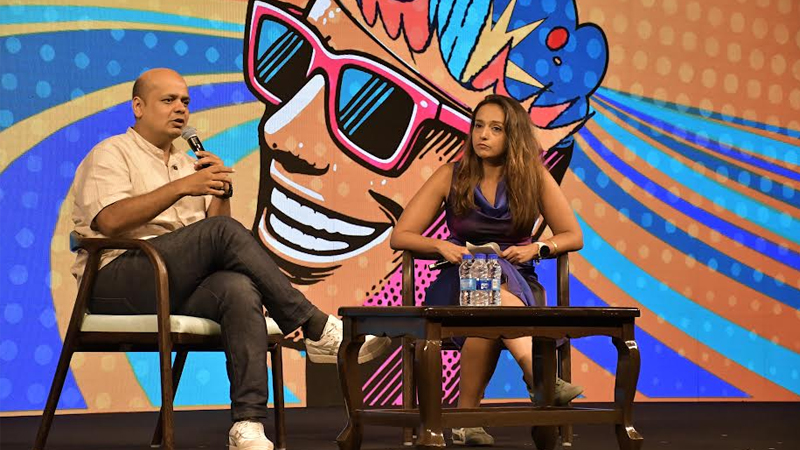
MUMBAI: What’s invisible, expensive, and possibly not even human? Thirty percent of your ad impressions. Hindustan Unilever Ltd (HUL), head of media and digital marketing Tejas Apte didn’t mince words at Goa Fest 2025 as he peeled back the pixel-perfect surface of digital advertising to reveal a mess of murky metrics and media mayhem.
Speaking in a session titled ‘Building a Safer, Smarter, Cleaner Media Ecosystem’, Apte laid bare the underbelly of modern marketing where ad fraud, bot views, and misuse of data are quietly eating away at ROI and trust. With up to 30 per cent of digital impressions possibly fake, brands aren’t just losing money; they’re losing credibility.
“Legacy media had a balance subscription and ad-funded models. But digital is almost entirely ad-funded,” he noted. “And that makes transparency and safety non-negotiable.”

As part of the Indian Society of Advertisers (ISA), HUL has taken a lead in drafting a four-point media charter that aims to disinfect digital with real-world rigour:Safe placements for both brands and users, Viewability standards to filter out the fake, Fraud prevention that spans all formats and platforms, Responsible first-party data usage grounded in clear consent.
Apte underscored that these principles weren’t just boardroom theory, they were co-created with platforms like Google and Meta, ensuring that everyone speaks the same metric language. The focus is shifting from shallow click metrics to meaningful business outcomes.
The ad world’s changing algorithm isn’t just affecting platforms, it’s rewriting agency job descriptions. With automation and AI replacing mechanical tasks, Apte sees agencies morphing from campaign vendors to strategic business partners. “In-housing is real, but rarely complete. Agencies remain critical, if they evolve from service delivery to impact delivery.”
While some brands are building internal muscle, the ISA charter pushes for an ecosystem-wide adoption from nimble startups to legacy giants. The ultimate goal? A future where every impression counts, every ad is seen by a human, and every click has consequence.
Practising what they preach, HUL has already implemented these guidelines internally. The result? Sharper first-party data strategies, better media ROI, and a wave of new, trustworthy media partners.
So, next time your ad gets a million impressions, pause to ask were any of them real? Or are we all just chasing ghosts in the machine?
As Apte put it with a smile, “Click fraud is not just a tech issue. It’s a trust issue.”





NATIONAL: Amazon Ads has laid out a sharply tech-led vision for the advertising industry in 2026, arguing that artificial intelligence, streaming TV and creator partnerships will combine to turn brand building into a more precise, performance-driven business.
At the heart of the shift, the company says, is the fusion of AI with Amazon’s vast trove of shopping, browsing and streaming signals, allowing advertisers to move beyond blunt reach metrics to campaigns designed around real customer behaviour.
“The future of advertising is not about reaching more people, but the right people with messages that resonate,” said Amazon Ads India head and vice president Girish Prabhu. “By combining AI with deep customer insights, we help brands move from broadcasting campaigns to having meaningful conversations wherever audiences spend their time.”
One of the biggest changes, according to Amazon Ads, will be the collapse of the wall between media planning and creative development. Retail media, powered by first-party data, is increasingly shaping everything from brand discovery to final purchase, pushing marketers to design campaigns around audience insight rather than internal instinct.
AI is also moving from a support tool to a creative engine. Agentic AI, which automates and accelerates production, is expected to make high-quality creative accessible even to small businesses, compressing weeks of work into hours and giving challengers the ability to compete with larger brands on speed and scale.
Behind the scenes, AI-driven analytics will take on a bigger role in campaign optimisation, identifying patterns, spotting opportunities and recommending actions that would previously have required teams of analysts.
Streaming TV is another big battleground. With India’s video streaming audience now above 600 million and connected TV users at 129.2 million in 2025, advertisers are set to treat streaming not just as a branding channel but as a performance engine, measured increasingly by sales, sign-ups and bookings rather than just reach.
Finally, Amazon Ads sees creators and contextual advertising reshaping how brands tell stories. Creators will act less like influencers and more like long-term partners, while scene-aware ads on streaming platforms will allow brands to insert hyper-relevant offers into the flow of what viewers are watching.
Taken together, Amazon Ads argues, these shifts mark a move towards advertising that is both more human and more measurable, where AI handles the complexity, and creativity does the persuading.