Ad Campaigns
Clear Premium Water turns plastic waste into Benches at National Games

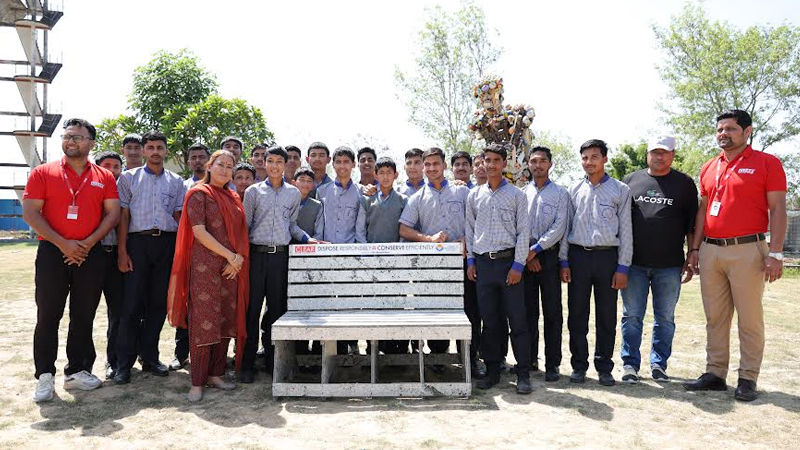
MUMBAI: Clear Premium Water has launched its ‘Drink, Dispose and Transform’ campaign during the 38 National Games, converting a staggering nine lakh plastic bottles into recycled benches at Maharana Pratap Sports College (MPSC), Dehradun.
The initiative was officially unveiled in the presence of Uttarakhand’s sports minister Rekha Arya, following the conclusion of the national event. It underscores the brand’s firm commitment to reducing plastic waste and fostering innovation in public spaces.
Developed under Clear’s eco-conscious campaign, the benches are crafted using high-quality recycled PET (rPET) bottles—offering a powerful symbol of the tangible outcomes of responsible waste management. Of the total bottles collected, six lakh were gathered before the games and three lakh during. An impressive one lakh bottles were segregated at source across 11 venues and transformed into durable seating, effectively reducing landfill waste and curbing carbon emissions.

“The installation of recycled benches at MPSC Dehradun, in partnership with Clear Premium Water, showcases our commitment to sustainability. By transforming plastic waste into public utilities, we are driving a circular economy and reinforcing our vision for a cleaner, greener future,” said Arya, sports minister of Uttarakhand.
Clear’s founder & CEO Nayan Shah added, “The installation of recycled benches at MPSC Dehradun reflects our belief that sustainability must be driven by practical, real-world solutions. By transforming used plastic bottles into public utilities, we are closing the loop on plastic waste and creating a model for environmental action that directly benefits the people. The initiative showcases the potential of circular economy solutions, where even discarded bottles are turned into something meaningful. With this drive, we are leading the way and showing to the world that Mission Zero Plastics Bottle Waste is achievable with collective commitment and efforts.”
The campaign’s impact extended beyond recycling. Over 200 ragpickers and 100 cleaning staff were mobilised across 11 venues to collect and repurpose the waste. Their collective effort not only saved nearly 10,000 kilos of carbon emissions but also conserved 2.67 lakh megajoules of energy—7.5 per cent of which came from green sources.
Clear Premium Water’s Mission Zero drive made history as the 38 National Games became India’s first national event—and the second globally after the Olympics—to spearhead a large-scale green initiative. The project supports the broader goals of Swachh Bharat Abhiyan and Mission Life, setting a strong precedent for sustainable action at future global events, including the proposed 2036 Olympics in India.
By combining innovation, inclusion, and environmental responsibility, Clear Premium Water has shown how corporate sustainability can spark nationwide change—one recycled bottle at a time.





NATIONAL: Amazon Ads has laid out a sharply tech-led vision for the advertising industry in 2026, arguing that artificial intelligence, streaming TV and creator partnerships will combine to turn brand building into a more precise, performance-driven business.
At the heart of the shift, the company says, is the fusion of AI with Amazon’s vast trove of shopping, browsing and streaming signals, allowing advertisers to move beyond blunt reach metrics to campaigns designed around real customer behaviour.
“The future of advertising is not about reaching more people, but the right people with messages that resonate,” said Amazon Ads India head and vice president Girish Prabhu. “By combining AI with deep customer insights, we help brands move from broadcasting campaigns to having meaningful conversations wherever audiences spend their time.”
One of the biggest changes, according to Amazon Ads, will be the collapse of the wall between media planning and creative development. Retail media, powered by first-party data, is increasingly shaping everything from brand discovery to final purchase, pushing marketers to design campaigns around audience insight rather than internal instinct.
AI is also moving from a support tool to a creative engine. Agentic AI, which automates and accelerates production, is expected to make high-quality creative accessible even to small businesses, compressing weeks of work into hours and giving challengers the ability to compete with larger brands on speed and scale.
Behind the scenes, AI-driven analytics will take on a bigger role in campaign optimisation, identifying patterns, spotting opportunities and recommending actions that would previously have required teams of analysts.
Streaming TV is another big battleground. With India’s video streaming audience now above 600 million and connected TV users at 129.2 million in 2025, advertisers are set to treat streaming not just as a branding channel but as a performance engine, measured increasingly by sales, sign-ups and bookings rather than just reach.
Finally, Amazon Ads sees creators and contextual advertising reshaping how brands tell stories. Creators will act less like influencers and more like long-term partners, while scene-aware ads on streaming platforms will allow brands to insert hyper-relevant offers into the flow of what viewers are watching.
Taken together, Amazon Ads argues, these shifts mark a move towards advertising that is both more human and more measurable, where AI handles the complexity, and creativity does the persuading.






