Brands
Cityflo launches Urban Glide to electrify India’s Rs 1 lakh crore bus sector under new transit model
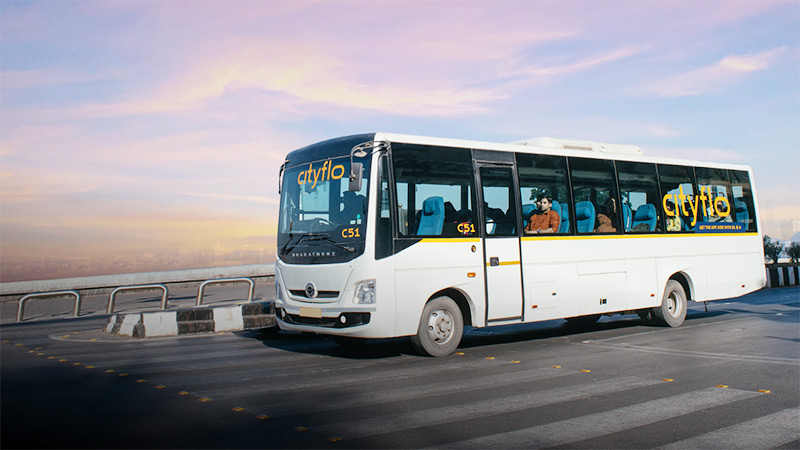
MUMBAI: India’s creaky public bus system is getting a long-overdue upgrade—and this time, it’s private players taking the wheel. Cityflo’s parent company, Komorebi Tech Solutions, has launched a joint venture with Globus Trans Solutions LLP to operate electric buses under the state-run transit system. The JV, Urban Glide, hit the road on 12 May 2025, promising to shake up the Rs 1,00,000 crore public mobility opportunity.
Urban Glide plans to deploy 500 electric buses in its first year. The project brings together former Best honcho Victor Nagaonkar and public transport veteran Sunil Solanki—names long associated with operational scale and on-ground execution across India’s biggest transit networks.
India’s urban transit network is undergoing a seismic shift under the Gross Cost Contract (GCC) model, which allows private operators to run state-owned electric buses while states control routes and fares. It’s a playbook borrowed from global models in Singapore and the UK, where companies like Comfortdelgro and Stagecoach run high-frequency, reliable services within public-private partnerships.
“We believe this will be one of urban India’s most consequential infrastructure transitions. The opportunity is not just operational but generational”, said Cityflo CEO Jerin Venad. “India is going to move over 200 million people a day on zero-emission, clean, well-run buses. Urban Glide is our commitment to building at the scale and standard that this moment demands.”
The new model solves several pain points—funding gaps, outdated fleets, inconsistent commuter experience—by opening the doors to private innovation and investment. And with over 200,000 electric buses being inducted across India under the GCC framework, players like Urban Glide are positioning themselves for scale.
Urban Glide will kickstart operations with 150 buses across Mumbai Metropolitan Region (MMR), with national expansion on the cards as more GCC contracts roll out. Its approach focuses on asset lifecycle control, professionalised driver operations, data-driven route optimisation, and embedded safety systems.
“We have seen this move in other sectors: regulation opens, capital flows in, and the incumbents are those who can build at scale. Public transport is now getting its Jio moment”, added Venad.
The ecosystem is further bolstered by long-term contracts, fare collection handled by the state, operating subsidies on EVs, and a Payment Security Mechanism already in motion—mitigating risk for serious operators.
Still, Venad acknowledges that the sector demands players with muscle—those ready to manage fleets of over 1,000 buses and commit to long-term, safety-first operations. With deep operational roots and capital alignment, Urban Glide appears ready to lead from the front.

Brands
Uber launches hotel bookings feature in partnership with Expedia
From hotel bookings to room service at your door, the ride-hailing giant is making its boldest push yet into everyday life
CALIFORNIA: Uber is done being just a taxi app. At its annual GO-GET product event, the world’s leading mobility and delivery platform unveiled a sweeping set of new features designed to plant itself at the centre of how people travel, eat and shop, hotel bookings included.
The headline move is a partnership with Expedia Group that lets Uber users in the United States book hotels directly within the Uber app, with access to a catalogue that will eventually grow to more than 700,000 properties worldwide. Uber One members get 10 per cent back in Uber One credits on all hotel bookings and savings of at least 20 per cent on a rolling list of more than 10,000 hotels globally. Vacation rentals from Vrbo, Expedia Group’s home-rental brand, will be added later this year. The partnership is expected to expand beyond the United States. From June, Uber rides will also be integrated directly into the Expedia app, with push notifications sent to travellers ahead of hotel check-in to book discounted Uber rides for the duration of their stay.
Dara Khosrowshahi, chief executive of Uber, framed the expansion in terms of the modern condition. “Uber is becoming an app for everything, helping people go, get, and now travel all in one place,” he said. “We’re all living through a moment of real cognitive overload: too many apps, too many decisions, too much noise. At the end of the day, our job is to help people reclaim their time, spending less of it managing the logistics of life and more of it actually living.”
Ariane Gorin, chief executive of Expedia Group, struck a similarly ambitious note. “Travel should feel effortless, and this partnership gets us one step closer to offering a seamless traveller experience,” she said. “By connecting our two-sided marketplace with Uber, we’re bringing Uber rides directly into the Expedia app and Expedia Group’s lodging inventory into the Uber app through our Rapid API technology. Together, we’re helping travellers spend less time planning and more time enjoying the journey.”
Beyond hotels, the product announcements come thick and fast. Travel Mode, available within both the Uber and Uber Eats apps, offers curated recommendations on local favourites, tourist destinations, OpenTable restaurant reservations and on-demand delivery to hotel rooms. Uber One International means the membership programme now works globally, allowing members to earn credits on rides abroad that can be redeemed once back home. A new Shop for Me feature lets users request items from any store, even those not listed on the app. Eats for the Way allows riders in select cities booking an Uber Black or Uber Black SUV to have a drink or snack waiting for them in the car. Voice Bookings, powered by artificial intelligence, lets users book a ride conversationally, without touching their phone. And a redesigned One Search bar consolidates results for places, food and items across the entire Uber platform in a single query.
Uber has now logged more than 72 billion trips since it launched in 2010. The question it is now answering is what comes after the ride. The answer, apparently, is everything else. Whether users want a hotel in Paris, a coffee in the back of a car or a snake plant from the local garden centre, Uber would very much like to be the one to provide it. The app economy’s land grab has a new front-runner.
NOTE: The image used is AI generated and only for representational purposes.