MAM
Chaayos and its brand of tea fly high with Spice Jet

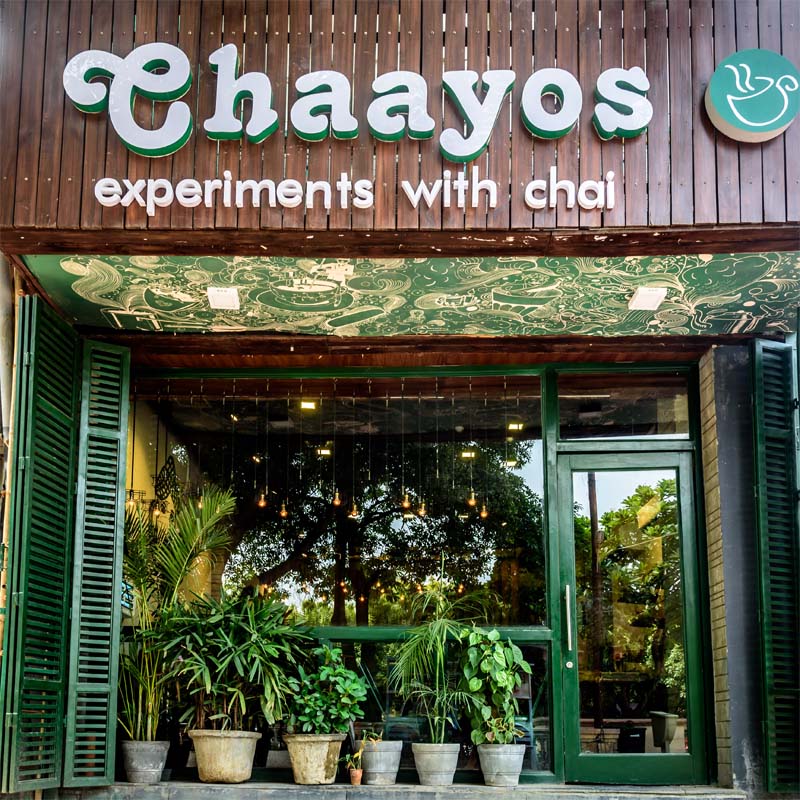
MUMBAI: Brand integration and partnerships are key to the startup world and often lead to innovative co-ops. SpiceJet, for example, has joined hands with the hip and upscale tea shop franchise Chaayos to serve hot steaming cup of masala chai to its passengers on-board.
For those who don’t know, Chaayos is a kiosk style tea startup that kick-started in Gurgaon and has gained popularity among the chai lovers in cities.
“Spice Jet is a people’s brand and our sustained efforts are always towards nurturing the ‘experience’ that our customers have with us. Chaayos is an expert in customised tea and with this partnership, we look forward to our customers savouring the chai drinking experience with us even while being on-board.” said SpiceJet spokesperson Ajay Jasra.

To highlight this partnership, Chaayos has launched a customized instant Masala Chai mix, exclusively for SpiceJet travellers and customers who can either pre-book or buy their favourite cup of chai on-board.
While co-founder Nitin Saluja was always proud of the cup of chai he made, he never thought this subconscious demand for a great chai outlet would lead him to actually establish a chai kiosk with fellow IITian Raghav Verma in 2012. Right now, between, Gurgaon, Chaayos has 25 stores to the franchise’s name and has broken even with the initial investments, said Saluja.
The sole purpose behind Chaayos, as Saluja puts it, was to give people their ‘meri wali chai’ that would go on to compete with the CCDs and the Starbucks of the world. Co-founder Raghav Verma feels the partnership with Spice Jet as a step forward in that direction.
While reliving the street side chai shop memories from college or the home made tea blend that one enjoyed every morning is a great way to reminisce, how viable is setting up a tea shop as a business?
Establishing ‘what coffee is to the west, Chai is to India’ Saluja emphasised “how coffee is embedded in the cultural fabric of the west, tea or chai is embedded in our cultural fabric.” Saluja also goes on to say that it would be wrong to assume that the coffee shops in India are running in profit, just because they are backed by big brands. “I don’t think there are many coffee companies in India which are making a reasonable amount of money. This is because people don’t walk in for coffee, but the nice ambience and the space they offer. Whereas, when it comes to tea, it’s the product which is the USP,” Saluja opined. Chaayos clearly aims at the natural demand for chai in India as opposed to coffee.
While the blend remains a familiar, tried and tested one, Chaayos plans to experiment and come up with three to four new products each year.
Unlike similar food and beverage start-ups, instead of marketing Chaayos is banking on its product strength, smart pricing and retail visibility. “I think more than marketing, being present on more and right locations is what will do the trick for a store like us. Currently we are focusing on being present on as many locations as we can, and giving the right experience to the customers inside the store. By design the overall proposition is such that the customer should come back,” Saluja explained.
Great customised blends of tea isn’t the only weapon Chaayos uses for customer retention. “A regular cup of 200 ml chai costs Rs 59 at Chaayos. At face value that might sound more if compared to the roadside tapri, but a 60 ml tea at such a stall costs around Rs 10. So we aren’t charging a whole lot for the ambiance we offer along with the tea,” Saluja runs the numbers through. With a strong digital presence, Chaayos does a lot of social media and digital marketing to stay relevant to its customers.
Apart from Spicejet, the brand has also partnered with digital brands like Ola and Uber, as well as American Express, which also serves the purpose of driving the right customer base at the outlets.





MAM
BLR Airport Launches ‘Connections’ Service to Ease Transit Travel
New initiative targets smoother transfers as Bengaluru hub traffic rises 30 per cent.

MUMBAI: Missed connections may be a traveller’s nightmare but Bengaluru is trying to make them a thing of the past. Kempegowda International Airport Bengaluru (BLR Airport) has rolled out ‘Connections by BLR’, a new transfer programme designed to take the friction out of connecting journeys. Built around three pillars ease, efficiency and experience,the initiative aims to simplify what is often the most stressful leg of air travel.
The move comes as transfer traffic at BLR Airport climbs sharply, up more than 30 per cent year-on-year. Transfers currently account for around 15 per cent of total passenger traffic and are projected to touch 20 per cent by 2026, signalling a clear shift in how the airport is positioning itself within airline networks.
At its core, the programme focuses on making navigation intuitive and downtime more comfortable. Dedicated transfer desks have been set up across terminals, supported by colour-coded wayfinding blue and yellow signage designed for quick recognition. Inter-terminal movement is being streamlined through complimentary shuttle services with predictable wait times, while designated transfer zones aim to reduce passenger confusion.
Beyond logistics, the airport is leaning into experience. Travellers in transit now have access to a wider choice of lounges, curated retail and food and beverage options, as well as sleeping pods for short stays. For longer layovers, transit hotels in both Terminal 1 and Terminal 2 offer boutique in-terminal accommodation, an increasingly sought-after feature as global travel patterns evolve.
The timing is strategic. BLR Airport now connects to 114 passenger destinations 80 domestic and 34 international with key routes spanning Delhi, Mumbai, Kolkata, Hyderabad and Pune domestically, and Singapore, London Heathrow, Dubai, Abu Dhabi and Kuala Lumpur internationally. Recent additions such as Hindon, Bidar and Silchar within India, alongside Dammam, Hanoi and Riyadh overseas, are further expanding its reach.
Infrastructure is also catching up with ambition. Developments including the West Cross Taxiway, Terminal 1 refurbishment and Terminal 2 expansion are laying the groundwork for higher capacity and smoother operations critical for any airport aiming to become a serious transfer hub.
Bangalore International Airport Limited chief operating officer Girish Nair framed the initiative as both a response to demand and a forward-looking play. He pointed to the growing depth of the airport’s network and the opportunity to build a more reliable transfer ecosystem that benefits both passengers and airline partners.
In an era where travel is as much about transitions as destinations, BLR Airport is betting that a seamless connection might just be the journey’s most important upgrade.







