AD Agencies
CCOs are shepherds, not showmen, say ad veterans in spirited Goafest debate

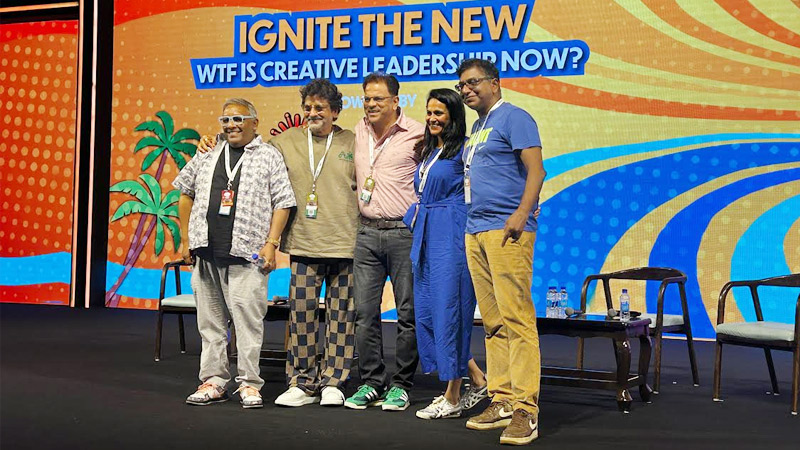
MUMBAI: At Goafest 2025’s high-energy panel “WTF is Creative Leadership Now?”—powered by Sun NEO and Amar Ujala—the crowd wasn’t just fed insight, it was served a full-course debate. The motion on the table: “The chief creative officer (CCO) is no longer the heart of the creative agency”. What followed was part philosophy, part punchlines, and all-out passion.
Moderated by Ohriginal founder Rohit Ohri, the session featured industry legends and present-day captains: Bobby Pawar, Sonal Dabral, Senthil Kumar (VML India), and Lulu Raghavan (Landor APAC). The format was unconventional—a structured debate—and emotions ran high as both sides made their case.
Pawar, speaking for the motion, fired the opening salvo: “The CCO has become a generalist, not a specialist”. He lamented the erosion of focus, saying creatives today juggle too many hats—part spreadsheet warrior, part HR liaison, part plumber of broken processes. “The CCO is supposed to make people better, not just the work”.
Dabral echoed the sentiment. “The role’s been marginalised”, he said. “Once upon a time, creative work brought in the revenue. Now, we’ve surrendered that ground to consultants and growth officers”.
On the other side, Raghavan mounted a spirited defence. “The CCO is the custodian of the brand’s unified creative vision”, she said. “They’re culture magnets and client counsellors. Yes, the role has evolved, but that doesn’t mean it has weakened—it has amplified”.
Kumar brought the flair, calling today’s CCO a “playing captain”, not a bench-bound boss. “They’re curators of talent and makers of movement. They must know when to step up and when to step back.”
The debate heated up as rebuttals flew. Pawar quipped, “If the client only wants to speak to one person, why do they need the rest of us?” Raghavan countered, “Then make that person the one who inspires, not just manages”.
What united both camps, despite the sparring, was a shared reverence for creativity’s core purpose. All agreed that CCOs must move beyond ego, protect originality, and build cultures that nurture bold thinking. In Ohri’s closing words, “It’s not about idea ownership anymore—it’s about creating open spaces where ideas can roam freely and return home safe”.
The rapid-fire round that followed was peak Goafest theatre. The panelists defined today’s CCO in their own punchy terms: “instigator”, “playing captain”, “creative curator”, “versatile”. When asked to choose between a Cannes Lion or a lifetime client, most cheekily opted for both.
As the session wrapped, the takeaway was clear: the CCO isn’t dead. They’re just shape-shifting—and perhaps learning to lead not from the podium, but from the pasture.