Brands
Cargill Foods India aims to expand market with sponsorship of Rising Pune Supergiants


MUMBAI: Indian Premier League as an IP has proved itself beneficial for brands time and again. In its 9th season now, the tournament sold all its advertising inventory a month before it even began, which speaks of the trust and faith it enjoys from the brands, thanks to the eyeballs it generates each season.
On the team sponsorship front, though Cricket Team Sponsorship (ESP Properties Sportz Power report 2016) saw a marginal 1.9 percent drop from Rs. 3,478 million (Rs 347.8 crore) in 2015, IPL 9 seems promising especially with the new teams Rising Pune Supergiants and Gujarat Lions making inroads for many brands who were looking for an opportunity to enter the market. Though late entrants in the tournament the new teams allow the brands to grow their visibility.
“IPL is not just a cricket league anymore; it is celebrated as a festival in India. This partnership with Rising Pune Supergiants for IPL 2016 is a strategic one and an obvious choice for us as both the brands have a strong connect with Pune. Through this collaboration two supergiants of Pune are coming together which will further strengthen our bond with the people of Pune,” shared Cargill Foods India CMO Neelima Burra, explaining the FMCG brands decision to become associate sponsors for Rising Pune Supergiants for this current tournament.

When asked how this association with a sports team helps a FMCG brand, Burra answered, “Research has shown that in Maharashtra the viewership of IPL is the second highest and has increasingly started catering to many female audiences. The proportion of female viewers watching cricket has increased to 30 percent (source: TAM) since the inception of IPL matches. This makes it an ideal platform for us to connect with our consumers and with the trade community and create some high decibel energy in the market for our brands across Sunflower categories..”
As part of the deal, the brand would see its presence in several marketing initiatives surrounding the sport. ”The Gemini logo will be visible on the leading side of the players’ caps and helmets. We also have rights to use players’ photographs in our POSM and retail promotions as well as on our digital assets,” Burra added in detail. Apart from this, the brand also leveraged this association through various digital promotions and contests, as well as in-shop and outdoor advertising in key sites including the MCA stadium in Pune.
“The Gemini Facebook page has a lot of content on the IPL season. We have an activation for Cargill employees wherein players’ cut-outs are placed at multiple locations in our offices. People can click pictures and share the same on their social network by tagging the Gemini page and stand a chance to win prizes. Apart from this, we have started an employee engagement program called the ‘Cargill Premier League’ which is based on the IPL format,” Burra explained the brand’s marketing strategy on the digital front.
In addition the marketer conducted meet and greet sessions with players for key distributors of Gemini,” Burra added. In addition, Burra said the brand is open to explore further associations with other sporting avenues or leagues that will help them connect with their consumers.







Brands
Samsung certifies 1,000 Maharashtra students in AI and coding
The South Korean electronics giant marks its first large-scale skilling push in the state, with women making up nearly half the national programme’s enrolment
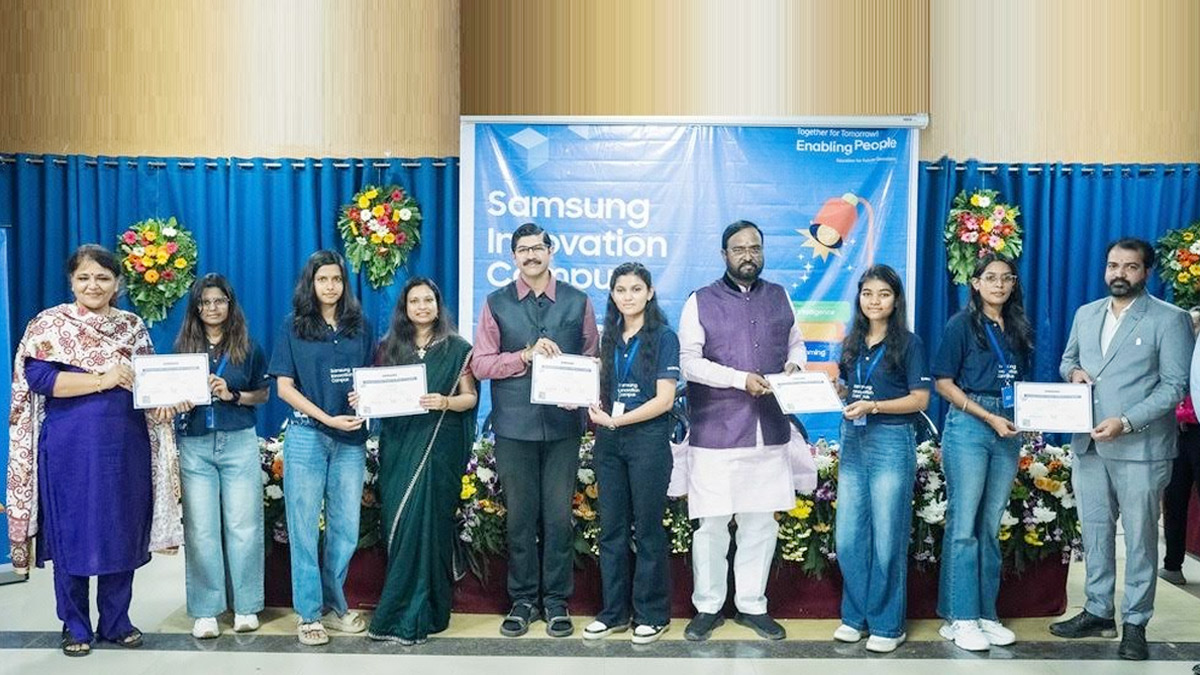
PUNE: Samsung has put 1,000 students in Maharashtra through a certified training programme in artificial intelligence and coding, the largest such drive the South Korean electronics company has run in the state and a signal that corporate India’s skilling ambitions are moving well beyond the boardroom brochure.
The certifications were awarded under Samsung Innovation Campus (SIC), the company’s flagship corporate social responsibility programme, which launched in India in 2022 with the stated aim of democratising access to future-technology education. The 1,000 graduates were drawn from four institutions: 127 from Savitribai Phule Pune University, 373 from Pimpri Chinchwad University, 250 from D.Y. Patil University’s Ramrao Adik Institute of Technology and 250 from Anjuman-I-Islam’s Kalsekar Technical Campus. All completed training in either AI or coding and programming, the two disciplines Samsung has identified as the critical pillars of the digital economy.
The programme does not stop at technical training. Soft-skills development and career-readiness modules are baked into the curriculum, a deliberate attempt to close the gap between what universities teach and what employers actually want.
“India’s digital growth story will ultimately be shaped by the quality of its talent pipeline,” said Shubham Mukherjee, head of CSR and corporate communications at Samsung Southwest Asia. “As technologies like AI move from the periphery to the core of industries, skilling must evolve from basic training to building real-world capability. This milestone in Maharashtra reflects how industry and academia can come together to create a future-ready workforce that is both globally competitive and locally relevant.”
The Maharashtra drive sits within a rapidly scaling national effort. Samsung Innovation Campus trained 20,000 young people across India in 2025, hitting its stated target for the year. Women account for 48 per cent of national enrolments, a figure the company cites as evidence of its push for an inclusive technology ecosystem. The programme is implemented in partnership with the Electronics Sector Skills Council of India and the Telecom Sector Skill Council.
Samsung, which is marking 30 years in India this year, runs SIC alongside two other initiatives, Samsung Solve for Tomorrow and Samsung DOST, as part of a broader effort to build what it calls a generation of innovators with both the technical depth and the problem-solving mindset to thrive in a fast-moving digital world.
A thousand certified students is a tidy headline. Whether they find jobs that match their new skills is the harder question, and the one that will ultimately determine whether corporate skilling programmes like this one are genuine pipelines or well-photographed gestures.






