MAM
Cards on the table as adland laughs at itself with a very knowing deck

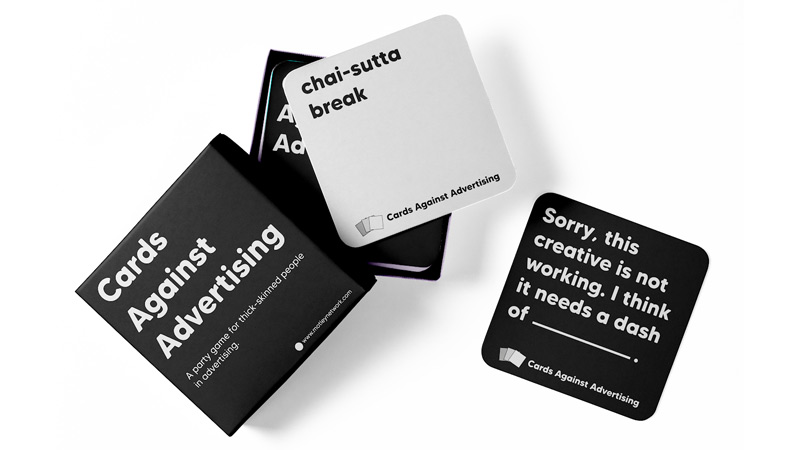
MUMBAI: When the brief goes sideways and the pitch deck grows by 47 slides overnight, sometimes all you can do is laugh preferably with a deck of cards. Enter Cards Against Advertising, a new parody party game from Mumbai-based independent creative agency Motley that shuffles the chaos of adland into a sharp, self-aware pack of 150 cards.
Inspired by the irreverent format of Cards Against Humanity, the game leans into the clichés, contradictions and quiet toxicities of the advertising world, using humour not as a punchline but as a pressure valve. Developed under Motley Orgnls, the agency’s internal platform for crew-led ideas, the game draws directly from lived experiences across advertising, marketing and creative services.
Advertising may be one of the world’s most influential industries, but it is also one famously fuelled by long hours, high stakes and cultural burnout. Cards Against Advertising does not attempt to diagnose or fix these issues. Instead, it acknowledges them openly, collectively and with a wink. From last-minute presentation changes and endless alignment calls to pitch panic and jargon-heavy conversations that rarely make it into meeting minutes, the cards reflect moments most industry insiders recognise instantly.
“This is more than just a game; it’s an advertising-specific party experience,” said Motley founding partner and creative head Priyanka Surve. Designed by people who live the industry’s realities daily, the deck turns shared frustrations into satire rather than sermon.
The project also reflects Motley’s approach to creative ownership. Conceived through Motley Orgnls, the initiative allows team members to pitch independent ideas beyond client briefs. Selected projects receive production backing from the agency, with profits shared with the creators over time, a model that treats creativity as equity, not just output.
“In an industry powered by ideas, ownership should extend beyond billable work,” said Motley founding partner and business head Jason Menezes. “Creativity should build pride and participation, not just pay cheques.”
Written collaboratively by creatives, strategists, account managers and interns, the game is designed for groups both small and sprawling. Sessions typically run between 30 and 90 minutes and are intended for players aged 18 and above including current agency folk, former adlanders and even clients with a sufficiently self-aware sense of humour. Expansion packs focused on specific roles such as copywriters, designers and social media teams are already on the cards.
Arriving amid ongoing conversations around burnout, mental health and sustainable work cultures, Cards Against Advertising positions itself neither as a solution nor a critique. Instead, it offers something rarer in the industry: a shared laugh that feels a little too real and perhaps that’s precisely the point.






