MAM
Brands need to move away from femvertising: Sakshi Choudhary, Ogilvy India

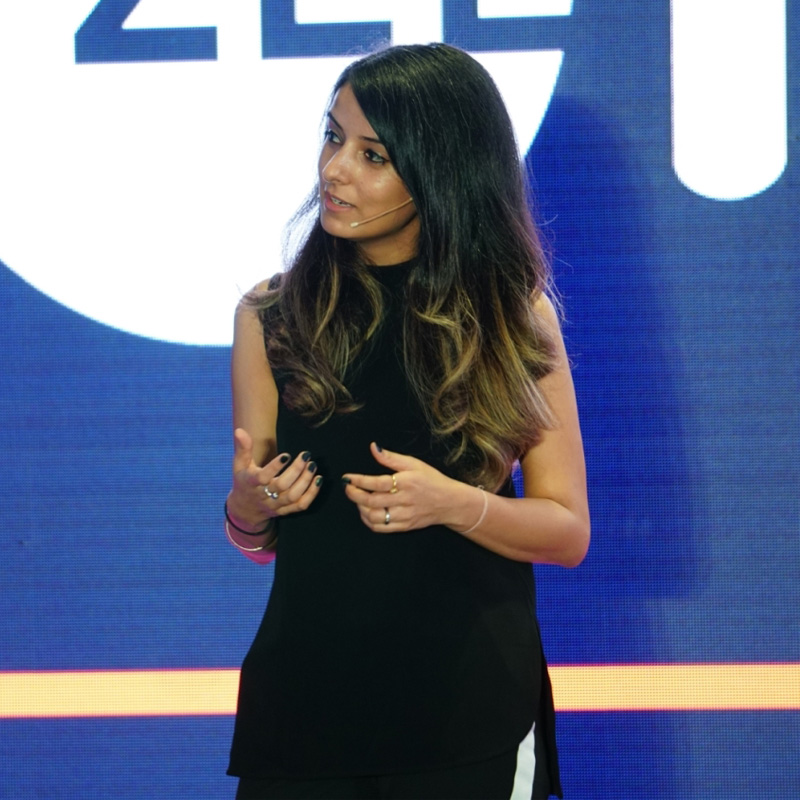
MUMBAI: The 28-year-old lady, who rose to fame pretty early in her career, proudly sits as the creative controller at Ogilvy India’s office. An avid feminist that she herself is, Sakshi Choudhary spoke eloquently on day one of Zee Melt, on how brands must make a better portrayal of women in ads.
The young creative head began her session with a rant on the patriarchal ad industry. “Dear ad industry, you don’t talk to me. At 21, I finally fell in love with my body, I rigged myself of the low self-esteem and I roared like a lioness. But you compare me to the kitten and chicken that will lick and bite when the oh-so masculine half-naked man sprays his oh-so masculine deodorant. Dear ad industry you don’t talk to me. At 24, I got my first big promotion and a pay-check which was a result of years of passion, handwork and persistence that has finally paid off. But you think it’s the perfect time to tell my male colleagues that it’s time for me to be picked up and carried home. Dear ad industry, why do you not talk to me? Why does the dreamer in you not connect to the dreamer in me?”
After the intense rant, Sakshi Choudhary remarked, “If you think that as an industry we have come a long way, well think again.” She spoke about how women in India are increasingly getting into the purchasing power in categories that were predominantly considered a male dominant segment. Women today spend 2X times more time on mobile devices and 74 per cent of purchasing decision today is being made by women which includes decisions about automobile (60 per cent), vacation (90 per cent) and consumer electronics (50 per cent).

Brands including Honda motorcycles, Bacardi Weekender, Nykaa, UrbanClap and Hotstar have recognised these opportunities to connect with women.
Choudhary said that brands need to change the portrayal of women as an object, a homemaker or an instantly empowered woman. While creating a campaign, brands and agencies need to follow Badger & Winters test that calls out for sexism in advertising. Badger & Winters is a New Your based agency that leads with a female perspective that helps brands grow loyal and lasting relationships with women. Brands should ask themselves these four questions before they crack an advertisement or final creative:
– No Prop: Agencies need to ask themselves whether the woman in the ad is a prop? Does she have a voice or a choice?
– No Plastic: Is she air brushed to a point where she looks like a plastic doll?
– No Part: Is any part of her being shown? Is it a sexually provocative ad?
– No Stranger: would you see your mother, daughter or sister in the ad where the women is right now. If the answer to all the above points is no, do not proceed with the campaign idea.
She then pointed out about how brands stereotype women in ads and they are given less airtime, fewer dialogues and are expected to look young and enthusiastic homemakers whereas men are always shown to have an occupation and get four times as much screen time as women.
She also touched upon the recent trend in adverting, which is femvertising and suggested that brands should not come up with a piece of work which only speaks to women on women’s day or mother’s day. “Clients need to have an equal and empowered portrayal through the year. Brands should have realistic beauty standards and actively work for social change,” she challenges.
She ended her session by quoting Tain Wei, “Any society that fails to harness the energy and creativity of its women is at a huge disadvantage in the modern world.”
Indiantelevision.com got talking to Sakshi Choudhary about her views on the female economy, what the ad industry needs to do to address the issue and more. Excerpts:
How do you ensure your agency Ogilvy does not create ads that stereotype women?
At an individual level, I ensure that every piece of work that’s proposed or released from my team is free of stereotypes, and portrays women to be equal as men. As an agency, Ogilvy has constantly strived to create work that doesn’t just beat stereotypes (Komfort, Tata Salt), but also empowers women through effective campaigns like #MakeLoveNotScars, #NotMusicTomyEars, Vodafone Sakhi or #LforLove.
Which platform woks the best for promoting and advertising women centric products that promote women empowerment or women safety? Is it digital since you mentioned that women today spend 2X more time on mobile devices. Will digital change the wave?
It doesn’t really matter which platform you place your work on as long as you reach women effectively, and the right way.
Does creating campaign and products designed specifically for women safety or empowerment) lead to a jump in sales? Does it help in improving the brand perception?
Yes, if done right, gender equality campaigns not only lead to increased brand love and loyalty but also sales. However, as mentioned in my talk, lately, Femvertising has become a fad. The problem arises when brands want to hop on the empowerment bandwagon just for the sake of it, or to enjoy a share of voice without any concrete on-ground results in mind.
This happens more often on digital as brands are often in a rush to jump on a trend or an occasion. Women’s Day campaigns are a classic example.
Gender pay is still a pressing issue in the industry. What do we need to do as an industry to address the issue?
Gender pay gap is an issue that exists in every industry.
While paying equally seems to be the first solution that comes to everyone’s minds, the issue is far deeper than that. Women don’t ask for their worth as often or as assertively as they should. They constantly undermine themselves and feel that they aren’t good enough. This self-doubt keeps them in a weaker position throughout their careers.
As an industry, for starters, we women need to come together through a forum. And then address our needs through formal training workshops or mentorship by senior women leaders.
How challenging is it to create a campaign that impacts culture?
Extremely. Anything to do with culture, and it runs the risk of offending sensibilities. The consumers are now online, and analyzing and scrutinizing every inch of your creative online. The intent of the brand may be right, but if the execution isn’t done well and is misinterpreted, it can lead to massive brand fails.
The risk is huge. But it’s an interesting challenge. These are also the pieces of work that come with the most fulfilment and make you feel good about being in the industry.
Is it a major responsibility on agencies and brands to create the societal change?
Nope, we are in the business of selling products.
Having said that, we need to be more mindful of the undercurrents shaping our country right now.
Whether it’s recognizing the societal advancement of women in the last 10 years, or embracing our younger population that’s judging marketing efforts and only trusting brands with a purpose.
One piece of advice to creative heads that are at the helm of ad industry that create/want to create ads about women empowerment while not demeaning them?
Nurture and celebrate your women.
Retain the ones you have, and hire more to make every team in your agency gender equal.
And nope, don’t do this to produce work only on ‘ women empowerment’.
Do this because the current Indian woman wants to see campaigns that she can relate to. Connect with the dreamer in her.







Starting a business is one of the most financially demanding transitions a person can make. In the early months, expenses are immediate and often unpredictable, while revenue streams may take time to stabilise. For first-time entrepreneurs, securing small business loans can feel like a paradox: lenders expect a clean financial track-record before approving a loan, but the business cannot establish that track record without funding. Understanding the start-up lending environment in India and knowing the realistic funding options make this process far less daunting, allowing entrepreneurs to plan strategically.
Why Traditional Business Loans Are Harder for Start-ups
Most financial institutions require a minimum business vintage of 2 to 3 years before approving a term loan. This is because the first two years of operations carry the highest risk of failure. For start-ups less than 12 months old, traditional loan options are limited, and lenders often ask for substantial collateral to mitigate risk.
The vintage requirement is not arbitrary. Businesses that have survived their first two operating cycles demonstrate market viability, which significantly lowers the lender’s risk. Until this milestone is reached, entrepreneurs often rely on bootstrapping, personal savings, or alternative financing to build a stable business foundation. Understanding this reality helps first-time entrepreneurs set practical expectations when seeking funding.
Government-Linked Schemes for Startups
India offers several government-backed schemes to support first-time entrepreneurs. One such scheme is the Pradhan Mantri Mudra Yojana (PMMY), which provides collateral-free loans for micro and small enterprises in three categories:
● Shishu: up to Rs. 50,000
● Kishore: Rs. 50,000 to Rs. 5 lakh
● Tarun: Rs. 5 lakh to Rs. 10 lakh
These loans are available through eligible lending institutions, making them suitable for early-stage businesses. For first-time entrepreneurs, a Mudra loan not only provides initial working capital but also helps establish a credit history. Repaying a Mudra loan on time strengthens the entrepreneur’s profile and increases the chances of securing larger loans in the future.
Using Personal Loans to Fund Early-Stage Needs
When business loan eligibility is not yet established, a personal loan can serve as bridge funding. These loans are assessed on the individual’s credit profile and income rather than the business’s financial history, making them accessible to salaried individuals or those with a strong personal credit record.
Personal loans have limitations: the loan amount is capped based on personal income, and the interest rate is typically higher than secured business loans. Nevertheless, taking out a personal loan during the first 12 to 18 months can provide crucial support as the start-up builds its financial profile. It is especially useful for covering immediate expenses such as inventory, marketing, or office setup costs.
Alternative Financing Options for Startups
For start-ups that are not yet eligible for traditional business loans, other financing options are available through financial institutions. Many lenders offer startup-focused or small-business loans designed for early-stage businesses. These loans evaluate the entrepreneur’s personal credit profile, business plan, and projected revenue rather than relying solely on business vintage. Financial institutions such as Tata Capital provide these loans with minimal documentation and fast disbursal, enabling entrepreneurs to manage operational expenses, purchase equipment, or fund early growth initiatives without pledging collateral.
Some lenders also offer flexible loan amounts, quicker approvals, and streamlined processes, making them well-suited for first-time entrepreneurs. Exploring these options early allows start-ups to access working capital while gradually building a credit history that will support larger loans in the future.
Building the Right Financial Profile Before Applying
For entrepreneurs planning to apply for a business loan in 12 to 18 months, the preparation period is critical. Key steps include:
● Filing Income Tax Returns (ITRs) consistently and accurately from the first year
● Maintaining a clean current account with regular deposits and no overdraft patterns
● Keeping the promoter’s CIBIL score above 750
Lenders assess start-ups by examining these signals. Entrepreneurs who maintain financial discipline from the start will have stronger loan applications after two years. Additionally, tracking cash flow and avoiding irregular withdrawals can further enhance the business’s credibility.
Collateral-Based Options for Larger Requirements
Startups requiring larger amounts beyond government schemes can consider loans against property. These loans allow entrepreneurs to access larger amounts of funding at lower interest rates, as the property secures the lender’s risk.
This option carries significant risk: using personal or family assets as collateral can result in a loss if the business does not perform as expected. Such loans should be considered only when the business plan is validated, the entrepreneur has clear cash flow projections, and the repayment strategy is realistic. Careful assessment of risk versus reward is essential before pledging assets.
Practical Steps to Strengthen Your Loan Application
To maximise the chances of approval, entrepreneurs should:
● Maintain accurate financial statements, bank records, and GST returns.
● Avoid over-borrowing; apply for realistic amounts that match business needs.
● Keep personal and business credit profiles in good standing.
● Explore lenders that offer startup-friendly products.
● Be transparent and complete in all documentation.
Taking these steps early ensures a smoother and faster loan process when the business is ready for formal financing. A well-prepared application reduces processing delays and demonstrates professionalism to the lender.
Conclusion
First-time entrepreneurs often face a funding gap in the early stages, but it is usually smaller than it appears. Maintaining clean banking records, filing ITRs consistently, and exploring personal loans, government schemes, and alternative financing options help build a strong financial profile. Entrepreneurs who plan systematically from day one are better positioned to access formal credit sooner, giving their start-ups financial stability through small business loans.
The ideal time to start building a credit-worthy business profile is the very first month of operations, not when applying for a loan. By understanding available funding options and acting proactively, first-time entrepreneurs can confidently apply for a business loan and set their businesses on a path to long-term growth.







