MAM
Bollywood producers need specialised marcom consultants

MUMBAI: The Advertising Club Bombay’s Value Creation seminar on marketing entertainment and their growing inter-dependence gave glimpses of the future of film production in India and the gradual transformation that the process of film-making is currently undergoing. The panelists agreed that Bollywood needed marketing lessons in order to capitalise on the merchandising opportunities and in-film placements.
 |
PNC chairman Pritish Nandy, while talking about his personal experiences in successful marketing of entertainment, mentioned that intangibles were the heart of the business. He added that the interface between filmmakers and third-party marketing/advertising agencies working together to come up with different branding opportunities was a huge opportunity.
Writer director Ashutosh Gowariker of Lagaan fame felt that films have not been able to leverage marketing or merchandising opportunities because the filmmakers didn’t manage their time well and got drawn into distribution-related routines closer to the release phase. He added that modernization has still not made such of an impact in the traditional ways of the film industry. Gowariker also seconded the view that the third-party marketing/advertising agency could take on the responsibility for informing the producers about the various possibilities for leveraging merchandising.
Pritish Nandy Communications (PNC) will make eight movies till March 2004 and 12 movies till March 2005. Nandy mentioned that more and more viewer movies will be the order of the day in 2003. He also envisaged that corporate participation in film-making will increase in the near future. He felt that corporates don’t have any special skills but could play a vital role in handling the risks better and cost-efficiencies. He added that many financers had badly burnt their fingers and movie-producers need to make choices that financers are comfortable with. Gowariker added that the corporates and third-party marketing/advertising agencies need to study the distribution network diligently.

Nandy stated that the distribution people down the line (in remote parts of India) played a very big role in the film hits and misses. He added that these distributors had an uncanny ability to ‘smell what is right’ and the money-making opportunities therein. He lamented the fact that the entire film or its details are not shown to the various rungs of the distributors. In the near future, he envisaged a situation wherein the distributors would get involved in the early stages of conceptualization of the film. Gowariker added that the scripts must be previewed and tested amongst an audience comprising of distributors and viewers.
Nandy mentioned that the only predictable thing about the film business was its innate unpredictability. He pointed out that conventional wisdom still guided and ruled scripts but it was slowly changing into a search for offbeat themes. He opined that many producers and filmmakers were struck in a time wrap, believing that they could connect with the viewers through the usage of traditional ploys. But Nandy mentioned that the society was in a state of flux. He pointed out that the viewers choices and preferences varied from villages to towns to mini-metros to metros; even within metros different pockets of viewers liked different fare. He also felt that every new film took off on an age-old theme; re-packaged the rediscovered theme by restructuring the styling; and changed the execution to touch innate sensibilities that were representative of the contemporary society. Nandy gave examples of movies such as My Fair Lady and Pretty Woman. Nandy admitted that filmmakers must initiate consumer research during the pre-release phase which would involve aspects such as “Is the movie the first choice?” and “Why would I see the movie?”. He also stated that film-goers loved a certain element of surprise and the ‘magic of discovery’. Nandy added that the Indian audiences were ready for change and “surprises” and commented that anything could work if it was well made.
Nandy mentioned that producers must involve an outside advertising or marketing agency to obtain a different perspective and present positive criticism. He admitted that the third-party intervener wouldn’t have the same passion as the film-maker and sometimes could bring out negative aspects. Although producers and film-makers are sensitive to criticism, they must absorb the relevant rationale of the interveners as the final communication message would develop from the confluence of the views of the film makers and the interveners. Gowariker added that the marketing strategy of a film depends on the content. Gowariker opined that a definite marketing strategy for different phases of the film’s release must be clearly outlined at the conceptualization stage itself.
Nandy also mentioned that the traditional streams such as audio rights had hit a dead-end. However, the current breed of producers and filmmakers could choose and pick from a large menu of sponsorships and branding opportunities during the pre-release, release and post-release phases of each film. Gowariker added that the marketing plan should comprise of several options catering to different scenarios of a film’s fate – in case the film is hit or if it is a semi-hit or flop. Gowariker offered the example of Lagaan wherein the cricket match event between cricketers and film stars held after the film’s release evoked more interest in the film itself and led to repeat viewings. Gowariker however rued the fact that they missed out on various merchandising opportunities for Lagaan. However, he added that the filmmakers mustn’t compromise with their initial concept line. He emphasized that content can never take a backseat.
Also read
TV personalities – good option for advertisers
Entertainment brands are illusory, elusive and magical – Star India COO Sameer Nair
Need a hit – all about marketing and communications
Radio provides unique options to advertisers
Leo Entertainment capitalises on in-film product placements




MAM
Promotedge marks 11 years with expansion into D2C and performance marketing
Kolkata-based agency strengthens global footprint and launches new platforms.
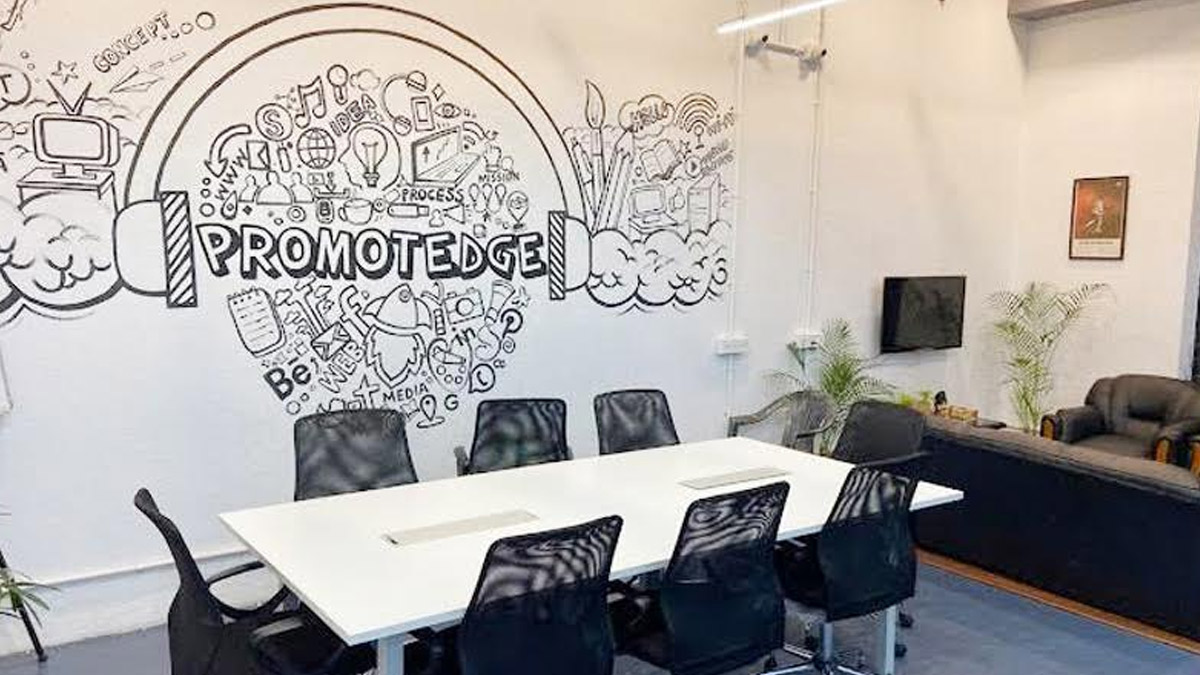
MUMBAI: Promotedge has spent 11 years quietly building momentum and now it’s ready to take a much bigger leap. The Kolkata-based integrated marketing and branding agency, founded in 2015, has completed 11 years of steady growth, evolving from a local creative firm into a full-service marketing partner with a growing international presence. With operational hubs in the US and Canada through its platform PromotEdgeDigital, the agency now serves clients across India, the US, Canada, Australia, and the Middle East.
Over the past 11 years, Promotedge has partnered with more than 200 businesses across diverse industries. Guided by its “Digitally Desi” philosophy which blends cultural insight with data-driven execution, the agency offers end-to-end services including web solutions, digital marketing, creative design, brand planning, and audio-visual production.
In its eleventh year, the agency made significant strides by developing branded IPs and content series for the automotive and industrial sectors, creating audio-visual content for international sporting bodies like the Fédération Internationale de Volleyball, and strengthening its performance marketing capabilities, particularly on quick-commerce platforms such as Zepto, Blinkit, Flipkart, and Swiggy Instamart.
To further boost its D2C focus, Promotedge has integrated the operations of Fizzle Digital into its performance marketing division, now led by founders Avi Saraf and Jhalak Agarwal. The agency continues to serve B2B clients in sectors like steel, energy, engineering, and infrastructure.
Beyond traditional services, Promotedge has introduced new platforms. DesiMachines is an online marketplace for heavy engineering and construction equipment, supported by two financial institutions and six top OEMs. The agency also launched Pexora, a joint venture with Prodigy focused on workspace design, branding, experiential marketing, and Digital Out-of-Home (DOOH) solutions in Eastern and North Eastern India.
Additionally, Promotedge nurtures The Trip Space, a boutique travel brand that curates personalised, luxury journeys for high-net-worth travellers.
Promotedge CEO Saurav Agarwal said, “PromotEdge has always been built with a long-term vision. Our goal is to develop capabilities that provide long-term value to our clients.”
As it approaches its 12th year, the agency plans to expand its global clientele, deepen D2C and performance marketing capabilities, invest in AI-enabled solutions, and strengthen its platform-led initiatives.
From a modest start in Kolkata to building platforms and partnerships across borders, PromotEdge is proving that smart, culturally rooted marketing can travel far and deliver real impact. The agency is clearly gearing up for an even bigger chapter ahead.






