MAM
Bivabasu Kumar named head of media and corporate communication at Adani Navbharat


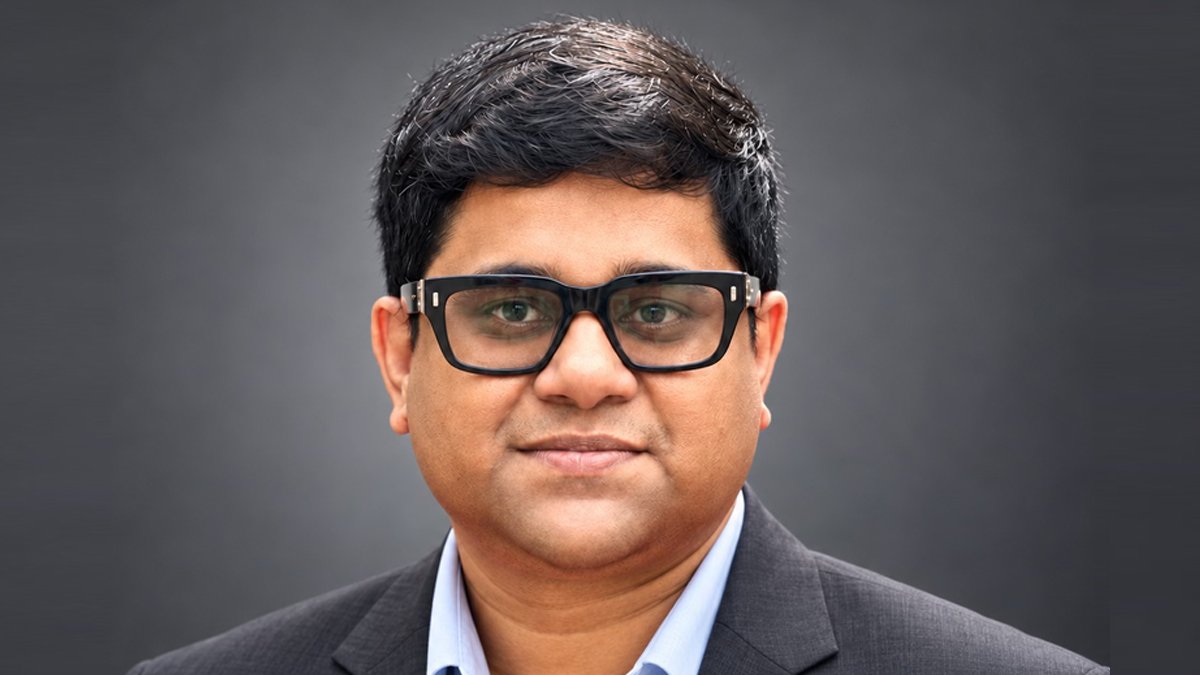
MUMBAI: From the cricket press box to the Dharavi hot seat. Bivabasu Kumar has been promoted to assistant vice president and head, media and corporate communication, at Adani Navbharat Developers Private Limited, from October 2026. His brief is among the toughest in Indian communications: the Dharavi Redevelopment Project.
Kumar has led media and corporate communication for the project since October 2024, when he joined as general manager and head. In his own words, it is one of the most complex urban regeneration programmes of its kind in Asia. The work involves building trust and understanding around a project that touches people, livelihoods and the future of a large part of Mumbai, often under intense media and public scrutiny. His role covers media and reputation management, crisis communication, content and digital engagement, and making complex issues around rehabilitation, infrastructure and redevelopment easier to understand.
Kumar describes his career as a move over two decades from journalism to leading corporate communications for complex infrastructure and urban regeneration projects. Along the way, he says, he has helped build reputations, handle crises, create memorable content and, most importantly, make complex businesses and projects easier to understand. At Dharavi, he says, his work involves people, policy, infrastructure, media and public trust, often all at once.
The grounding for this was laid at Afcons Infrastructure Limited, a Shapoorji Pallonji Group company. Kumar joined in February 2013 as manager, corporate communications, became senior manager in October 2015, and later served as head of corporate communication. There he led communications for nation-building projects including the Chenab Railway Bridge, Atal Tunnel and India’s first underwater Metro tunnels beneath the Hooghly River in Kolkata. He worked with project teams and leaders to explain complex engineering clearly, handle media enquiries and communicate through sensitive situations.
The role also took him beyond India. On critical and time-sensitive projects across Asia, the Middle East and Africa, Kumar worked with embassies and stakeholders from different governments and nationalities. His last assignment, the Greater Malé Connectivity Project in the Maldives, was the most challenging in this respect, given the international circumstances at the time. In between, from September 2016 to January 2017, he was deputy general manager, corporate communications, at Reliance Infrastructure, managing communication and media relations for Reliance Energy and other verticals.
Before moving into corporate communication, Kumar was a sports journalist. He was principal correspondent at The Times of India from May 2011 to February 2013, where he specialised in cricket and other sports and helped set up the TOI Sports desk for the Kochi edition. He was chief sub editor at The Telegraph in Kolkata from 2010 to 2011, principal correspondent at Hindustan Times from November 2008 to October 2010, senior correspondent at DNA from 2006 to 2008, and sub editor at The Indian Express in Kolkata from 2004 to 2006, which he says laid the foundation of his career in journalism.
The analysis
Three things explain why this appointment makes sense. First, the pedigree. A communications chief on Dharavi needs to explain concrete, steel and rehabilitation policy to residents, officials and reporters alike. Kumar has spent years doing exactly that for bridges, tunnels and Metro lines, where the engineering is complex and the public interest is high.
Second, the newsroom instinct. Kumar spent about seven years in the press before crossing over, handling desks, editions and headlines on tight deadlines. That is useful on a project that is rarely out of the news, because it gives him a feel for how a story is built, what an editor wants and how a reputation can swing in a single news cycle.
Third, the diplomatic touch. His work with embassies and stakeholders of different nationalities, culminating in the Maldives assignment, shows a comfort with sensitivity and high stakes. Dharavi may be a domestic project, but it involves many constituencies at once. The promotion from general manager to assistant vice president, after a year of running the function, suggests the company likes what it sees.