MAM
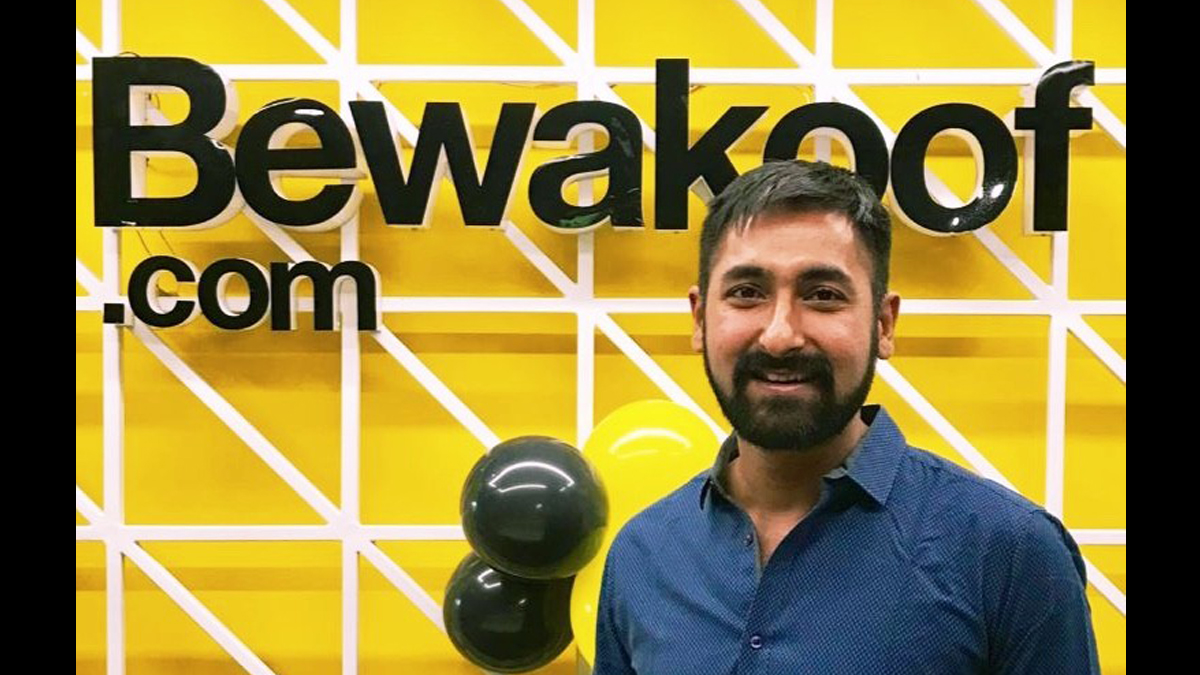
Bewakoof founder Prabhkiran Singh steps down after 14 years
CEO who built youth fashion brand from Mumbai room in 2011 to Rs 100 crore plus revenue exits end of March 2026.
MUMBAI: Bewakoof’s original designer is hanging up his entrepreneurial hoodie because after 14 years of stitching a brand from scratch, even the boldest founders need a well-earned breather. Prabhkiran Singh, co-founder and CEO of direct-to-consumer fashion label Bewakoof, announced on 24 February 2026 via LinkedIn that he will step down by the end of March to focus on health, family, and personal goals. He will stay on through the transition to ensure a smooth handover.
Singh launched the brand in 2011 at age 21 in a small Mumbai room alongside a fellow engineer, with no prior business experience, no venture capital, and a youth-focused apparel idea that he admits looked “almost foolish” at the time. Operating on shoestring resources often handling deliveries and customer queries themselves, the duo grew Bewakoof into one of India’s early breakout D2C fashion players. The company now ships over 20,000 products daily, crossed Rs 100 crore in revenue, and commands a social media community exceeding 6 million followers.
“Bewakoof has been my baby since I was 21 years old,” Singh wrote. “Bewakoof raised me while I was raising it.” He credited the journey with teaching him resilience, leadership, and the grit to push through tough stretches.
The brand, now backed by TMRW (a digital-first venture under Aditya Birla Group), has a strengthened leadership team in place. Singh called it his “firstborn” and said the “14-year-old ‘child’ we raised is now all grown up and ready to soar on its own.” He plans to cheer from the sidelines and share untold stories from the company’s early days in coming weeks.
His exit arrives as India’s D2C space enters a consolidation phase, with legacy conglomerates snapping up digital brands and founders after a decade of high-octane growth increasingly reassessing long-term roles. For a label built on bold prints and youthful energy, Singh’s departure isn’t an end, it’s the quiet close of one chapter so the next can print even brighter.

MAM
Barista partners Ginny Weds Sunny 2 with mango campaign
Cafe chain blends cinema buzz with summer menu and 20 per cent offer.
MUMBAI: Love may brew slowly, but marketing clearly doesn’t especially when coffee meets cinema and mangoes steal the spotlight. Barista Coffee Company has partnered with the upcoming hindi film Ginny Weds Sunny 2 as its official beverage partner, in a move aimed at tapping into youth culture through entertainment-led engagement. The collaboration is not just a logo placement exercise. Instead, Barista is translating the film’s high-energy vibe into its cafés with a themed summer menu titled “Main Hoon Mango”, accompanied by a limited-period 20 per cent discount on combo offerings across outlets.
Actors Medha Shankr and Avinash Tiwary feature in the campaign, seen engaging with the mango-themed menu inside Barista cafés, a visual cue designed to blur the lines between reel and real-life consumption moments.
The strategy reflects a broader shift in how consumer brands are leveraging hindi film industry not just for visibility, but for immersive, on-ground engagement. By embedding the film’s narrative into its product experience, Barista is aiming to drive footfall, especially among younger audiences who increasingly seek experiential touchpoints over traditional advertising.
Barista Coffee Company CEO Rajat Agrawal described the partnership as both a branding and growth play, focused on expanding reach beyond the existing customer base and aligning with evolving consumer preferences.
The emphasis on a seasonal, flavour-led hook mango, one of India’s most culturally resonant ingredients adds a timely layer to the campaign, aligning with summer consumption trends while riding on the film’s promotional momentum.
For Barista, the move is part of a larger positioning shift. Rather than operating purely as a coffee retail chain, the brand is increasingly framing itself as a lifestyle destination, one that intersects with entertainment, conversation and shared experiences. By integrating cinema into its physical spaces, Barista is effectively turning cafés into micro-extensions of the film’s universe, where consumers do not just watch a story unfold but participate in it sip by sip.
The 20 per cent offer further nudges trial, lowering the barrier for consumers to engage with the themed menu while amplifying recall through a tangible incentive.
Brand-film collaborations are hardly new, but their execution is evolving. Where earlier partnerships relied on co-branded ads or product placements, the current playbook leans towards immersive storytelling and retail integration.
In that sense, Barista’s “Main Hoon Mango” push is less about promotion and more about participation inviting consumers to experience a slice of the film within a familiar, everyday setting. As the film industry continues to act as a cultural amplifier, such partnerships underline a growing truth, in today’s attention economy, it is not enough to be seen brands must be experienced.
And if that experience comes with a mango twist and a cinematic backdrop, all the better.