MAM
BARC shows it cares for children

MUMBAI: BARC India is treading the path of altruism by adopting four public schools and an alumni hub in Mumbai to provide them with better educational facilities and make it fun.
The initiative titled BARCares will commence from Diwali and the schools cater to the underprivileged parts of the community. BARC India CBO Romil Ramgarhia says, “We believe an initiative like this, on behalf of our stakeholders, not only adds value but also adds commitment for an overall enthused and motivated performance as a responsible joint industry body representing the three apex bodies of IBF, AAAI and ISA in our country.”
The ratings agency isn’t bound by law to undertake any Corporate Social Responsibility (CSR) activities. “We are taking education for a cause to contribute for the sake of society,” adds Ramgarhia.

BARC India has tied up with NGO Akanksha Foundation that has been working in this space for over 20 years and runs more than 20 schools in Pune as Akanksha schools helping more than 7000 students so far. The NGO conducts the first assessment to identify schools that need help.
The four adopted schools are Wadi Bunder Mumbai Public School in Mazgaon, DN Nagar Mumbai Public School in Andheri, Natwar Nagar Mumbai Public School in Jogeshwari and Mahatma Phule Jyotibha Mumbai Public School in Masjid Bunder. Donated items include functional desktops, laptops, whiteboards, atlas, desks, chairs, curtains, fans, paints and paintbrushes.







Brands
Google secures AP discom licence to power $15bn Vizag AI hub
First-of-its-kind move gives tech giant grid control for massive 1GW campus
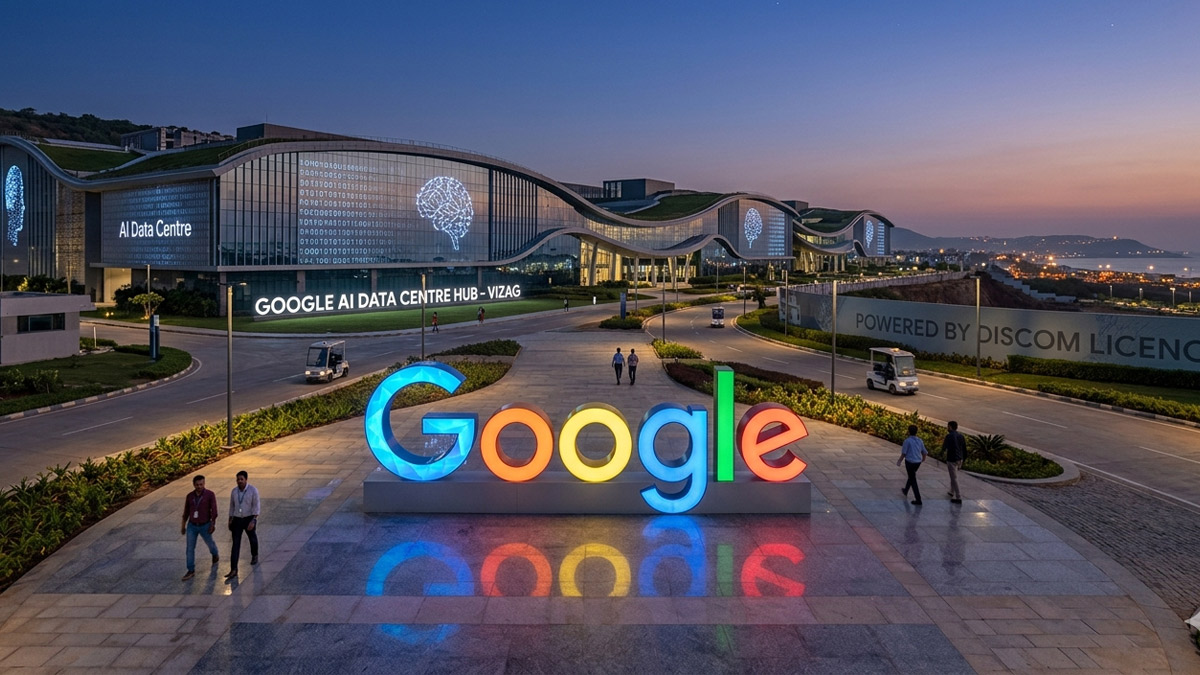
VISAKHAPATNAM: Google has secured a rare electricity distribution company licence in Andhra Pradesh, marking a decisive shift from being just a power consumer to becoming a power distributor for its upcoming mega data centre hub in Visakhapatnam.
The move effectively rewrites the rulebook for hyperscalers in India. Instead of relying on state utilities, Google will be able to procure electricity directly from generators, including its own renewable sources. This not only cuts out intermediaries but also gives the company tighter control over supply, reliability and long-term costs.
For a business where electricity can account for up to 60 per cent of operating expenses, the economics are hard to ignore. Even more critical is uptime. Data centres demand near-perfect reliability, and owning the distribution layer allows Google to manage outages and load balancing with far greater precision.
At the heart of the plan is a sprawling 1-gigawatt data centre ecosystem spread across more than 600 acres in three locations near Vizag. With an estimated investment of $15 billion over five years, the project is set to become India’s largest single foreign direct investment and Google’s biggest AI-focused facility outside the United States.
The campus is being designed with artificial intelligence workloads in mind, housing the company’s custom tensor processing units to power services such as Gemini, Search and Google Cloud. In scale, the planned capacity is comparable to powering a small city.
Google is not building alone. It has partnered with Adani Infrastructure to develop the physical campuses, while Bharti Airtel will set up an international subsea cable landing station. This connectivity backbone is expected to link the hub directly to a dozen countries, ensuring low latency for global data traffic.
Vizag’s coastal location plays a key role in that strategy. It enables direct access to subsea cables and provides the large volumes of water needed for cooling data centre operations. Equally important is policy backing from the Government of Andhra Pradesh, which fast-tracked approvals and granted the uncommon discom licence to anchor the investment.
Groundbreaking is scheduled for April 28, 2026, with phased commissioning expected to begin by July 2028.
The broader signal is clear. As AI workloads surge, hyperscalers are no longer content plugging into existing infrastructure. They are beginning to build and control it. In Vizag, Google is not just setting up a data centre, it is wiring up its own future.







