Brands
Auto Brands tune in to Entertainment TV channels to tackle inventory surplus

Mumbai: As Diwali, India’s most radiant and cherished festival, approaches, the season of joy and prosperity stirs excitement across the country. The festive atmosphere peaks with ‘Dhanteras,’ a day when buying gold, new homes, and cars is seen as a harbinger of good fortune. This year, India’s top auto brands are seizing the moment, fueling their promotions through India’s most powerful advertising tool—Television. With an estimated 7.3 lakh cars sitting unsold, manufacturers are going all out, lighting up prime-time GEC shows and blockbuster movies to spark demand and give a festive boost to their sales projections, which hover at a modest 4-5 per cent growth.
BARC data reveals that auto brands have substantially increased their activity on linear TV. In September 2024, the four-wheeler segment saw a 20 per cent spike in the number of active advertisers, with leading names like Hyundai, Skoda, Maruti, Tata Motors, and Volkswagen investing heavily in ads, particularly on Hindi entertainment channels. Brands like Hyundai Alcazar and Skoda returned to TV to promote their facelifted models, while new entrants Tata Curvv and Citroën Basalt have leveraged linear TV to make a splash. Key Players like Honda and PCA Automobiles resumed TV campaigns in August 2024 after a year-long hiatus.
The two-wheeler segment recorded an even bigger jump, with a 54 per cent rise in advertisers during the same period. Bajaj Auto, Classic Legends and Eicher Motors have all made a return to TV advertising. Yamaha India took an aggressive approach, ramping up its entertainment ad activity by 2.5 times in July – Sep 2024 compared to the same period last year. These efforts underscore the medium’s ability to create memory structures that build brand recall and drive sustained growth.
Why television makes sense for auto brands
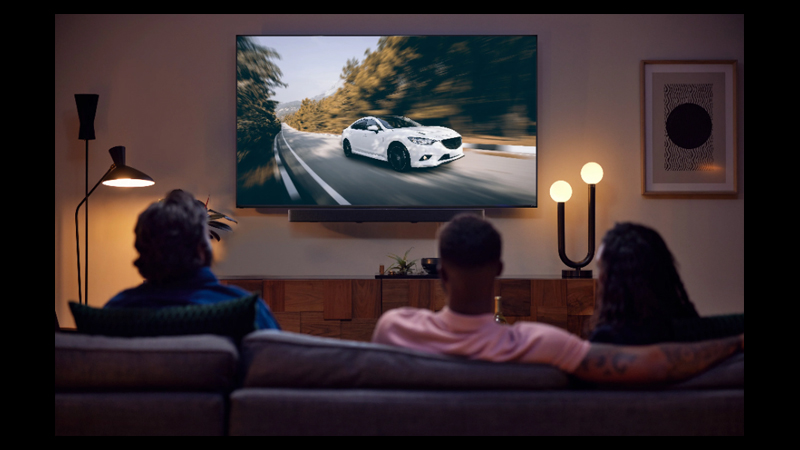
Larger-than-life visuals on a large and a high degree of viewer attention make Entertainment channels an essential platform for auto brands to boost awareness and brand consideration. More importantly, the co-viewing nature of linear TV typically leads to higher conversations which induce more search interest, more customer inquiries and increased website traffic, ultimately translating to showroom visits and sales.
Yamaha India, general manager, marketing strategy division, Vijay Kaul, “This festive, we launched our campaign with TV towards the end of September, focusing on tactical promotion to build top-of-mind (TOM) awareness and drive brand consideration. Linear TV and print remain the key mediums for reaching a broad audience, given TV’s unmatched reach. Additionally, the campaign is bolstered by influencer marketing and performance marketing to engage the lower funnel, helping to generate dealership walk-ins, leads, and boost bookings in the run-up to Diwali.”
Proven impact of TV ads on sales performance
If one studies past data, there is a strong correlation observed between a high decibel TV campaign and car sales performance – be it established car models or newly launched ones.


For example, Maruti’s compact SUV Fronx, launched in April 2023, experienced a 38 per cent sales increase in Q3 & Q4 of 2023. Similarly, Kia Carens & Maruti Suzuki Grand Vitara ran a strong campaign in the quarter when they launched and recorded a 50 per cent jump in sales in the subsequent quarters. Even existing car models like Kia Seltos and Maruti Brezza saw a significant boost in sales after a TV campaign last year.
With television’s broad reach across a spectrum of audiences and unique ability to capture attention, brands are not only addressing immediate sales needs but also investing in long-term brand equity. This festive season, television stands firmly as the linchpin of automotive advertising, linking brands and buyers at a moment when the glow of Diwali could well illuminate the road to greater prosperity.






