MAM
Ather powers up revenue, trims losses this quarter
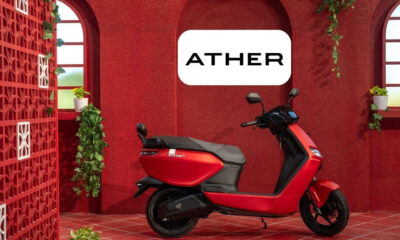
MUMBAI: The Bengaluru-based electric scooter maker, Ather Energy Limited, posted a zippy rise in revenue for the quarter ended 30 September 2025, even as losses narrowed compared with last year’s slowdown.
The company’s revenue from operations surged to Rs 8,989 million from Rs 5,835 million a year ago, reflecting growing demand for its e-scooters. Total income stood at Rs 9,407 million, up from Rs 5,989 million in the same period last year.
Despite the solid topline, Ather reported a loss of Rs 1,541 million for the quarter, an improvement from Rs 1,972 million in the year-ago quarter. The firm attributed the performance to better operating leverage and improved cost efficiencies.
For the half year ended 30 September 2025, revenue jumped to Rs 15,435 million, compared with Rs 9,440 million in the same period of 2024, while losses stood at Rs 3,323 million, down from Rs 3,801 million.
The company, which went public earlier this year, also strengthened its balance sheet, its total assets more than doubled to Rs 44,434 million from Rs 21,006 million as of March 2025, aided by fresh equity from its IPO.
Ather noted that temporary supply disruptions due to China’s export ban on rare earth magnets affected some manufacturing processes, prompting it to defer certain government incentive claims worth Rs 192 million.
The results were approved by the board on 10 November 2025 and reviewed by Deloitte Haskins & Sells, which issued an unmodified report.
With the EV wave accelerating, Ather seems to be fine-tuning its gears, leaning into growth while keeping an eye on the cost curve.

Brands
Hyundai and TVS Motor partner to develop electric three wheelers
Joint development pact targets last mile mobility with localisation push
MUMBAI: Three wheels, one big ambition and a charge towards the future. Hyundai Motor Company and TVS Motor Company have signed a joint development agreement to co-create electric three-wheelers (E3Ws), aiming to crack India’s complex last-mile mobility puzzle. The collaboration moves beyond concept talk into execution mode, building on the E3W prototype first showcased at the Bharat Mobility Global Expo 2025. The goal now is clear, design, develop and commercialise a purpose-built vehicle tailored to Indian roads, riders and realities.
Under the agreement, Hyundai will lead design and co-development, bringing its global R&D muscle and human-centric engineering approach to the table. TVS Motor, meanwhile, will anchor the product on its electric platform, leveraging deep three-wheeler expertise and local market insight. It will also handle manufacturing and sales in India, with an eye on exports down the line.
The timing is strategic. India remains the world’s largest three-wheeler market, where affordability, durability and adaptability often outweigh sheer innovation. The upcoming E3W aims to strike that balance combining advanced technology with practical features such as adaptive ground clearance for monsoon-hit roads, improved thermal management for tropical climates, and flexible interiors suited for passengers, cargo or emergency use.
A key pillar of the partnership is localisation. Major components will be sourced and manufactured within India, a move expected to strengthen the domestic supply chain, create jobs, lower costs and improve after-sales support.
The shift from prototype to production will involve rigorous testing, certification and refinement to meet regulatory standards and consumer expectations. Dedicated cross-functional teams from both companies are already in place to accelerate timelines.
At a broader level, the tie-up reflects a growing trend in mobility, global players partnering with local specialists to navigate emerging markets. For Hyundai and TVS, the bet is that combining scale with street-level insight could unlock a new chapter in sustainable urban transport, one that runs not just on electricity, but on relevance.