Connect with us

MAM

ASCI cracks down on false claims in education ads

Published

on

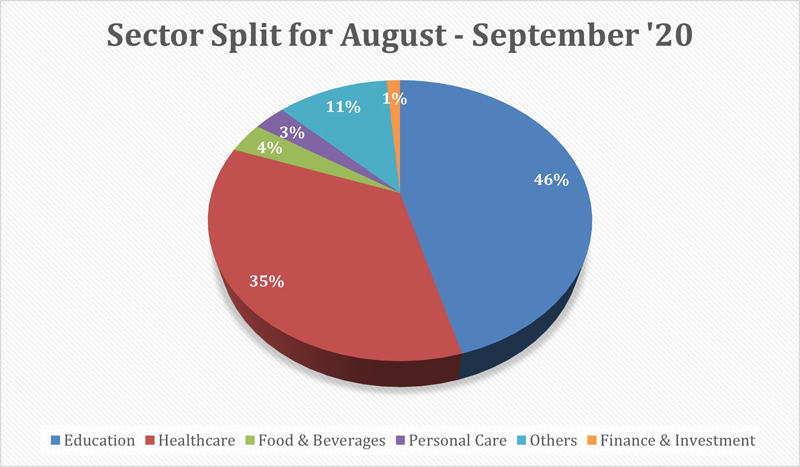
MUMBAI: The Advertising Standards Council of India (ASCI) has cracked down on advertisements from the education sector which made misleading and false claims. During August and September, the regulatory body noticed a sharp rise in advertisements fielded by educational institutes which tried to pass off fake claims and upheld complaints against 101 such ads.   

Claims such as top of their field, ranking no.1, 100 per cent job placements, best institute, 100 per cent passing rate, were the most used red flag terms that violated ASCI’s code. One online learning app claimed to be the best and pioneer of live online classes. Many educational institutions didn’t have substantial data and surveys to support the claims they were making and the Consumer Complaints Council (CCC) of ASCI recommended that these advertisements be declared misleading.

In the health sector, with advertisers are trying to leverage consumers’ fears and insecurities amid the Covid2019 pandemic, ASCI cracked the whip on 59 ads which falsely claimed to cure or prevent the infection. Working together and synergizing efforts with the ministry of AYUSH, ASCI has constantly been working towards eliminating such false claims for consumer protection.

Advertisement

The self-regulatory body also looked into non-healthcare advertisements, wherein a company contended that their paint protected home owners from germs, a clothing company claimed to kill 99 per cent germs, while another professed their fabric was anti-Corona. There was even an instance of a sweet confectioner claiming their sweets could combat COVID 19 and improve the immune system. There was a grocery chain that said they would refund their full grocery bill if their customer tested positive for Covid2019 within 24 hours of shopping at their store. These advertisers were told to modify such claims or withdraw their advertisements.

There were some interesting cases flagged in the finance and investment sector too. ASCI received a unique direct complaint from a consumer regarding a campaign TVC run by a leading loan company. The TVC had people covering their mouth only till their nose with the mask. The CCC concluded that such advertisements misuse the Covid2019 situation and upheld the complaint.

ASCI also upheld misleading ad claims made on various digital platforms like Instagram, Twitter and Facebook. Many such claims were taken up by ASCI suo motu.

Advertisement

Overall, ASCI looked into complaints against 317 advertisements during August-September period, of these 64 were promptly withdrawn by advertisers on the council’s intervention. Of the remaining 253, complaints against 221 advertisements were upheld.
ASCI secretary general  Manisha Kapoor said: “ASCI, is now in its 35th year since inception. COVID-19 related claims as well as misleading education claims continued to dominate the kind of complaints we received at ASCI during this period. The independent consumer complaints council (CCC), which comprises members of civil society as well as industry, jointly view such advertisements and adjudicate. The CCC goes deep into understanding the underlying complaint and the advertiser response and justification before an opinion is given. ASCI’s only goal is to promote responsible advertising which safeguards consumers.”


Advertisement
Click to comment

Leave a Reply

Your email address will not be published. Required fields are marked *

Brands

Creative Intelligence: Using AI to Predict Which Ads Will Actually Convert

Priyanka Aeron, Director & Co-founder of Thrive Global AI

Published

on

MUMBAI: In a heavily populated digital landscape, simply being creative with your advertising will not guarantee that your ad will be successful. In fact, brands today are producing more content than ever. However, very little of that results in actual engagement or sales. However, Creative Intelligence, powered by AI, is fundamentally transforming the advertising industry.

Creative Intelligence utilizes data, machine learning, and statistical behavioral insights to analyze and predict how well a creative asset will perform prior to it being published. Therefore, marketers no longer have to rely on either their gut instincts or post-campaign analytics for making informed decisions before production. That said, AI-powered creative intelligence greatly improves results and decreases wasted dollars spent.

Moving Beyond Guesswork
In the past, making ads was a mix of gut feeling, experience, and A/B testing. These methods were useful, but reactive by nature. People have already spent their budgets by the time the results are looked at. AI models can find patterns that are linked to higher engagement and conversion rates by looking at huge datasets. These datasets can include things like past campaign performance, audience behavior, and visual elements like color, composition, and facial expressions. This helps marketers guess which ads will do well even before they go live.

Advertisement

Decoding What Truly Drives Conversions
AI-powered creative intelligence allows for an evaluation of advertisements that is not limited to the basic data but also explores the elements of an effective advertisement through subtle reactions; clarity and directness of the ad message and how well the ad captures audience’s attention in the first three seconds. AI can also provide insights into the successful use of advertisements directed to human faces, which connect through eye contact based on media channels, and how advertisements that utilize shorter but clear calls to action may produce more clicks from certain populations. The insights, provided through AI, provide marketers with the ability to think beyond creating more advertising material and additionally create more effective ad campaigns that actually convert.

Personalization at Scale
Consumers expect relevance more than ever. Irrelevant mass messaging is not going to work in a society inundated with information. Hyper-personalization, using AI, allows companies to create content that suits individual segments within their target markets based on their demographics, interests, and behaviors. Rather than having one single message that aims to reach everyone, brands can have many versions of their messages tailored to each segment within the market. Such flexibility is what makes campaigns successful nowadays.

Faster Iteration, Better Results
Another advantage to using AI in creative decision-making is speed. Companies must improvise because their campaign cycles are shorter than ever before, and having the ability to iterate rapidly is more important than it has ever been. There is no greater way to do this work than through AI, as new technologies give brands the ability to test multiple creative avenues and figure out which ones are working well. This reduces a lot of the testing that companies would otherwise have to do and makes the process faster.

Advertisement

With AI, brands can also make creative changes in real-time during a campaign, allowing the, to make vital decisions and adjust their creatives, rather than waiting out. This allows for faster adaptability, well-tested campaigns and reduced lost ad spend.

The Human-AI Collaboration
Even though AI is capable of performing certain tasks, its purpose is not to eliminate human creativity. Successful campaigns require human collaboration with computer intellect since both complement each other. While computers are capable of dealing with massive amounts of information, discovering patterns, and providing predictions, humans are the one to inject stories and emotions into campaigns.

The Future of Advertising
As the complexity of advertising becomes harder with the passage of time, Creative Intelligence will play a significant role in helping marketers formulate a strategic approach. The yardstick that will set standards for determining whether a marketing firm has fulfilled its responsibilities will be the forecasting of future outcomes, as well as personalized content and optimization of creative elements in real-time. In contrast to the existing scenario where the campaigns remain fixed, these campaigns will be capable of adjusting themselves according to the customer interacting with the brand, as well as other trends on social media channels. This will enable brands to offer customers an engaging experience that will exceed expectations. The biggest hurdle marketers will face will be finding ways to utilize these capabilities without compromising branding and enhancing the creativity of the team involved.

Advertisement
Continue Reading

Advertisement News18
Advertisement
Advertisement
Advertisement
Advertisement Whtasapp
Advertisement Year Enders

Indian Television Dot Com Pvt Ltd

Signup for news and special offers!

Copyright © 2026 Indian Television Dot Com PVT LTD