Brands
Apsara launches new brand identity and packaging design

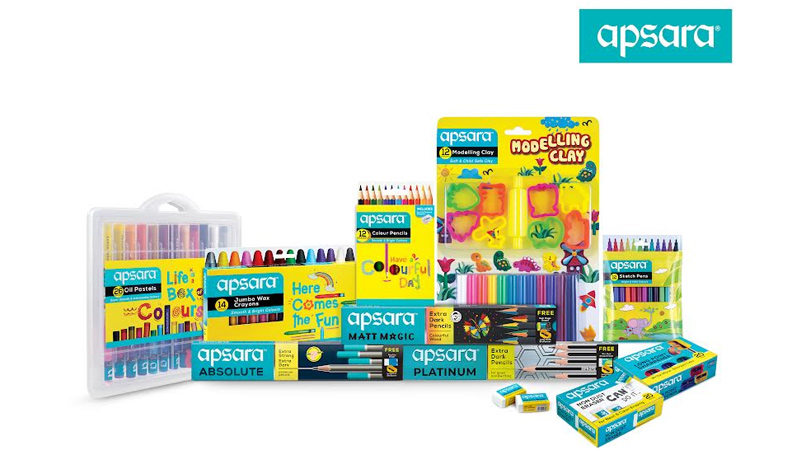
Mumbai: Apsara, the flagship brand of Hindustan Pencils, has launched its new brand identity and packaging design. This transformation aims to redefine Apsara’s market presence with a fresh look that reflects the brand’s commitment to quality and innovation.
Since its inception in the 1960s, Apsara has become a well-known name in stationery, elevating the simple pencil into a symbol of excellence. Through campaigns like “Extra Marks for Good Handwriting,” Apsara has set standards for students and professionals alike. Today, Apsara continues to innovate, demonstrating the impact of a well-designed product.
Apsara has consistently updated its logo and packaging to maintain relevance. The latest rebranding modernises the typeface while preserving its recognition. This update introduces a unified visual identity across all product lines, including art materials, gifts, and stationery, bringing consistency to the brand’s overall presentation.

In this revamp, a turquoise shade has been selected as the primary brand color, unifying Apsara’s diverse product range under a single identity. For the pencil and related categories, where Apsara has a strong legacy, subtle adjustments were made to preserve familiar visual elements and the existing color palette. The art materials and gifting segments now feature a bold yellow color scheme, improving shelf visibility and making it easier for customers and retailers to recognise the products.
“Our new packaging is a testament to our dedication to delight consumers with designs that are as exceptional as our products,” stated Hindustan Pencils president Pradip Ughade. “This revamp not only enhances the customer experience but also strengthens Apsara’s market presence across a broader spectrum of products.”
The agency behind the revamp – Almond Branding founder Shashwat Das added, “This transformation solidifies Apsara’s leadership in the market. The refreshed identity resonates with both our loyal customers and new audiences, reinforcing Apsara’s influence in the stationery and art materials markets.”
Apsara continues to set industry benchmarks with its innovative approach and unwavering commitment to quality. The refreshed branding embodies the company’s vision of evolving with market trends while upholding the core values that have defined Apsara for generations.





Brands
KKR sixes to power EV charger rollout under VIDA campaign
Cricket meets clean mobility as big hits spark India’s charging growth
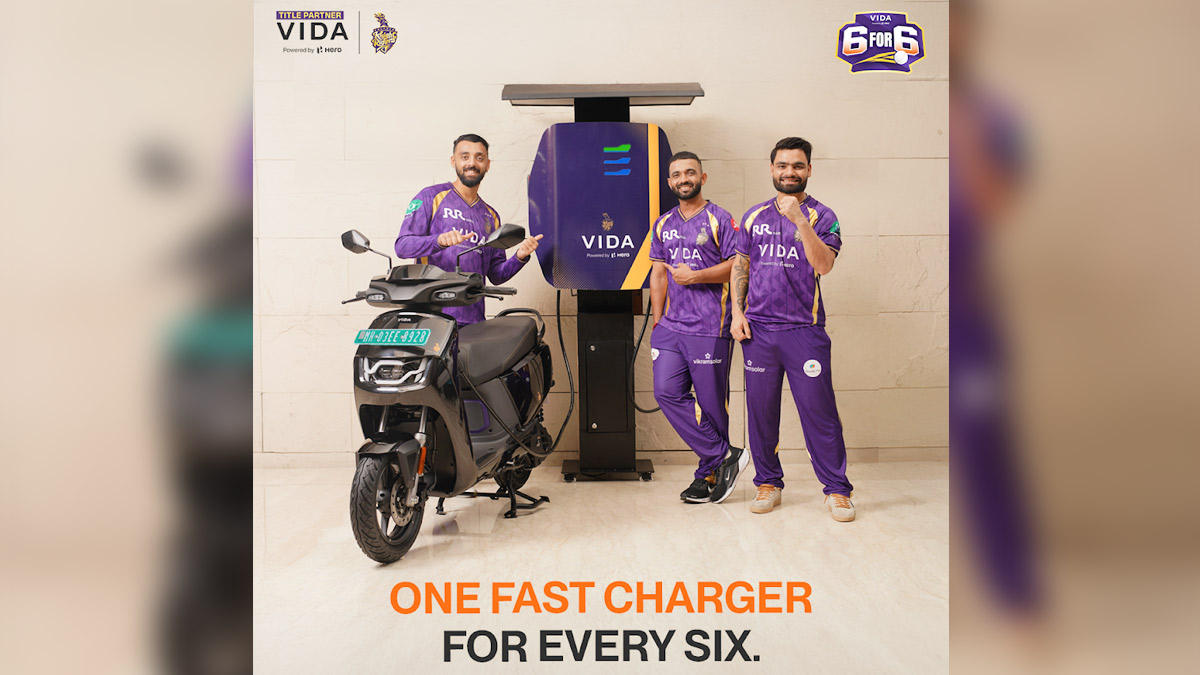
NEW DELHI: VIDA, the electric mobility arm of Hero MotoCorp, has teamed up with Kolkata Knight Riders to launch a campaign that turns cricketing flair into real-world impact.
Titled ‘6 for 6’, the initiative promises to install a 6kW fast EV charger for every six hit by KKR during the ongoing Indian Premier League season. The idea is simple but powerful, as each big hit on the field contributes directly to expanding India’s fast-charging infrastructure.
The campaign builds on VIDA’s growing network, which already spans over 5,300 fast-charging points across more than 430 cities. With EV adoption gaining pace, the brand is using cricket’s mass appeal to accelerate both awareness and infrastructure growth.
Explaining the thinking behind the move, Hero MotoCorp emerging mobility business unit chief business officer Kausalya Nandakumar said, “Cricket has an incredible ability to unite and inspire millions across the country. With the ‘6 for 6’ campaign, we are turning every big hit on the field into a step towards a cleaner and a more accessible mobility future.”
She added that VIDA’s expanding fast-charging network and removable battery technology are designed to make EV ownership more convenient and practical for everyday users.
From the franchise’s side, the campaign is also about giving on-field moments a larger purpose. Kolkata Knight Riders chief executive officer Venky Mysore said, “The ‘6 for 6’ campaign exemplifies the potential of sport as a platform for meaningful, real-world impact. By linking every six to the expansion of EV charging infrastructure, this partnership transforms fan excitement into tangible progress.”
As part of the rollout, VIDA has introduced co-branded charging stations in KKR’s signature colours, with a flagship installation unveiled alongside team players. The chargers are designed for quick top-ups, powering VIDA scooters from zero to 80 percent in about an hour, while also being positioned along key highways to support longer journeys.
The initiative also taps into VIDA’s removable battery system, which allows users to charge using standard household plug points, adding flexibility to the charging ecosystem.
By blending the thrill of cricket with the urgency of clean mobility, VIDA and KKR have found a neat way to make every six count twice, once on the scoreboard and again on India’s road to an electric future.








