Brands
Amit Kumar Nanchahal elevated to brand communications head – international beverages at PepsiCo
Seasoned reputation strategist takes charge of international beverages portfolio after steering corporate narrative in India and South Asia

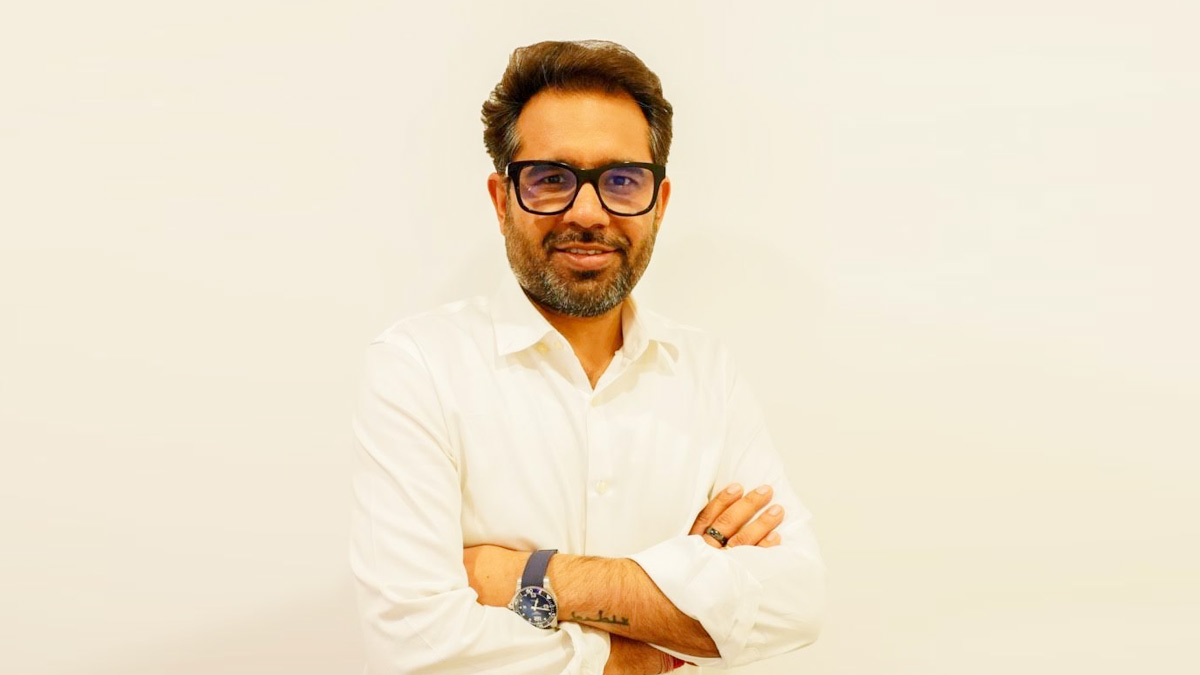
GURGOAN: PepsiCo has handed the communications reins of two of its punchiest brands to a veteran insider. Amit Kumar Nanchahal has been appointed brand communications head, international beverages for Sting Energy and Mountain Dew, marking his latest ascent in a career spanning more than two decades in corporate storytelling and sustainability strategy.
Based in Delhi, Nanchahal will now oversee global communications for Sting Energy and Mountain Dew across international markets, sharpening brand narratives in an increasingly competitive and youth-driven energy drinks segment.
The move follows his stint as head of corporate communications for India and South Asia at PepsiCo, where he drove the company’s food and beverage marketing communications, sustainability messaging, digital outreach and internal communications. Over seven years at the American beverages giant, he has moved steadily up the ladder, from associate director overseeing food category and sustainability communications to the top communications post for international beverages.

Before PepsiCo, Nanchahal cut his teeth in high-stakes corporate environments. At Ola, he led corporate communications and advocacy, positioning the ride-hailing firm as a sustainability-focused mobility player while steering crisis strategy and stakeholder engagement. Earlier, at SABMiller India, he spent nearly a decade managing media relations, internal communications and sustainability programmes in one of India’s most tightly regulated sectors.
His career began at the Confederation of Indian Industry, where he worked on corporate communications and policy engagement, liaising between industry and the Haryana government.
Nanchahal’s credentials include being named among India’s Top 100 Change Makers and a 40 Under 40 honouree by industry platforms. Campaigns under his watch have picked up Cannes Lions, including initiatives such as Lay’s Smart Farm, BioChar, Gatorade Turf Finder and the Lay’s Farm Equal Project, blending brand building with sustainability narratives.
At PepsiCo, the brief is clear: amplify global brand voice, align purpose with performance and keep two high-voltage brands culturally relevant in crowded markets.
If reputation is capital and narrative is leverage, Nanchahal now sits at the fulcrum. In the battle for consumer attention, the energy is not just in the can, it is in the story.






Brands
Dunkin’ Donuts to exit India as Jubilant FoodWorks ends 15-year franchise deal
The quick service restaurant giant is ending a 15-year franchise partnership with the American doughnut chain, even as it renews its Domino’s agreement for another 15 years
NOIDA: Dunkin’ is done in India. Jubilant FoodWorks Ltd, the country’s leading quick service restaurant operator, has decided not to renew its franchise agreement with the American coffee and doughnut chain, and will wind down its Indian stores in a phased manner before December 31, 2026, bringing a 15-year partnership to a quiet, loss-laden close.
The decision, approved by JFL’s board on March 30, 2026, ends a relationship that began with a Multiple Unit Development Franchise Agreement signed on February 24, 2011. JFL will now evaluate and undertake what it described in a regulatory filing as the “rationalisation and/or cessation of certain operations and/or sale, transfer or disposal of assets and/or assignment or transfer of franchise rights,” all in consultation with Dunkin’s brand owners and strictly within the terms of the original agreement.
The numbers tell the story bluntly. In the financial year 2024-25, Dunkin’ India posted a revenue of Rs 37 crore against a loss of Rs 19 crore — a haemorrhage that was always going to test the patience of a parent company recording revenues of Rs 6,104 crore and a profit of Rs 194 crore in the same period. Doughnuts, it turns out, were never going to move the needle.
The contrast with JFL’s handling of its other marquee franchise could hardly be sharper. Even as it walks away from Dunkin’, the company has just doubled down on Domino’s, signing a fresh Master Franchise Agreement on March 31, 2026, granting it exclusive rights to develop and operate Domino’s Pizza stores in India for 15 years, with an option to renew for a further 10.
JFL, incorporated in 1995 and promoted by the Bharatia family, operates a network of more than 3,500 stores across six markets — India, Turkey, Bangladesh, Sri Lanka, Azerbaijan and Georgia. Its portfolio includes Domino’s and Popeyes on the global side, and two home-grown brands: Hong’s Kitchen and COFFY, a café brand in Turkey.
For Dunkin’, India was always a stretch. The brand never quite cracked the cultural code in a market where filter coffee and chai command fierce loyalty and where the doughnut remains, at best, an occasional indulgence rather than a daily habit. Fifteen years, mounting losses and a parent with better things to spend its capital on was always going to be a difficult equation to solve.
The doughnut has had its last day. The pizza, however, is staying.






