Digital
AI, automation & beyond: Navigating digital advertising’s new frontier


Minor changes in the quickly changing advertising scene of today are as significant and upending as those resulting from automation and artificial intelligence (AI). Digital advertising has been transformed by these technologies, which have opened up new creative possibilities, efficiency levels, and precision levels. But as we enter this ‘new frontier,’ it’s critical to look beyond the technical aspects of automation and artificial intelligence and comprehend their wider effects on consumer trust, brand authenticity, and the strategic human touch that cannot be replaced. Here, I want to discuss the many opportunities and difficulties that modern advertisements face.
AI-powered customisation versus real connection
The irony of AI-driven personalisation is that, although technology enables brands to customise experiences like never before, there is a chance that the real human connection that serves as the foundation for customer trust may be lost. Ads are now targeted not just by demographics but also by micro-segments, behavioral data, and even real-time mood analysis thanks to AI’s ability to evaluate enormous data sets. As the chief revenue officer, however, I see an increasing need to strike a balance between this effective targeting and a genuine voice. Customers are astute; they prefer to feel understood by firms rather than taken advantage of. Instead of treating insights as a script, brands should think about how automation might help with authentic storytelling.

Automation’s contribution to innovation beyond efficiency
Automation is frequently boiled down to an efficiency tool that eliminates manual labor, saves money, and saves time. The true potential, however, is in how automation allows innovative and smart brains to push the envelope. Automating tedious processes frees up time for invention, testing out novel ideas, and trying out forms that weren’t previously practical. For example, advertisers may now run innumerable ad versions using dynamic creative optimisation (DCO), which reacts in real time to audience preferences. Beyond efficiency, this flexibility allows for genuine creativity in messaging, audience interaction, and campaign improvement.
Transparency and ethics: AI’s hidden aspect
Ethics is an important but frequently disregarded aspect of AI and automation in advertising, especially when it comes to data protection, transparency, and equity. It is our duty to make sure AI algorithms that determine which advertisements are shown don’t perpetuate prejudice or lead to unintentional exclusion. We must promote openness as stewards of a brand’s message, explaining to audiences how data is used and pledging to follow policies that protect their online privacy. Customers are becoming more conscious of their data rights, and businesses that can openly communicate the ways in which automation is used will gain a sustained competitive edge in terms of customer loyalty and brand trust.
How to draw the line between automation and the human aspect
Workflows can be made more efficient by automation, but not every part of digital advertising should be automated. Machines cannot replace the human empathy and insight needed to craft a message, especially during the strategic formulation stage of a campaign. Automation should complement, not replace, the human aspect in execution. In order to empower human teams to make better decisions, the emphasis should be on integrating tools that give them greater insights. Instead than replacing human creativity, consider automation as enhancing it.
AI’s place in future-proofing techniques
Future success depends on your ability to adjust to the rapid changes in digital advertising. Brands can remain ahead of the curve by using AI’s predictive skills to foresee shifts in consumer behavior before they happen. For instance, AI may assist in predicting future trends by evaluating past campaign data, enabling firms to make proactive strategy adjustments. Advertisers that can anticipate and adjust to changes in consumer demand will always be relevant, while those who only use historical data run the risk of lagging behind. This agility will define competitive advantage in the future.
Creating cross-functional, agile teams with an AI mentality
Companies need teams who can think across silos and work with a digital-first, AI-savvy mindset if they want to fully utilise AI. This is more than just employing machine learning or data science experts. Marketers who comprehend the potential and constraints of data, creatives who can generate ideas in dynamic, data-driven settings, and strategists who know when to rely on the machine and when to consult a human viewpoint are all necessary for the successful integration of AI and automation in advertising. Agile, cross-functional teams that view AI as a cooperative tool rather than a single, all-encompassing force are essential.
The importance of continuous learning in the AI-driven landscape
This digital frontier requires continuous upskilling and adaptability. Technologies in AI and automation evolve, and companies must nurture a culture of learning to stay relevant. As AI begins to shape our approaches to both media planning and creative ideation, the question shifts from how we use AI to how well we use it. Training in understanding data insights, interpreting AI-driven analytics, and maintaining ethical practices will become essential skills for teams navigating this space. For leaders, investing in this education will prove invaluable for staying competitive.
Unquestionably, automation and artificial intelligence are revolutionising digital advertising. However, as leaders in this field, we need to carefully guide this change. We should make use of these technologies to create trustworthy, nimble, and morally sound brands. The goal of our work is always to interact with people in a meaningful and responsible way, even though this new advertising frontier is full of opportunities.
The article has been authored by AdCounty Media co-founder and chief revenue officer Delphin Varghese.







Digital
Ethical AI must benefit society, not dominate it, says WFEB chief Sanjay Pradhan at IAA event
At Mumbai event, ethics expert urges businesses and governments to shape AI responsibly
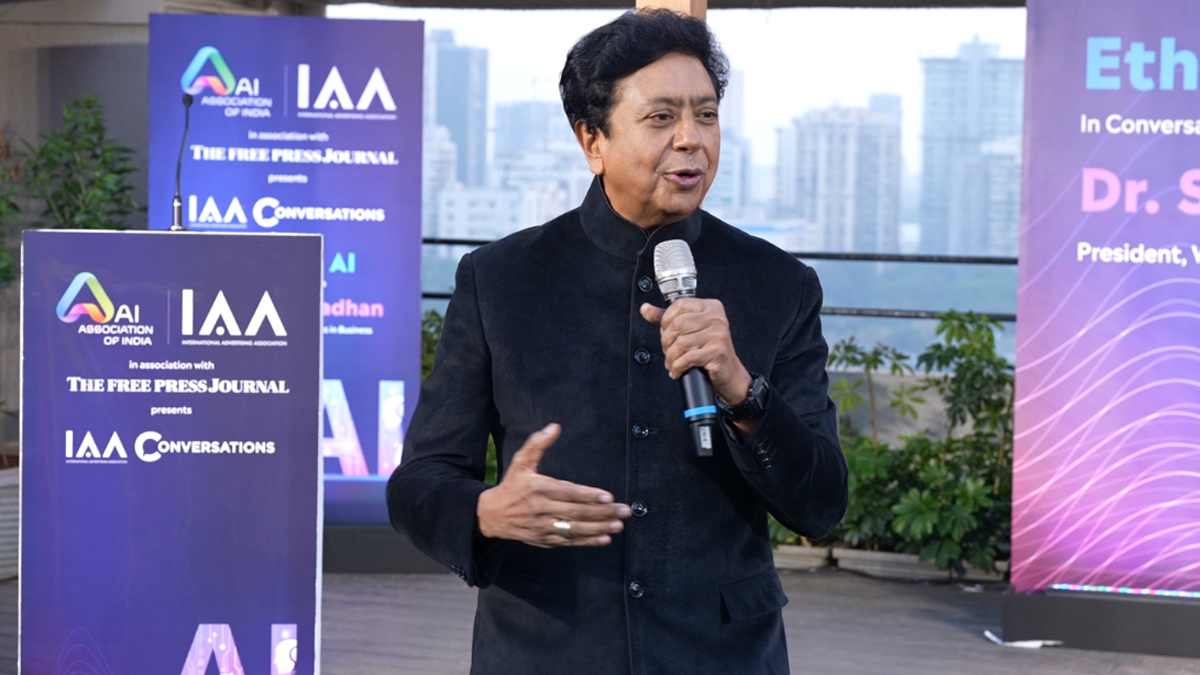
MUMBAI: Artificial intelligence may be racing ahead at lightning speed, but its direction must still be guided by human conscience. That was the central message delivered by Sanjay Pradhan, president of the World Forum for Ethics in Business (WFEB), during the latest edition of IAA Conversations held in Mumbai.
The session was organised by the International Advertising Association (IAA) and the Artificial Intelligence Association of India (AIAI) in association with The Free Press Journal at the Free Press House on 7 March. Addressing a packed audience, Pradhan called for stronger ethical leadership to ensure AI remains a tool that benefits humanity rather than one that governs it.
“Artificial intelligence has rapidly become one of the most powerful technologies humanity has created,” Pradhan said. “It is unlocking breakthroughs in medicine, science and creativity at a pace unimaginable just a few years ago.”
But he warned that the same technology carries serious risks. AI, he noted, can amplify disinformation faster than facts can travel, compromise privacy, deepen discrimination and disrupt millions of livelihoods. Referencing concerns raised by AI pioneers such as Geoffrey Hinton, often called the godfather of AI, Pradhan stressed that the real challenge is not whether AI will shape the world, but whether humans will shape it with ethics and wisdom.
Structuring his talk around four guiding questions, why, what, how and who, Pradhan introduced the audience to WFEB’s emerging AI Ethics Partnership, a global platform aimed at advancing responsible artificial intelligence. He outlined four priority concerns that demand urgent attention: disinformation, bias and discrimination, data privacy and job security.
To make the idea of ethical AI easier to grasp, Pradhan offered a simple metaphor. Ethical AI, he said, is like a three layered cake. The outer layer represents the visible value ethical AI creates for businesses and society. The middle layer is organisational culture that moves ethics from written codes to everyday practice. The innermost layer, however, is the most crucial, the conscience of individual leaders.
Drawing from Indian philosophical thought through WFEB co-founder Ravi Shankar, Pradhan noted that while artificial intelligence can reproduce stored knowledge, true intelligence is boundless and rooted in conscience, creativity and compassion. Practices such as breathwork and meditation, he suggested, can help leaders develop the calm clarity needed for ethical decision making.
The event also featured a discussion with Maninder Adityaraj Singh, chief of staff and head of innovation at Rediffusion Brand Solutions Pvt Ltd, and Yash Johri, lawyer, Supreme Court of India.
Opening the session, IAA India chapter president Abhishek Karnani, highlighted the need for industries to understand and engage with AI responsibly.
“AI has to be befriended and understood,” added Rediffusion managing director and AIAI national convenor Sandeep Goyal. “Its ethical use will determine whether it becomes a friend or a foe.”
As AI continues to reshape industries and societies, Pradhan ended with a simple but powerful call to action. Businesses, governments and individuals must work together to ensure that the algorithms shaping the future reflect human values rather than just cold logic.