MAM
Ads piggyback kids

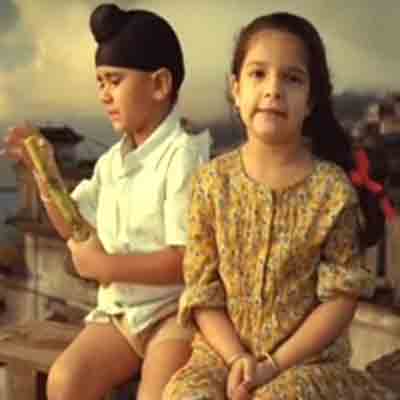
MUMBAI: The latest advertisement to hit television screens is testimony to the fact that advertisers can’t seem to get enough of children when it comes to publicising brands. And this includes brands which don’t target kids; not even remotely.
The ad in question is for IDBI Bank and rolls with a little girl sitting beside her friend, saying she loves to eat ganna (sugarcane) but can’t until she gets a new set of teeth which is why her pal is busy peeling it for her. The commercial ends with a voiceover: ‘Bank aisa, dost jaisa’. Two other ads are part of the campaign conceptualised by Ogilvy & Mather (O&M) and have children speaking of their friends in different scenarios.
O&M NCD Abhijit Avasthi exults: “When we started work on the new campaign of IDBI Bank, we were very clear that we are changing the campaign and not the values that the bank stands for. The idea we came up with does exactly this. In an innocent and charming way, we are telling people ‘What if a bank would do what a friend would do’. When you say something like this, you really don’t need to say much more.”
Indeed, the ad has charmed its way into people’s hearts, especially on social media. But that doesn’t stop one from wondering what kids can possibly have in common with a bank!
Again, this isn’t the first instance where children have been used to sell products and services which they have nothing to do with; be it detergents, power inverters, cars, insurance policies or e-commerce websites. So what is it about kids that advertisers find so attractive? Ad veteran Alyque Padamsee reasons that people notice kids more than they do adults. “It is heart warming to see kids on screen. And who does not love them?” says he.
Padamsee gives the example of Vodafone’s earlier campaign. “Vodafone used a little boy and her dog for its ‘everywhere you go, our network follows’ campaign, and it worked for them. Everyone remembers the commercial and it beautifully conveys the message the telecom company wants to tell people.”
“Anything in life can be told through the eyes of a child. It’s not difficult,” says BBDO’s chairman and chief creative officer Josy Paul who elaborates on the point by giving the example of the agency David (founded in 2000 by BBDO) and adds, “When you joined the agency you got a resignation letter, not an appointment letter. You had to resign from adulthood to join David. The whole philosophy was to think like a child.”
The other factor is that kids today play an important role in family decisions, say buying a car. Remember the ad with the Sardar kid whose car doesn’t run out of petrol ever – that’s how Maruti Suzuki tried to convince people about the car’s performance.
Ernst & Young consultant (media) Mihir Date goes to the extent of calling present-day children decision makers. “What they watch on television is what they want. For example, my nephew only watches Cartoon Network but wants everything shown on the channel, be it a kiddie product or not,” he says.
Peer pressure too plays an important part where kids want what their friends have; points out Date, adding, “And marketers have been smart enough to understand the GenY. It is working in their favour to use kids in advertisements wherein both kids and parents get targeted.”
 There are enough and more examples where brands and their creative agencies have used situations or scenarios where kids fit in beautifully, and the overall image is always happy and colourful. Say Nerolac paints, now being promoted by Shah Rukh Khan, which earlier had the jingle ‘Jab Ghar Ki Raunak Badhani Ho’ with happy scenes of children prancing around while the walls of their homes are being painted in bright colours.
However, there’s a flip side as well to using kids in commercials.
Says ad film director Prahlad Kakar, “If the brand value or what they stand for is not woven well into the story, then the message will be lost.”
Padamsee agrees: “Amitabh Bachchan and Shah Rukh Khan are all over the place. They endorse so many brands; do we remember which commercial stands for which brand? Hardly… Similarly, one might notice and love the kids in an advertisement but that doesn’t mean that people will remember the brand. Many a times, the ad gets noticed but the brand isn’t.”
While this is an open debate, it’s true that putting children in the ad is a sure way of getting viewers to like it, most of the times at least…