MAM
Ad spends in the US to slow down in 2012: Study

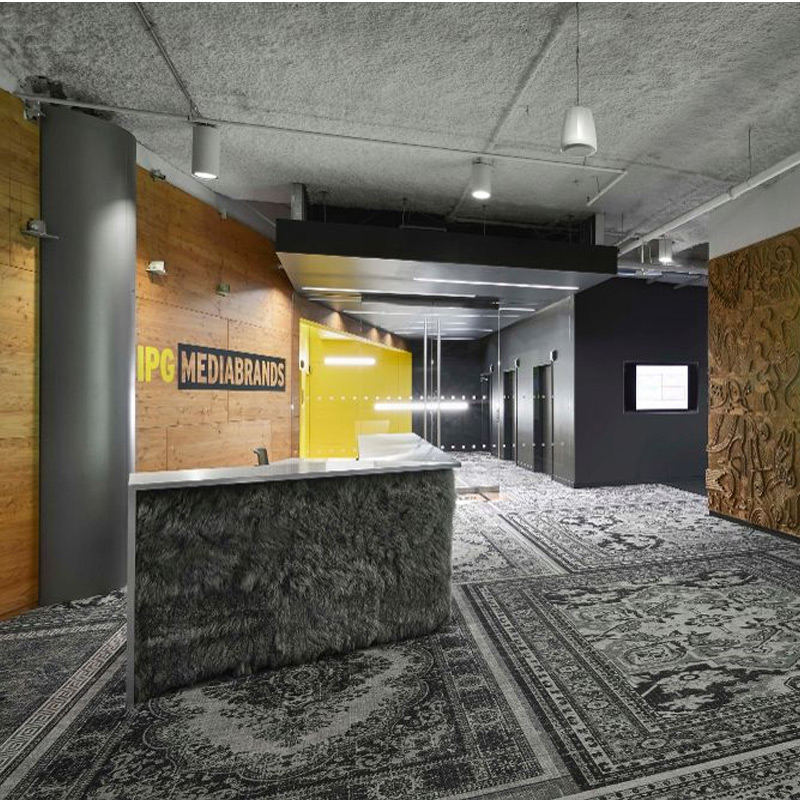
MUMBAI: Magnaglobal a division of IPG Mediabrands has released its updated US Media Owners Advertising Revenue Forecast.
The 2011 forecast remains unchanged at 1.6 per cent growth, including the impact of political and Olympics (P&O) advertising, and it still expects media suppliers to generate $173.5 billion of ad revenues in 2011. Due to persistent weakness in the US economy, however, it has revised the 2012 growth forecast down from 4.8 to 2.9 per cent, including P&O.
A slowdown in real personal consumption expenditures, manufacturing activity, and ongoing problems in the labour and housing markets all contribute to the revised outlook.
The estimates are further impacted by continued disinflation. The forecasts encompass core media categories including Television, Internet, Print, Radio and Outdoor, as well as direct marketing categories (Direct Mail, Directories). Excluding direct marketing components, the revenue growth of core media categories is estimated at 2.9 per cent in 2011 and 4.3 per cent in 2012.
Under the current expectations of a slow-but-positive economic recovery in 2012, media suppliers’ advertising revenues will continue to recover from the severe recession of 2008-2009.
Magnaglobal expects revenues to reach $178.5 billion in 2012, which is still significantly less than the pre-recession level of 2007 ($206.1 billion).
National mass media will continue to gain share due to strength in national online display, online video, mobile and national cable network advertising. Across the three media segments, TV will be the fastest growing medium after Online in 2012, with advertising revenues increasing by 7.1 per cent compared with online’s 11.6 per cent.
Television will benefit from the “quadrennial bonanza.” The agency believes that the 2012 elections and the Summer Olympics will generate incremental revenue of $3.1 billion for television: $2.5 billion in political advertising (the highest spending ever, mostly on local broadcast television) and $633 million around the London Olympics (up 5.5 per cent compared with Beijing 2008, and primarily fuelling National Broadcast TV revenues).
Direct media is exhibiting an increasing discrepancy between traditional activities (Directories and Direct Mail) and digital (Internet Yellow Pages, Paid Search, Lead Generation). Traditional direct media remains significant ($26.2 billion in 2011), but it is increasingly challenged by digital alternatives. Digital direct media, on the other hand, continues to outperform.
Paid Search growth has accelerated this year to 21.7 per cent, and is expected to maintain double-digit growth in 2012 (13 per cent). Recent algorithm improvements have helped accelerate cost-per-click trends and have led brands to rely more heavily on search engine marketing and search engine optimization while eschewing low-quality sites. For 2011, it now expects $31.1 billion in total online advertising, up 19.5 per cent versus 2010.





MAM
Lego brings Messi, Ronaldo, Mbappé, Vinicius together
Campaign clocks 314 million views ahead of FIFA World Cup 2026 buzz.
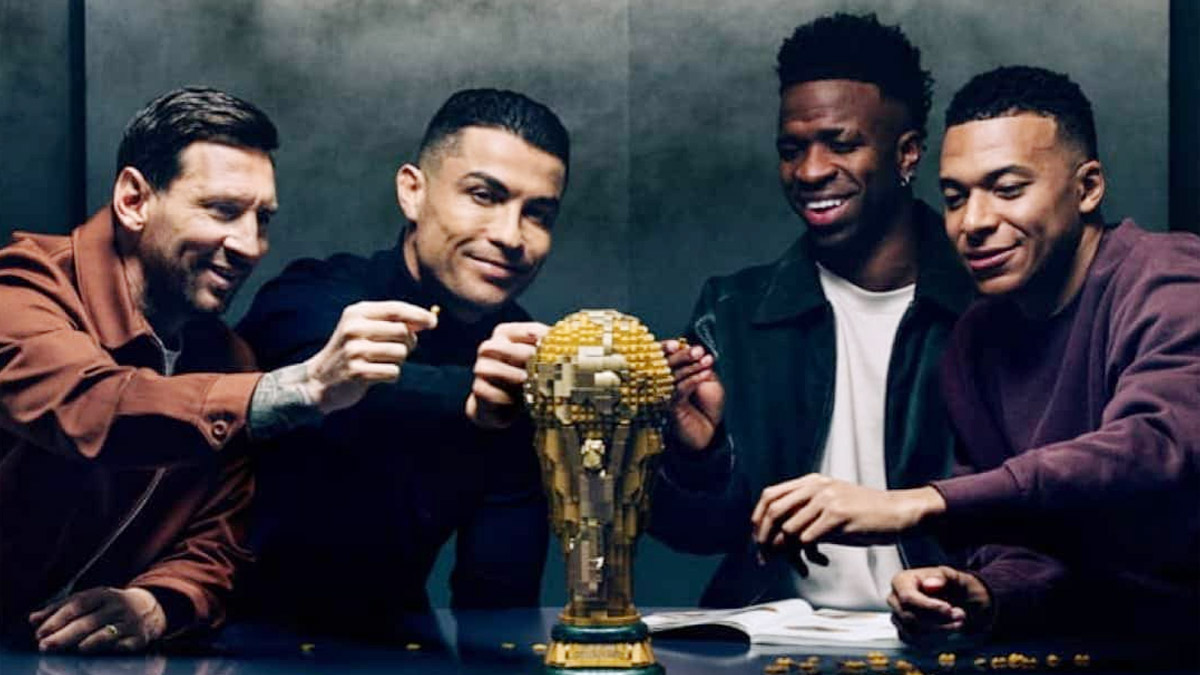
MUMBAI: Four legends, one frame and not a single tackle in sight. Lego has pulled off a crossover few thought possible, uniting Lionel Messi, Cristiano Ronaldo, Kylian Mbappé and Vinícius Júnior in a single campaign ahead of the FIFA World Cup 2026 only this time, they’re building dreams brick by brick.
Titled “Everyone wants a piece”, the campaign features the quartet assembling a Lego version of the World Cup trophy, before placing miniature versions of themselves atop it, a playful nod to football’s ultimate prize. Shared widely across social media, the ad carries a pointed disclaimer: it is not AI-generated, a subtle but telling signal in an era where even reality is often questioned.
The numbers tell their own story. The campaign has already crossed 314 million views on Instagram across the players’ accounts, with fans hailing it as a rare, almost nostalgic moment particularly for the reunion of Messi and Ronaldo, whose last shared campaign ahead of the 2022 World Cup became one of the platform’s most-liked posts.

Beyond the film, Lego is extending the play with exclusive, player-themed sets tied to each of the four stars, part of a broader football-led programme designed to ride the global momentum building towards 2026. The idea, as echoed by the players themselves, leans into the parallels between football and play experimentation, creativity, failure, and triumph.
Messi described the sets as a way to bring on-pitch moments into an imaginative, hands-on world, while Ronaldo called the transformation into a Lego figure a rare honour, blending sport with storytelling. Vinícius, meanwhile, struck a more personal note, recalling childhood moments of building with Lego and framing creativity as a universal language that transcends borders.
The timing is no accident. With the 2026 World Cup set to run from June 11 to July 19 across the United States, Canada and Mexico, and featuring an expanded 48-team format, global anticipation is already building. Argentina, led by Messi, will enter as defending champions, adding another layer of intrigue.
For Lego, the campaign does more than celebrate football, it taps into its mythology. Because when icons become figurines and rivalries turn into play, the beautiful game finds a new kind of pitch. one built, quite literally, by hand.






