Connect with us

MAM

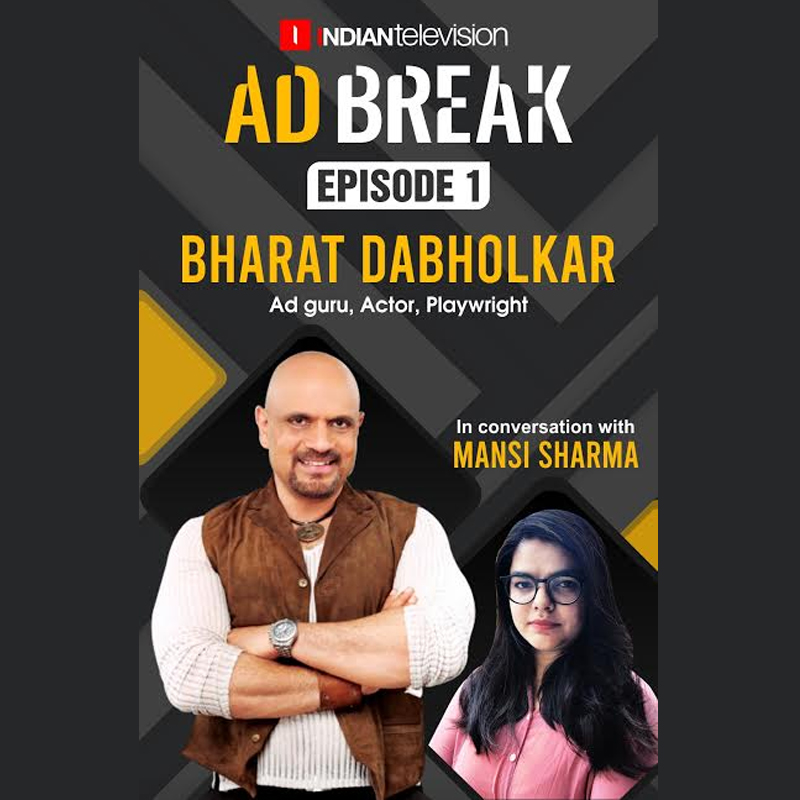
Ad Break | Youngsters lose their idea of creativity when they get into workplace: Bharat Dabholkar

Published

on

NEW DELHI: Bringing the concept of “Hinglish” language to advertising and pioneering, with a few others, the art of including satire and humour in brand-selling, ad-guru Bharat Dabholkar is one of the finest ad-men our industry has. 

Opening the first season of Indiantelevision.com Ad Break, an initiative to outline the creative nooks of the ad-world, Dabholkar opened up on his idea of creativity, his journey in the industry, and the idea of humour in the modern marketing. 

The versatile playwright and actor shares that out of the many roles he has played in his professional career, spanning over four decades, advertising has been the most difficult and challenging one. “In theatre, or in films even, you are aware of who your consumer is.  When I do a play, I know who is watching my play. If I find that something is not working, I can change it before the next show. If I don’t feel like writing a play, I don’t have to write a play for the next two years. If I don’t want to write a film, I don’t have to write a film for the next 10 years. Nobody bothers. But advertising is ‘creativity on demand.’ Advertising means that day-in, day-out all these years, you have to keep coming up with great creative ideas on a daily basis.”

Advertisement

He adds that currently, the advertising industry is facing a dearth of good writers because the younger generation, which is more creative and aware, isn’t interested in being a part of the mainline agencies. Dabholkar adds, “Youngsters have a fantastic idea of how things can be created, which I think they lose when they get into a workplace because then they are told what to do. I think people kill their creativity.” 

Dabholkar notes that in today’s time, people must stay away from three things while writing; religion, communalism and sexism. “These things work with stand-up comedians because they are not selling anything. Their audience will come, have a drink and are of a similar kind mindset. They laugh and if they don’t like you they will curse you and go away. If we are talking about hard selling of products, then you have to be careful.” 

Listen to more interesting anecdotes on creativity powered by Dabholkar’s personal experiences in first break of Ad Break. 

Advertisement

Click to comment

Leave a Reply

Your email address will not be published. Required fields are marked *

MAM

Paramount set to acquire Warner Bros. Discovery in $81 billion deal

Shareholders back merger, combined entity could reshape streaming and studios.

Published

on

MUMBAI: Lights, camera… consolidation, Hollywood’s latest blockbuster might be happening off-screen. Shareholders of Warner Bros. Discovery have voted in favour of selling the company to Paramount in a deal valued at $81 billion rising to nearly $111 billion including debt setting the stage for one of the biggest shake-ups in modern media. The proposed merger, still subject to regulatory approvals, would bring together a vast portfolio spanning HBO Max, CNN, and franchises such as Harry Potter under the same umbrella as Paramount’s own heavyweights, including Top Gun and CBS.

At the heart of the deal is streaming scale. Executives have indicated plans to combine HBO Max and Paramount+ into a single platform, potentially creating a stronger challenger to giants like Netflix and Amazon’s Prime Video. Current market data suggests HBO Max holds around 12 per cent of US on-demand subscriptions, compared to Paramount+’s 3 per cent, together still trailing Netflix’s 19 per cent and Disney’s combined 27 per cent via Disney+ and Hulu.

Paramount CEO David Ellison has signalled that while platforms may merge, HBO’s creative identity will remain intact, stating the brand should “stay HBO” even within a broader ecosystem.

Advertisement

Beyond streaming, the deal would redraw the map for film production. Combining two of Hollywood’s oldest studios Paramount Pictures and Warner Bros., the new entity aims to scale output to over 30 films annually, while maintaining a 45-day theatrical window. Warner Bros. currently commands around 21 per cent of the US box office, compared to Paramount’s 6 per cent, underscoring the strategic weight of the acquisition.

But scale comes with scrutiny. Critics warn that fewer players could mean reduced consumer choice, rising subscription costs, and potential job cuts as the combined company looks to streamline overlapping operations while managing billions in debt.

The news business, too, faces a reset. CNN would join forces at least structurally with Paramount-owned CBS, raising questions about editorial independence and positioning. The merger has already drawn political attention in the United States, particularly given perceived ties between the Ellison family and Donald Trump, though the company maintains that newsroom autonomy will be preserved.

Advertisement

If approved, the deal would mark another milestone in Hollywood’s consolidation wave shrinking the industry’s traditional “big six” studios to a “big four”, with Paramount joining Disney, Universal, and Sony at the top table.

In an industry built on storytelling, this merger may well become its most consequential plot twist yet.

Advertisement
Continue Reading

Advertisement News18
Advertisement
Advertisement
Advertisement
Advertisement Whtasapp
Advertisement Year Enders

Indian Television Dot Com Pvt Ltd

Signup for news and special offers!

Copyright © 2026 Indian Television Dot Com PVT LTD

This will close in 10 seconds