Brands
Accenture finds 82% consumers prefer companies with shared purpose

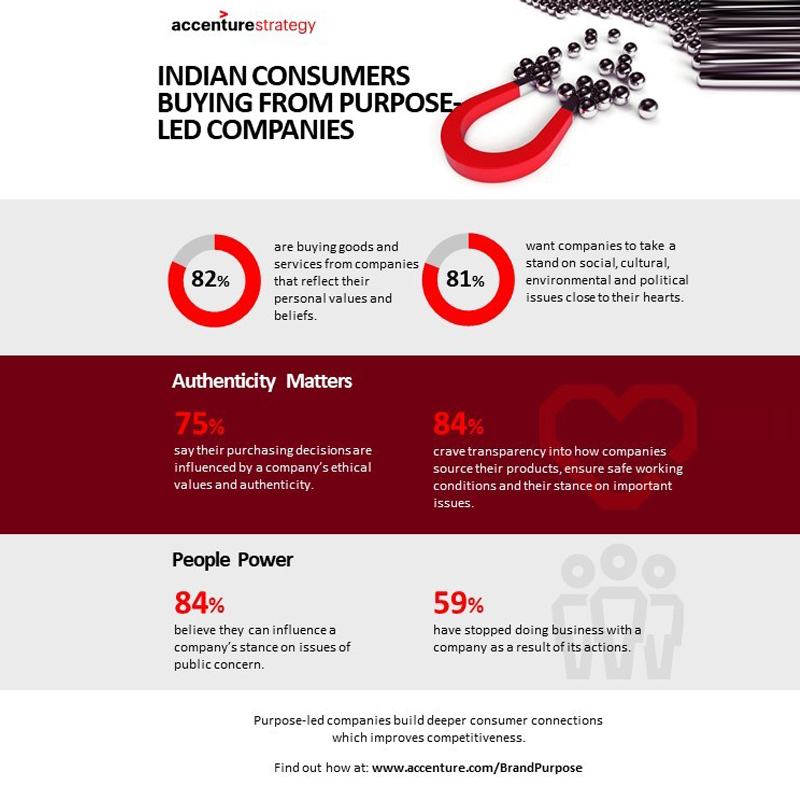
MUMBAI: Accenture released its fourteenth annual ‘Accenture Strategy Global Consumer Pulse Research’ report. The ‘From Me to We: The Rise of the Purpose-led Brand’ revealed that 82 per cent Indian consumers prefer to buy goods and services from companies that stand for a shared purpose that reflects their personal values and beliefs, and are ditching those that don’t, according to new research from Accenture. The report has been created after conducting a survey on nearly 30,000 consumers from around the world, including 660 Indian consumers, to gauge their expectations of brands and companies today.
Accenture India geographic unit and country senior managing director Anindya Basu said, “Technology and media have empowered consumers to take a stand on their opinions and beliefs, and this has had a profound impact on how they evaluate their brand associations. Price, product quality and customer experience continue to be important considerations but a brand’s purpose beyond profit has emerged as a clear differentiator.”
Basu added, “This shift in expectations from ‘give me what I want’ to ‘support the ideals we believe in’ provides brands the opportunity to create stronger and more resilient customer relationships which generate more sales and greater customer lifetime value.”
Other pointers highlighted by the report include that 81 per cent of Indian consumers want companies to take a stand on the social, cultural, environmental and political issues close to their hearts while 84 per cent say their purchasing decisions are influenced by the words, values and actions of a company’s leaders. Consumers are attracted to organisations that are committed to using good quality ingredients (84 per cent), treat employees well (70 per cent), and believe in reducing plastics and improving the environment (74 per cent).
Furthermore, 84 per cent crave greater transparency in how companies source their products, ensure safe working conditions and their stance on important issues such as animal testing. 84 per cent of consumers believe their individual protest actions, such as boycotting a company or speaking out on social media, can make a difference in how companies behave. Forty-eight percent have been disappointed by how a company acted which betrayed consumers’ belief in what the company stands for, and 59 per cent have stopped doing business with the company as a result.
Accenture Strategy managing director, customer insight and growth strategy Vineet R Ahuja said, “Understanding how to instill a sense of ‘brand belonging’ through a clear and relevant purpose is quickly becoming a prerequisite to stay relevant in today’s hyper-competitive world. To usher in the next era of engagement, companies need to focus on creating a community of loyal, engaged and valuable brand proponents. Involving customers, employees and the larger ecosystem of stakeholders to identify and shape shared values will be key.”