Brands
82 per cent of Indians have damaged smartphones, but only 6-8 per cent have active cover
OneAssist-Hansa Research study finds a sharp gap between device damage and protection


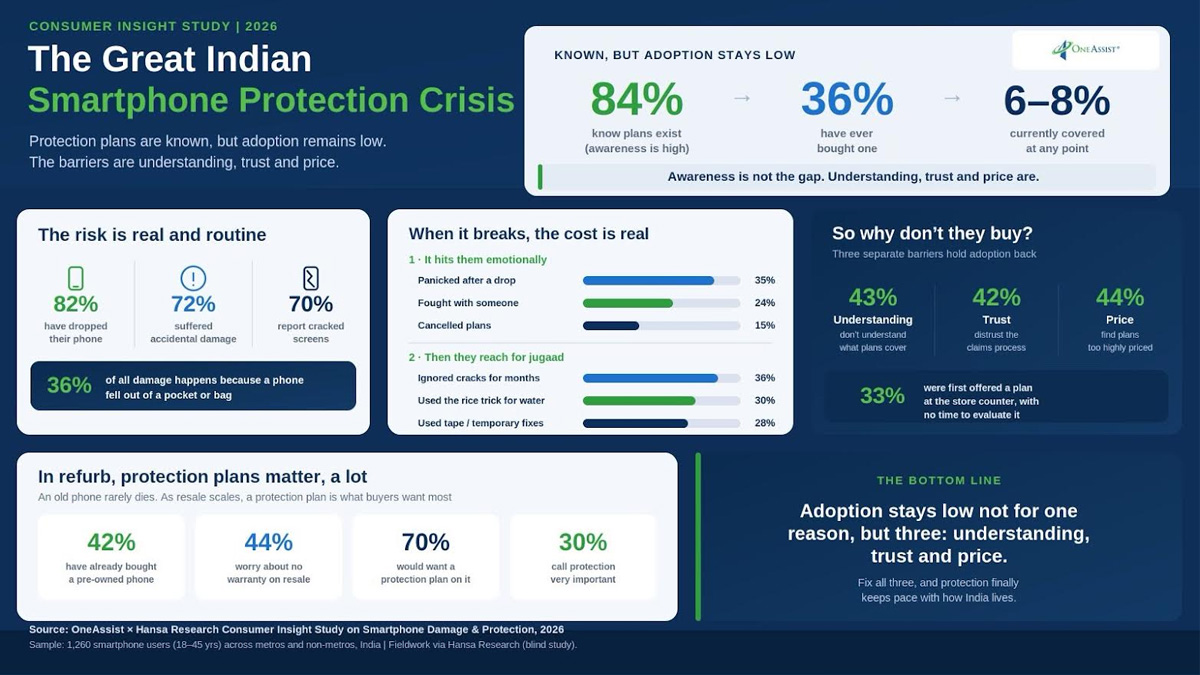
MUMBAI: Drop it, panic, pick it up and hope for the best. That appears to be the familiar smartphone routine for millions of Indians, with a new study finding that 82 per cent of consumers have accidentally dropped their phones and 72 per cent have experienced accidental damage.
The findings come from The Great Indian Smartphone Protection Crisis, a consumer insights report by OneAssist in collaboration with Hansa Research. The study examines smartphone usage, accidental damage and the adoption of protection plans across India.
Despite the widespread risk, only 36 per cent of consumers surveyed said they had used a smartphone protection plan at some point during their ownership journey. Current active protection adoption is even lower, at just 6-8 per cent.
The findings highlight a growing mismatch between how dependent Indians have become on smartphones and how little protection they have against the cost of damage. Phones are now central to banking, shopping, communication, work and entertainment, while rising device prices and longer ownership cycles are increasing the financial stakes when something goes wrong.
Accidental drops and screen damage emerged as common causes of damage. The most ordinary mishap can also prove costly, with phones slipping out of pockets or bags accounting for 36 per cent of accidental damage incidents.
The consequences are not purely financial. The study found that 35 per cent of Indians panicked immediately after dropping their phone, while 24 per cent said they had fought with someone over the incident. Another 15 per cent cancelled plans because of device damage.
The emotional response is particularly pronounced among women. Some 43 per cent reported panicking after dropping their phone, compared with 33 per cent of men.
Women also reported higher levels of smartphone dependence and damage. About 79 per cent use smartphones for social media, compared with 69 per cent of men, while 94 per cent have accidentally dropped their device, against 80 per cent of men. Accidental damage was reported by 79 per cent of women compared with 71 per cent of men.
Domestic mishaps also feature prominently, with child- or pet-related incidents occurring at three times the rate among women compared with men, according to the study.
At the other end of the spectrum, consumers are not always reaching for formal protection or repair services when things go wrong. The study found that 29 per cent have used rice in an attempt to treat water-damaged devices, while between 20 per cent and 32 per cent have used tape or other temporary fixes to hold damaged phones together.
The low adoption of formal protection is being driven by several factors. Consumers cite affordability, limited understanding of protection plans and concerns around the claims process as key barriers.
The research also identifies a significant opportunity in India’s refurbished and pre-owned smartphone market. As consumers hold on to devices for longer, exchange them or buy pre-owned models, protection and warranty offerings could play a larger role in building confidence around the second-hand device lifecycle.
Some 70 per cent of consumers believe protection plans are more important for pre-owned smartphones than for new devices. Another 30 per cent say the availability of a warranty or protection plan would make them more likely to consider buying a pre-owned phone.
The refurbished market is already particularly strong outside major cities. The study found that 54 per cent of non-metro consumers have purchased pre-owned smartphones, compared with 30 per cent of metro consumers.
The report also identifies consumers aged 26 to 30 as India’s most connected cohort, with particularly high dependence on smartphones for communication, digital payments, shopping and entertainment.
The findings suggest that the smartphone protection market has plenty of room to grow, but simply offering more plans may not be enough. Consumers appear to want products that are affordable, easier to understand and backed by a claims process they can trust.
With more than 650 million smartphone users in India, rising device prices and ownership cycles extending beyond three years, the cost of leaving valuable devices unprotected is becoming harder to ignore. For smartphone brands, retailers, insurers and protection providers, the challenge is to make protection feel less like an add-on at checkout and more like a natural part of owning a phone.