
Brands
80 per cent back single nutrient food warnings from day one
LocalCircles survey finds 88 per cent want larger labels and six-month compliance


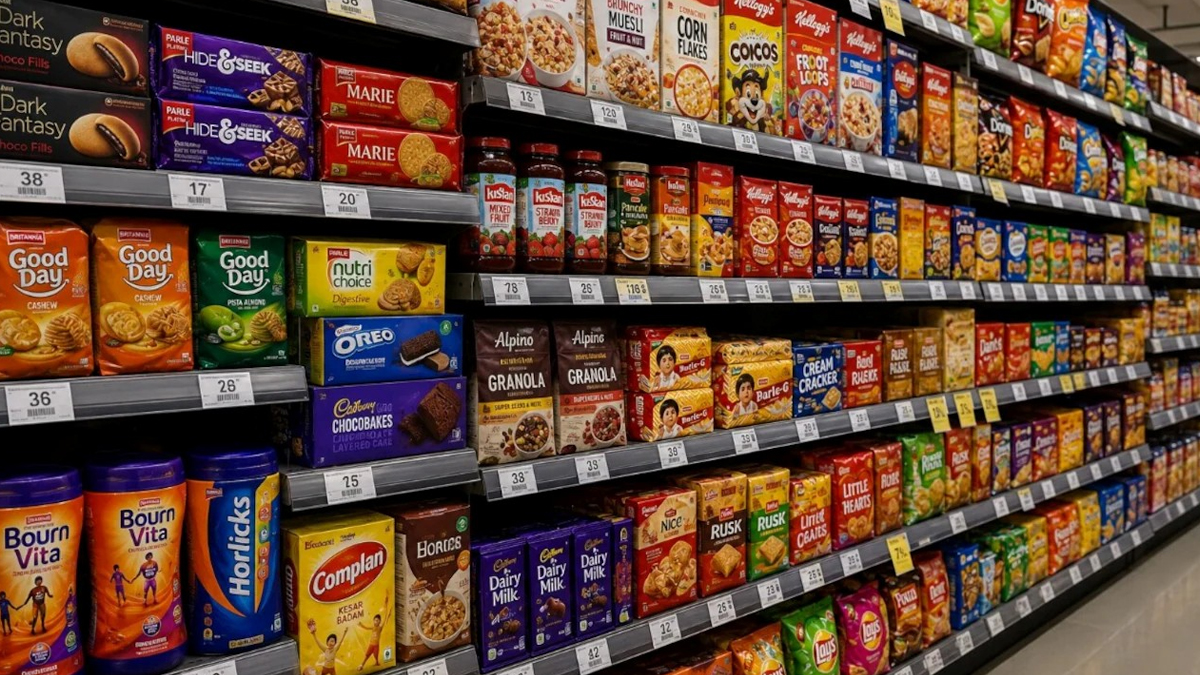
MUMBAI: The writing is on the pack, and consumers appear to want it in bold. A majority of respondents in a LocalCircles survey have backed mandatory front-of-pack warnings whenever packaged food is high in even one of sugar, salt or saturated fat.
The findings come as the Food Safety and Standards Authority of India (FSSAI) considers a proposed red hexagonal warning system for packaged foods and beverages. In an affidavit filed before the Supreme Court on 28 August, the regulator proposed declarations including ‘High Sugar’, ‘High Salt’, ‘High Fat’ and ‘Highly Sweetened Beverage’.
Under the proposed two-stage framework, the first phase would cover products exceeding prescribed limits for at least two of added sugar, salt and added saturated fat, along with certain sweetened beverages. Products crossing the limit for only one nutrient would be brought under a later phase, although no timeline has been specified for it.
LocalCircles received 23,516 responses on the proposed two-stage system. As many as 80 per cent said warnings should be mandatory from the first phase itself when a product is high in even one of the three nutrients.
Only 12 per cent supported the proposed two-phase approach, while 6 per cent said warnings should apply only when a product is high in two or more nutrients. Another 2 per cent were unable to say.
Consumers also want the warning to be hard to miss. Among 23,491 respondents who answered the question on label size, 88 per cent said the warning should be large, clearly visible and immediately noticeable on the front of the pack.
The FSSAI proposal would make the warning text one point larger than the nutrition information table on the back of the package, which is generally printed in six to eight point type. Ten per cent of respondents considered the proposed size adequate, while 1 per cent wanted a smaller warning as long as it was present and another 1 per cent could not say.
The survey also found consumers leaning towards a broader measure of what goes into a product. Of the 20,525 respondents who answered the question, 53 per cent said warnings should be based on the total amount of sugar, salt and saturated fat in a product.
Another 37 per cent wanted both added and total quantities to be displayed prominently. Only 6 per cent supported using added quantities alone, while 4 per cent could not say. In effect, 90 per cent favoured having total nutrient levels reflected in some form.
When it comes to implementation, consumers appear to have little appetite for a long wait. Among 20,068 respondents, 88 per cent said food and beverage companies should implement front-of-pack warnings within six months of the rules being finalised.
Six per cent preferred a 12-month window, while 2 per cent each backed an 18-to-24-month period or more than 24 months. Another 2 per cent could not say.
India’s front-of-pack labelling debate is not new. The first draft framework was notified in September 2022, with the format and scope of the proposed warnings subsequently remaining under consideration.
The survey also takes the warning beyond the physical packet and into the digital shopping aisle. Among 20,435 respondents, 89 per cent said warnings should be prominently displayed both on the product listing and product page of eCommerce and quick commerce platforms before a consumer adds the item to the cart.
Another 2 per cent supported displaying the warning on the detailed product page, taking overall support for some form of online display to 91 per cent.
Seven per cent said a warning on the physical package would be sufficient, while 2 per cent could not say.
The message from the survey is therefore fairly clear: consumers want food warnings to be visible, comprehensive and present wherever the purchase happens, whether the packet is sitting on a supermarket shelf or waiting in a digital basket.