AD Agencies
60 of 61 nutraceutical ads breach ASCI Code, report finds
The self-regulator’s ‘A Pill for Thought’ report flags gaps between ingredient-level evidence and whole-product claims in weight loss, anti-ageing, respiratory health and disease-related advertising


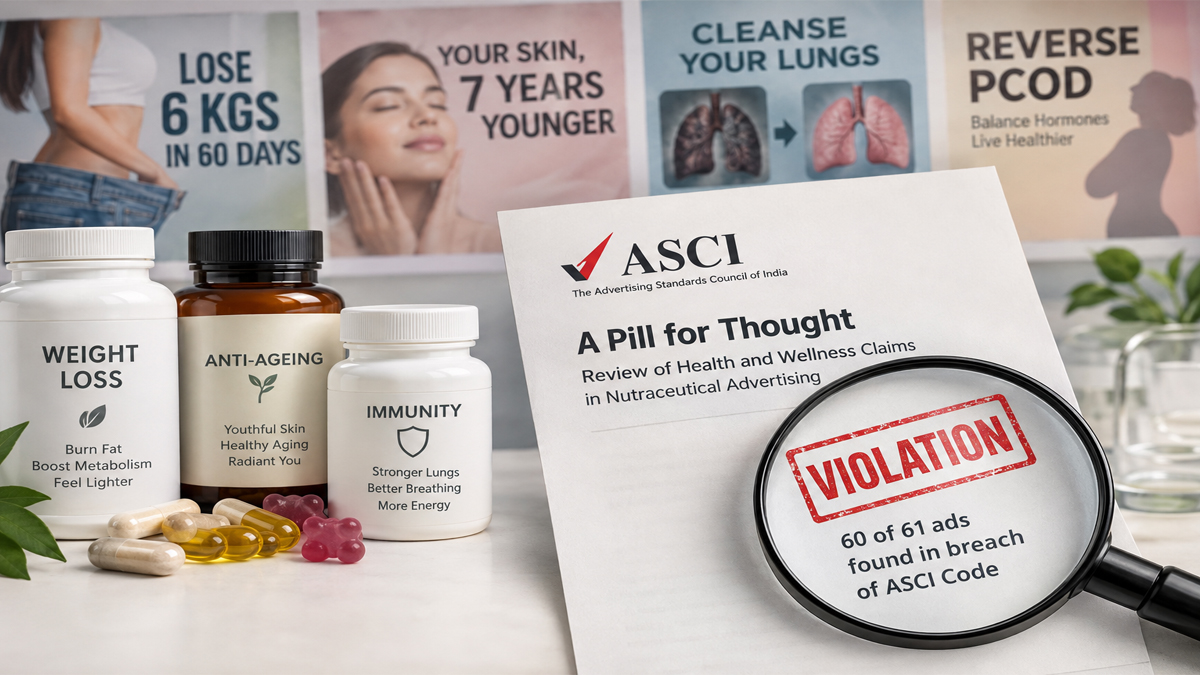
MUMBAI: Big promises, thin proof. India’s advertising watchdog has taken a hard look at the country’s fast-growing nutraceutical aisle, and the verdict is blunt. Of 61 ads evaluated, all 60 where processing is complete were found in violation of the ASCI Code. The Advertising Standards Council of India (ASCI) has released its report, ‘A Pill for Thought: Review of Health and Wellness Claims in Nutraceutical Advertising’, and it makes a case that evidence must come before the promise.
The report is based on a suo-motu investigation of nutraceutical ads between July and September 2026. It highlights recurring concerns around the substantiation of health and wellness claims, including time-bound results and representations that may lead consumers to be misled about the benefits of nutraceutical products.
A market with room to run
The stakes are rising with the market. Valued at $38.77 billion in 2025, India’s nutraceuticals market is projected to reach $1,151.5 billion by 2033, driven by rising health consciousness and demand for preventive healthcare, according to Grand View Research. As the category grows across functional foods, beverages and dietary supplements, advertising plays a growing role in shaping consumer perceptions of product efficacy.
The numbers
One of the 61 advertisements is still under process. Of the 60 where processing is complete, 29 ads were not contested, and were modified or withdrawn by the advertiser without contest. The 31 advertisers who contested the objections failed to provide adequate substantiation for the claims made in their advertisements. Put simply, not one advertiser that fought back could back up its promises. Every ad evaluated needed some modification.
Where the claims strayed
Weight management emerged as the most prominent theme, followed by skincare and anti-ageing claims, respiratory health, and claims that edged into the treatment of specific diseases. Key violations related to weight management, anti-ageing, skin lightening, UV protection and respiratory health.
The examples are striking. Weight-loss ads promised “Lose 6 kgs in 60 days” and “Your thigh fat will be gone in 12 weeks”, often paired with before-and-after visuals of oversized jeans and shrinking silhouettes. Some supplements and gummies positioned themselves as safer alternatives to prescription therapies for chronic weight management and Type 2 diabetes, claiming to burn fat, curb cravings, boost metabolism and control post-meal blood sugar spikes.
In skincare, claims such as “It helps you to reverse the signs of ageing”, “Your skin, but 7 years younger” and “300% stronger skin defence against UV damage” promised measurable improvements in skin appearance and function. One antioxidant, tocopherol and Omega-3 spray claimed that three under-the-tongue sprays enabled three times faster absorption. Glutathione ads linked sun protection and de-tanning claims with visuals of darker skin becoming lighter, which the report says risks reinforcing the problematic preference for lighter skin.
Respiratory ads claimed to “cleanse” lungs and clear tar from smokers’ lungs, with before-and-after images of lungs turning from black to pink. The report also flagged advertisements claiming to address conditions such as asthma, COPD, blood pressure, cholesterol and PCOS, including a wellness product promoted as able to “reverse PCOD”. Such claims blur the distinction between general wellness support and medical treatment.
The ingredient trap
The sharpest finding concerns method. Often, ingredient-level evidence was used to substantiate product-level claims, without robust evidence that the finished formulation delivered the advertised results. A well-researched ingredient does not make a well-proven product. The report’s lesson is that the strength of the claim must match the evidence, and that significant health claims need robust, product and dose-specific substantiation. Visuals matter too. The report notes that before-after comparisons often amplified claims of rapid, visible results without product-specific proof.
Three patterns
Across the cases reviewed, three patterns emerged.
Claims without adequate proof: Advertisers failed to provide adequate clinical evidence or independent test reports demonstrating that the finished product could deliver the advertised benefits.
Superiority without a benchmark: Terms such as “faster” and “more effective” implied a comparative advantage, but the basis of comparison was not always clear or substantiated.
Promises ahead of proof: Advertised benefits were sometimes communicated without adequate substantiation. When challenged by ASCI, advertisers often chose to withdraw or modify their advertisements rather than provide evidence to support the claims. As the report puts it, substantiation should precede the promise, not follow a complaint.
The regulator’s view
Manisha Kapoor, chief executive and secretary general, ASCI, said: “Consumers turn to nutraceuticals in good faith, often seeking solutions for concerns that directly affect their health and wellbeing. When advertising promises rapid weight loss, reversal of aging or relief from specific health conditions, the evidence must be strong enough to support those claims. Research on an individual ingredient cannot automatically be used to substantiate the efficacy of a finished product. As the category grows, it is important that the strength of advertising claims matches the evidence available, so consumers can make informed decisions, and trust is not compromised by promises that go beyond proof.”
The upside for honest brands
Here is the good news. In a category growing this fast, trust is the scarcest ingredient. Brands that arrive with clinical evidence or independent test reports for the finished product will stand out, and the report offers them a clear map of what to avoid. Through this review, ASCI reiterates the importance of responsible health and wellness advertising, where claims are supported by credible evidence and the overall impression created by words, visuals and promised outcomes is not misleading. For advertisers, robust substantiation is not merely a compliance requirement. It is fundamental to protecting consumers and sustaining trust in the nutraceutical category. A link to the list of cases processed is provided at the end of the report.