
iWorld
Zuckerberg says AI power must stay with people, not machines
Meta CEO outlines a superintelligence blueprint centred on empowerment and control


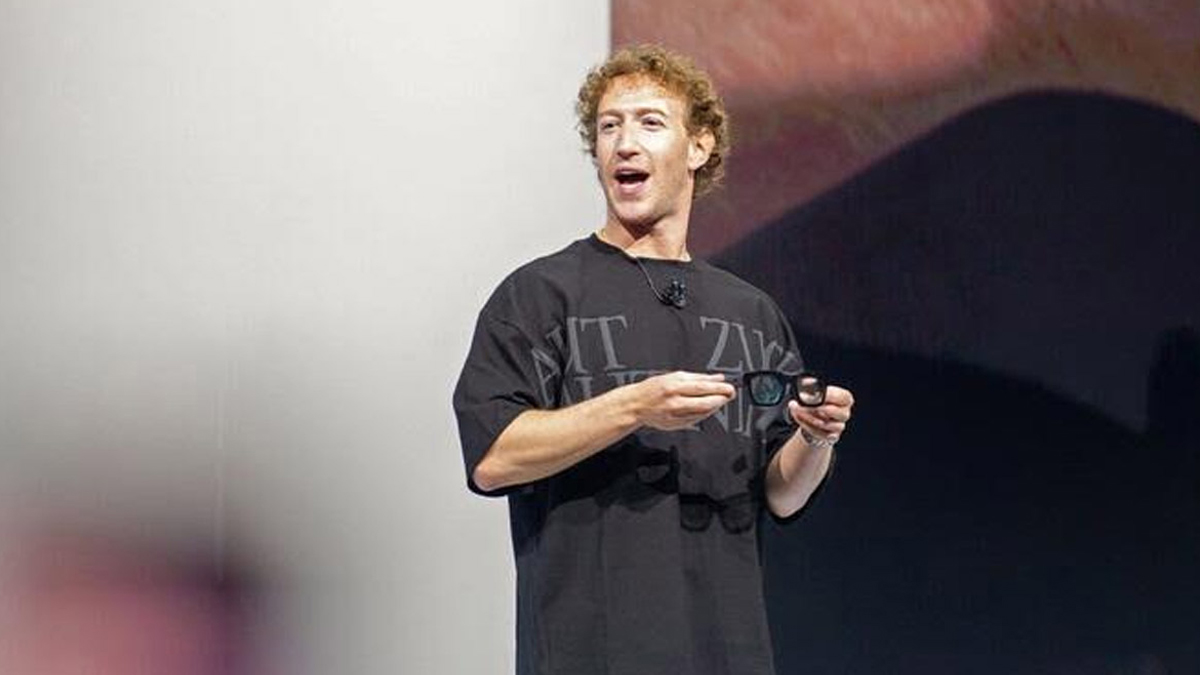
MUMBAI: Power play, but make it personal. Meta CEO Mark Zuckerberg has outlined his vision for the future of superintelligence, arguing that increasingly powerful AI systems should put more power in the hands of individuals rather than concentrate it among a handful of companies, governments or machines.
In a lengthy post titled The Future is for Everyone, Zuckerberg said the defining questions around superintelligence are who gets access to it and what it is ultimately used for. His answer is broad access, personal empowerment and a balance of power rather than a single, centralised AI system making decisions for humanity.
Zuckerberg’s philosophy rests on three principles: individual empowerment as the source of prosperity, invention as the primary purpose of superintelligence, and balance of power as the foundation of safety.
He said future AI could help people create businesses, discover scientific breakthroughs, learn new skills, improve their health and enhance their quality of life.
Personal AI for everyone
A central part of Zuckerberg’s vision is personal AI agents that understand an individual’s goals, interests and preferences and work continuously on their behalf.
These agents could eventually help users manage their careers, finances, health, relationships, homes and hobbies. They could also operate across devices, including smart glasses, allowing people to access AI assistance while remaining present in the real world.
Privacy, he said, will be critical to making these systems trustworthy. Meta plans to offer a fully private mode for personal agents where, according to Zuckerberg, even Meta or another service provider would not be able to see or grant access to a user’s information.
He compared the approach with WhatsApp’s end-to-end encryption, positioning privacy as a foundation for individual control over AI.
The ambition goes beyond assistants that simply answer questions. Zuckerberg expects personal superintelligence to help users create products, develop software, produce content and turn ideas into businesses without requiring large teams or significant upfront capital.
He predicted that this could make the economy more entrepreneurial, with smaller businesses able to achieve much greater scale using powerful AI agents.
Invention over automation
Zuckerberg also challenged the idea that AI’s biggest contribution will be automating existing jobs.
Instead, he argued that invention could become the technology’s most important contribution.
While current AI systems increasingly handle questions and routine work, future superintelligence could help discover new drugs, develop scientific knowledge, improve businesses and solve problems that humans have not yet tackled.
Zuckerberg acknowledged that some jobs will change, just as they did with computers and the internet. However, he argued that individual capabilities could grow alongside, or even faster than, automation if people have access to powerful personal AI.
He pointed to professions such as app developers, social media creators, electric vehicle technicians and data centre operators as examples of jobs that were uncommon or non-existent a generation ago.
He expects AI to similarly create new categories of work, including one-person product studios, world builders, experience designers and businesses built around personalised services.
Rethinking AI alignment
One of the biggest departures in Zuckerberg’s argument concerns AI alignment.
Rather than creating one superintelligence aligned with a single set of values, he argued that AI should be aligned with the goals and values of the individual using it, subject to legal and safety boundaries.
“Alignment should be about helping people pursue the many diverse goals and views held across society rather than a method of enforcing a centralised dogma,” Zuckerberg wrote.
He argued that humanity is not a monoculture and that people will inevitably have different ideas about what constitutes a good life.
For Zuckerberg, therefore, a single superintelligence controlled by one organisation creates a dangerous concentration of power. A world in which billions of people have access to different AI agents, meanwhile, could create a system where competing interests naturally check one another.
A warning against concentration
Zuckerberg said the more dangerous scenario would be powerful AI being developed and controlled privately by a small number of organisations.
If only one business had access to superintelligence, it could potentially outcompete every other business. Similarly, if only one person had a superintelligent lawyer, that person could gain an unfair advantage in court.
His proposed answer is distribution.
In his view, widespread access to AI can create a balance of power similar to the checks and balances found in democratic institutions and competitive markets.
That principle extends to cybersecurity and other risks. Zuckerberg argued that broadly available defensive AI capabilities could make digital systems more secure by allowing more people to identify vulnerabilities and strengthen systems.
At the same time, he acknowledged the potential for AI to be misused for cyberattacks, bioterrorism and other harmful purposes. His proposed approach is to strengthen defenders, including governments and law enforcement, rather than relying primarily on restricting access to advanced capabilities.
Government gets a role, not control
Zuckerberg called for closer cooperation between frontier AI companies and governments.
He proposed that AI labs share intermediate training checkpoints of advanced models with governments, alongside technical staff, so critical infrastructure can be tested and hardened against emerging threats.
The approach, he argued, would improve national security without unnecessarily delaying public access to advanced AI.
He also said governments need access to powerful AI tools to enforce laws and protect national security, while individuals should retain strong protections for privacy and freedom.
Meta backs open-source AI
Zuckerberg’s vision also includes a continued role for open-source AI.
He said open source can help prevent AI power from becoming concentrated among a small number of companies and institutions.
With Meta Superintelligence Labs now established, he said Meta would resume releasing some open-source models soon.
The company also plans to make personal superintelligence available to billions of people, including free or affordable versions.
For users who want more computing power, Zuckerberg proposed a dynamic auction mechanism designed to allocate compute according to demand while keeping prices as low as possible.
Keeping humans in control
The biggest long-term challenge in Zuckerberg’s framework is what happens when AI becomes capable of improving itself.
He raised the possibility of recursive self-improvement, where an AI system could devote significant computing resources to improving its own intelligence and efficiency.
Such a system, he warned, could potentially accumulate disproportionate effective computing power and become a singular superintelligence.
His answer is to ensure that most AI capacity remains directed towards human goals.
Meta and other frontier AI companies, he argued, should build enough computing capacity to support increasingly capable systems while ensuring that the majority of intelligence continues to serve people’s individual objectives.
Zuckerberg also called for monitoring systems engaged in recursive self-improvement and coordination between AI labs if harmful behaviour emerges.
AI infrastructure enters the equation
His argument extends beyond software.
Zuckerberg said the US needs to accelerate the construction of energy infrastructure, data centres and semiconductor capacity to remain competitive in AI.
He also stressed that communities hosting AI infrastructure should benefit through jobs, tax revenue, public services and training.
Meta has proposed a Community Compact approach for its infrastructure projects, alongside a Future Is For Everyone Fund to support communities where the company operates.
The company has also launched America’s Workforce Academy to train skilled workers for infrastructure projects, according to Zuckerberg.
Governance and the AI race
Zuckerberg argued that maintaining US leadership in AI is itself a national security priority.
He warned that excessive restrictions on American AI development could allow geopolitical rivals to close the gap in a field where technological advantages can disappear quickly.
At the same time, he called for closer collaboration between frontier AI companies and governments so national security concerns can be addressed without unnecessarily slowing innovation.
On governance, Zuckerberg said Meta is giving its independent board the authority to approve safety criteria for model releases and assess whether individual releases meet those standards.
He also suggested that similar independent oversight structures could be adopted across the frontier AI industry.
Ultimately, Zuckerberg’s blueprint is less about building one all-powerful AI and more about deciding who gets to wield the power of increasingly capable AI.
His bet is that the safest future is one where superintelligence is widely distributed, personal agents are aligned with individual goals, open-source models remain available and institutions continue to check one another.
For Zuckerberg, the future of AI should not be about putting a machine at the top. It should be about putting more power in people’s hands.






