e-commerce
Why India’s Tech Industry is Positioning Itself as the New Major Player on the Global Market

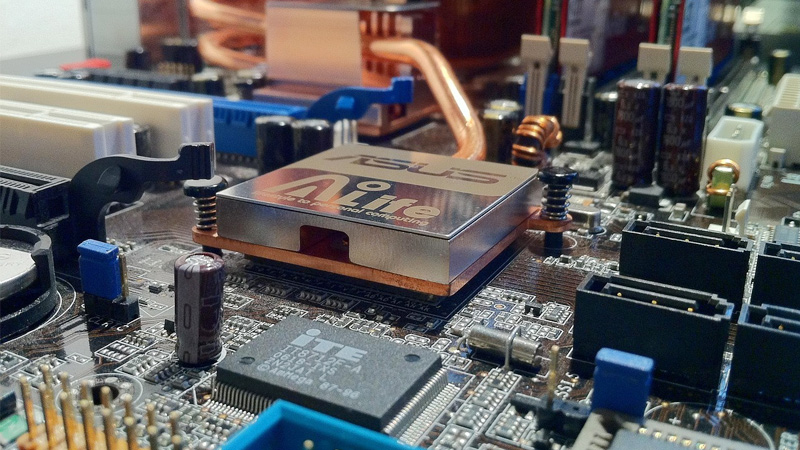
India is home to some of the world’s biggest tech companies, and over the past few years, the country has repositioned itself as a new major player on the global tech scene.
With that said, let’s dive straight in to discover why the Indian tech scene here is currently burgeoning and why it has become a key market for innovation and investment.
Where are the key tech hubs in India?

Key Indian cities such as Bangalore, Hyderabad, and Chennai are the country’s major tech hubs for various reasons, and the digital economy here is rapidly growing due to its large pool of highly talented and skilled developers and engineers.
The key tech sectors with thriving and robust ecosystems in India are the following:
. Data centers and semiconductors
. AI (artificial intelligence)
. Cloud computing
. Cybersecurity
. Gaming
Other tech sectors in India that are also currently growing are IT services, mobile technology, and eCommerce.
The epicentre of India’s technology industry is Bangalore, which has been compared to Silicon Valley in the United States. It’s home to a growing number of tech startups and major tech companies, and it has a well-matured framework fostering growth and innovation.
Tech companies receive plenty of government support via numerous initiatives, and over the coming years, experts predict that India’s tech scene will continue to reposition itself as a key player on the global stage.
Chennai has become a hub of Software as a Service (SaaS) and currently has a burgeoning IT sector. Other Indian cities, such as Noida, Ahmedabad, Kochi, Kolkata, Mumbai, and Pune, have also emerged as key technology hubs thanks to continued investment, a well-matured ecosystem, and a tech-savvy population.
The iGaming scene, which is home to countless legally permitted websites with online slot machines and classic table and card games, also continues to grow thanks to the latest ground-breaking technologies and better regulations.
How has India become a major tech hub?
India has a huge pool of graduates specialising in Science, Technology, Engineering, and Mathematics (STEM), which is helping its tech sector grow, and a significant portion of India’s talented workforce is proficient in English.
The lower labour costs here compared to other developed nations make India an ideal destination for offshoring and outsourcing, and there is continued investment in various key tech sectors, such as cloud computing, blockchain technology, the Internet of Things (IoT), and artificial intelligence.
Government-backed initiatives, such as Digital India and Startup India, have helped foster innovation and support tech startup companies, and according to recent statistics, India is now home to around 130,000 startup companies and more than 110 ‘unicorns.’
There is a huge focus here on nurturing digital infrastructure to help support the continued growth of the tech sector, and India is starting to emerge as a leader in setting high standards on the global stage for data ethics and governance.
Expert analysts who follow the industry closely project that India’s Compound Annual Growth Rate (CAGR) will climb by around 6.5% between now and 2028, and by the end of last year (2024), India’s tech industry achieved an impressive 5.90% (year-over-year) growth.
Final thoughts
Over the coming years, the future looks bright for India’s tech sector. Most of the revenue will be generated from significant exports to other countries in the IT and BPM sectors. It will also continue growing because of internet penetration and an ever-increasing population.
There’s no denying that India has become a true tech powerhouse on the global stage, and it is poised for unprecedented growth over the next decade.
However, there are still many challenges the country must overcome to assert itself as a true global tech leader, so it will be interesting to see what happens as the industry continues to evolve.
Disclaimer: This article does not have journalistic/ editorial involvement of indiantelevision.com. indiantelevision.com group or its websites does not endorse/ subscribe to the contents of the article/advertisement and/or views expressed herein.
The reader is further advised that Online Casino, Betting, Online Gaming , Crypto products, Financial Investments/Engagement , NFTs, Products associated with health, wellness, and food are unregulated and can be highly risky. There may be no regulatory recourse for any loss from such transactions or risk associated with health conditions.
Indiantelevision.com group shall not in any manner, be responsible and/or liable in any manner whatsoever for all that is stated in the article and/or also with regard to the views, opinions, announcements, declarations, affirmations etc., stated/featured in the same. The decision to read hereinafter is purely a matter of choice and shall be construed as an express undertaking/guarantee in favour of indiantelevision.com (indiantelevision.com group) of being absolved from any/ all potential legal action, or enforceable claims. The content may be for information and awareness purposes and does not constitute financial advice.




e-commerce
ONDC names Vibhor Jain MD and CEO; Rohit Lohia joins as CBO, Manoj Thakur as CTO
Leadership formalised as open commerce network sharpens focus on scale and user value

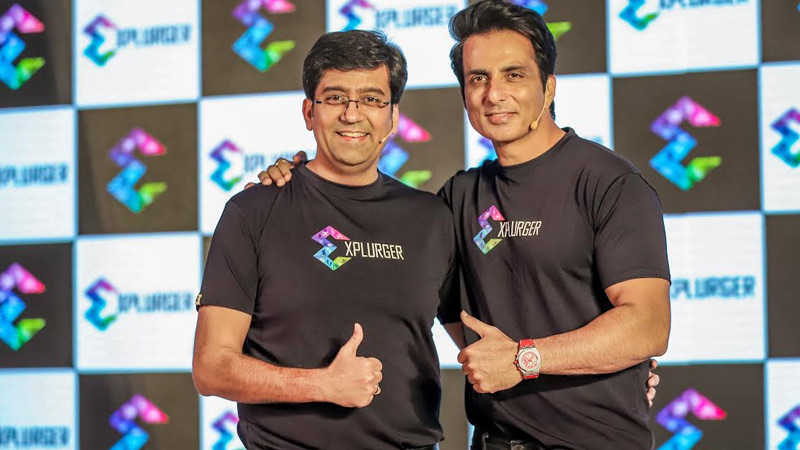
The Open Network for Digital Commerce has formalised Vibhor Jain as managing director and chief executive officer, cementing a leadership transition at India’s ambitious open commerce platform as it pushes for scale and relevance.
Jain, who had been serving as acting chief executive officer since April last year following the exit of Thampy Koshy, steps into the role with effect from 7th April , according to a report by The Economic Times. He previously served as chief operating officer at the government-backed network, which enables buyers and sellers to transact across applications through an open, interoperable system.
Setting out his strategy, Jain underscored the network’s differentiated architecture. “Going forward, we are concentrating on what open, interoperable infrastructure can uniquely enable, things that no single platform has the incentive or the architecture to do,” he said.
He added that the immediate priority is to widen ONDC’s impact across user cohorts often underserved by platform-led commerce. “My priority is to deepen the value ONDC creates for the people it exists to serve: kisaans, karigars, kiranas, gig workers, first-time investors, and daily commuters across India,” he said.
Jain also flagged leadership reinforcement within the organisation, noting that ONDC has “a strong and exciting leadership team in place”, with Rohit Lohia joining as chief business officer and Manoj Thakur as chief technology officer.
With over 18 years of experience spanning entrepreneurship and consulting, Jain brings a track record in technology-led, large-scale transformation programmes and internet businesses. At ONDC, he has been closely involved in shaping strategy and operations as the network seeks to move digital commerce away from platform-centric models towards an open network approach.
Before ONDC, Jain worked with JUMO, where he helped set up the fintech firm’s India operations, and led the India launch of Mobike, handling regulatory, policy and operational aspects of its market entry. Earlier, he co-founded Atlanta Healthcare, an air quality management company, and spent more than a decade in consulting roles at Andersen and EY, advising governments on public policy and technology-driven reforms, including work on the Aadhaar programme and tax systems.
The mandate is clear but the path is complex. As ONDC attempts to rewrite the rules of digital commerce, Jain now carries the burden of turning open architecture into mass adoption, in a market still dominated by platform power.







