iWorld
USD 1 trillion to be spent on telecom and datacom over next 5 years


NEW DELHI: The Asia Pacific region has shown major growth of six per cent year-over-year in the telecom/datacom equipment and software revenue as against 4.5 per cent by North America.
This trend is expected to continue through at least 2018, Market research firm Infonetics Research says. It also projects a cumulative $1.01 trillion will be spent by service providers and enterprises on telecom/datacom gear and software over the five years from 2014 to 2018.

Sales of telecom and datacom equipment and software came globally to $183 billion in 2013, three per cent above the previous year.
According to research data from its 2014 Telecom and Datacom Network Equipment and Software report, Infonetics says the overall telecom and datacom network equipment and software market share leaders are in rank order: Cisco, Huawei, Ericsson, Alcatel-Lucent and ZTE – the same top five vendors with virtually the same shares as the year prior.
Vendor share positions also held steady in the enterprise segment, with Cisco in the driver’s seat and followed distantly by tightly bunched Avaya, Brocade, HP, and Juniper (listed in alphabetical order).
Infonetics Research principal analyst Jeff Wilson said: “Despite the fact that enterprises and service providers are in the middle of massive network upheavals due to the evolution of software-defined networking (SDN) and network functions virtualisation (NFV) technology, the telecom and datacom networking equipment and software market is on track to grow annually through 2018 with the fastest growth coming in 2015.”
Infonetics co-founder and co-author of the report Michael Howard added: “Looking at just the service provider equipment space, we’re seeing a shakeup in vendor market share, with Huawei leapfrogging longtime number-one Ericsson to take the top spot in 2013. While Huawei’s been doing well in a number of regions, China’s economy is a key factor keeping Huawei’s growth so strong.”
The report has compiled worldwide and regional market size, vendor market share, and forecasts through 2018 from all of its reports that track enterprise and service provider gear. It is the majority of all data networking and telecom equipment for service providers, cable companies, and small, medium, and large organisations, excluding consumer electronics.
The 11 major categories of equipment and software tracked in Infonetics’ report include broadband aggregation; broadband CPE; pay TV; optical network hardware; carrier routing, switching, and Ethernet; service provider VoIP and IMS; service provider mobile/wireless infrastructure; service enablement and subscriber intelligence; security; enterprise and data center networks and enterprise communications. Companies tracked include Alcatel-Lucent, Avaya, Brocade, Ciena, Cisco, Ericsson, Fujitsu, HP, Huawei, Juniper, Motorola, NEC, Nokia, Samsung, Siemens, ZTE, and many others.







iWorld
Shemaroome acquires complete OHO Gujarati content library
Platform adds over 30 original web series, starting with Pratik Gandhi’s Vitthal Teedi.
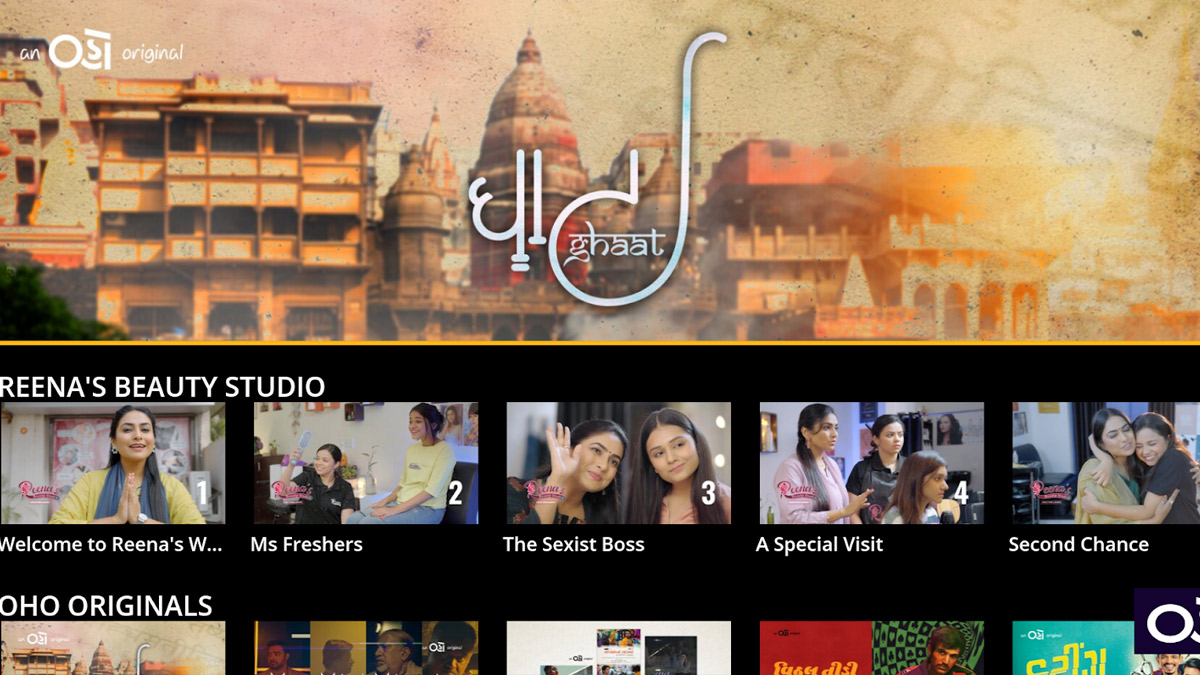
MUMBAI: Shemaroome has just hit the jackpot in the Gujarati entertainment space and this time, it’s a full house of regional stories. Shemaroo Entertainment has announced the acquisition of the entire content library of OHO Gujarati for its OTT platform ShemarooMe. This first-of-its-kind consolidation significantly strengthens the platform’s position in Gujarati digital content.
The deal brings more than 30 original Gujarati web series to ShemarooMe, featuring work from over 450 local actors. It builds on the platform’s growing focus on high-quality, culturally rooted regional storytelling.
Shemaroo Entertainment Ltd., chief operating officer for Digital Business Saurabh Srivastava said the acquisition will make compelling Gujarati stories more accessible to viewers across India and the world. “With our strong connection to Gujarati audiences, we believe these stories can travel far and create an exciting entertainment offering,” he noted.
The first title from the acquired library will stream on Shemaroome from 10 April. It is the acclaimed series Vitthal Teedi, starring Pratik Gandhi in his first and only Gujarati web series role to date. Set in 1980s Saurashtra, the character-driven drama follows a small-time gambler navigating personal ideals against harsh realities. The soundtrack features contributions from Aditya Gadhvi, Jigardan Gadhavi and Geeta Rabari.
This strategic acquisition aligns with Shemaroo’s broader digital growth approach focusing on sustainable expansion and deeper engagement with regional languages through a mix of originals and curated content.
For Gujarati entertainment lovers, Shemaroome has just rolled out the red carpet or should we say, the traditional dhabli for a rich new wave of authentic stories. The platform is clearly betting big that when it comes to regional content, more is indeed merrier.






