
iWorld
Supreme Court asks Centre to examine 18 year social media threshold
Bench seeks statutory safeguards as minors’ platform contracts face legal scrutiny


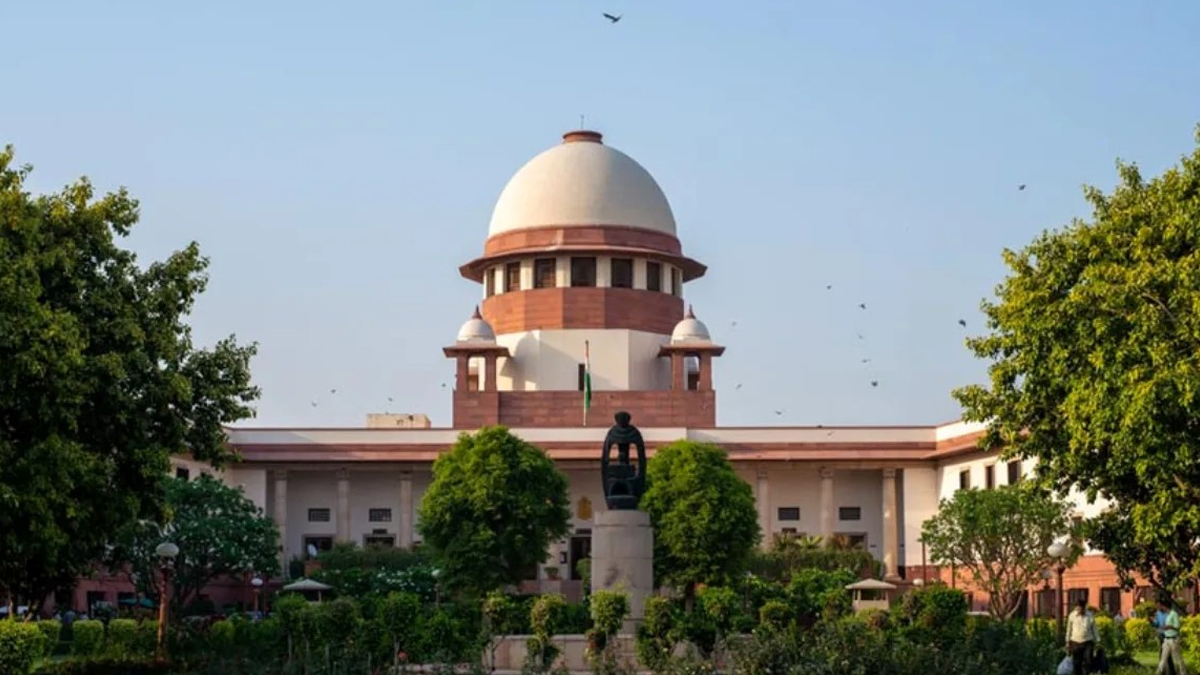
MUMBAI: The age-old question of “Are you old enough?” has found a very modern address, the login page. The Supreme Court has asked the Centre to examine whether social media platforms should be required by law to ensure users meet the 18-year legal threshold before independently creating accounts.
A three-judge bench headed by Chief Justice of India Surya Kant and comprising Justices Joymalya Bagchi and V Mohana was hearing a public interest litigation filed by the Just Rights for Children Alliance (JRCA), which has sought stronger safeguards for minors using social media and other digital platforms. The court indicated that the requirement should not remain merely a guideline and asked whether it could be incorporated into the statutory framework governing intermediaries.
Justice Bagchi asked the Centre to consider directions under the intermediary rules requiring platforms to configure their systems in conformity with Indian law, including an 18-year minimum threshold for membership. Solicitor General Tushar Mehta, appearing for the Centre, said the government would examine the issue and indicated that a parental-consent mechanism could also be considered.
The proceedings do not amount to a final nationwide ban on social media access for everyone below 18. Instead, the immediate issue is whether platforms should be legally required to align their account-creation systems with the existing legal position on minors and contracts.
At the heart of the case is an unlikely piece of digital fine print: the user agreement. The petition argues that creating a social media account involves accepting the platform’s terms and therefore creates a contractual relationship, while Section 11 of the Indian Contract Act, 1872 provides that a person who has not attained majority is not competent to contract.
Section 3 of the Majority Act, 1875 sets the age of majority at 18. The petition therefore questions how minors can independently accept platform terms when they are legally incapable of entering into such contracts.
The plea has pointed out that several social media platforms generally allow users from the age of 13 to create accounts, often through age or date-of-birth declarations. It has sought effective age-assurance mechanisms and restrictions on independent accounts operated by minors.
The Centre referred to the Digital Personal Data Protection Act, 2023 during the hearing. However, the petitioners argued that the relevant provisions would not provide an immediate solution. The Solicitor General indicated that a similar parental-consent regime could potentially be incorporated through another legal framework, with a parent or legal guardian entering into the contractual relationship on behalf of the child.
The bench also examined the existing intermediary framework under the Information Technology Act, including Section 79, which provides the statutory basis for intermediary safe-harbour protection. The court indicated that the government could use the existing rules to require platforms to bring their systems into conformity with Indian law.
The petition seeks safeguards against risks including online grooming, sexual exploitation, trafficking, sextortion, behavioural profiling, misuse of personal data, cyberbullying and exposure to age-inappropriate content. It also proposes that children should continue to be able to access educational content through accounts controlled by parents or guardians.
The case comes amid wider scrutiny of how digital platforms handle child safety. In September, the Supreme Court had sought the Centre’s response to the same PIL, with the petition specifically challenging the ability of minors below 18 to independently enter into contracts with digital platforms.
The government has also been examining the role of existing intermediary rules and data-protection measures in addressing child safety online. The latest hearing shifts part of that conversation from what platforms do with children’s data and content to a more basic question: who is legally allowed to open the account in the first place?
For now, the 18-year threshold remains an issue for the Centre to examine rather than a new nationwide prohibition imposed by the Supreme Court. The next step will be whether the government converts the court’s concerns into an enforceable statutory or regulatory mechanism for platforms operating in India.






