iWorld
Soundscapes of India 2026 brings together 150-plus artists from 20 countries
Three-day Delhi festival combines music showcases with global exchange and industry sessions


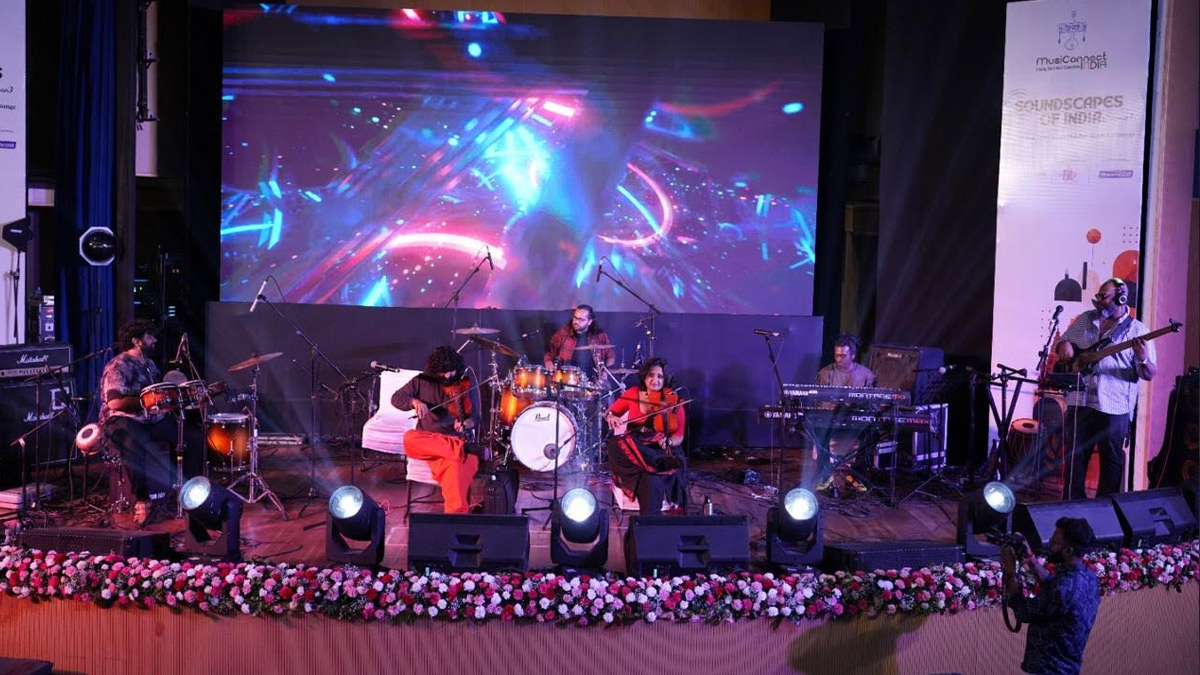
NEW DELHI: India’s music scene found plenty of new stages to play on as Soundscapes of India 2026 brought together more than 150 artists and delegates from over 20 countries for three days of showcases, industry discussions and global networking.
The third season of Soundscapes of India 2026, organised by The Indian Performing Right Society Ltd (IPRS) in association with MusiConnect India, was held from August 29 to 31 at the Dr Ambedkar International Centre in New Delhi.
The festival featured artists from more than 15 Indian states alongside international delegates from Europe, Africa, Australia, North America and the Asia-Pacific region. Its programming combined live music with panels, workshops, pitching sessions and one-to-one meetings aimed at helping Indian music reach international audiences.
A key focus of this year’s conference was how Indian music can become a stronger export category.
Sessions examined the role of cultural exports in building India’s global music presence, with tabla maestro Bikram Ghosh and Serendipity Arts Foundation director Smriti Rajgarhia among the speakers.
Country-focused sessions explored the UK’s live music industry, with representatives from Celtic Connections, while another session drew lessons from music markets in Africa, with industry voices from Tanzania, Eswatini, Egypt and South Africa.
The festival also hosted roundtables on cultural diplomacy, international festival partnerships, mapping India’s music ecosystem, music tourism and the festival economy. Rather than stopping at broad discussions, these sessions focused on practical ways for artists and industry stakeholders to build international connections.
Philip Grefer, founder and CEO of WISE, said his first Soundscapes of India experience gave him a closer look at India’s independent music ecosystem.
Riju Tuladhar, co-founder of Echoes in the Valley, said the festival offered an opportunity to experience India’s musical diversity while connecting with colleagues from India and overseas.
Marc Dube, producer and A&R at Wandering Entertainment in Canada, described the experience as a valuable platform for discovering new talent.
Stani Goma, founder of Beats of Any Nation Downunder (BAND), Australia, said he attended to discover Indian artists and explore opportunities to bring some of them to Australian audiences.
The discussion around music festivals also moved beyond stages and ticket sales.
During a session on music festivals as engines of place, tourism, local economies and cultural identity, Theja Meru, chairman of TAFMA, Government of Nagaland, outlined how state-backed cultural initiatives can use music festivals to stimulate local economies, encourage creative entrepreneurship and strengthen regional identity.
Koji Sato, director general of the Japan Foundation, highlighted the role of international cultural exchange and government-backed institutions in supporting cultural tourism and longer-term place-making.
Workshops covered practical areas including export readiness, grant and residency applications, artist branding and how festival programmers select talent.
The closing discussion, titled “India’s Many Sounds: Programming India for Global Stages”, brought international curators together to examine what can help Indian artists stand out on global stages.
One of the festival’s most direct industry initiatives was its one-to-one pitching programme.
Indian artists met festival programmers, bookers, agents, labels, publishers and talent managers from markets including the UK, Australia, the Netherlands, Poland, Spain, Japan, Nepal and Africa.
The “In the Spotlight” sessions introduced artists to international festivals and organisations including Ethno Port Festival in Poland, Fuji Rock Festival in Japan, Bushfire Festival in Eswatini, Hong Kong Arts Festival, South by Southwest (SXSW), Iceland Airwaves, The Great Escape, MAMA Festival and WOMEX.
The aim was to move conversations beyond discovery and towards actual touring, bookings, collaborations and partnerships.
The festival also featured The Discovery Room, where composer and producer Abhijit Vaghani hosted live creative sessions. Artists collaborated, experimented and created music together during the programme.
Vaghani encouraged independent musicians to stay resilient, make the most of their time and keep collaborating with other artists.
The evening showcases reflected the breadth of India’s music traditions, moving across classical, folk, tribal, Hindustani, Carnatic, pop, rock and fusion.
The opening night featured Abhijeet Pohankar’s The Global Varkari, Meghalaya’s Da-La-Riti, Hindustani tabla artist Anuradha Pal, the Isheeta Chakravarty Collective, Carnatic-jazz act Lakkshya and Arunachal Pradesh’s Dobom Doji Collective.
Day two brought together West Bengal folk artist Dipannita Acharya, Naga collective Seyie Intrepid, the Tamil Jazz Collective, Kerala’s Tribemama Marykali, Hindustani-progressive-rock act Param and Nagaland pop-punk band Street Stories.
The final night featured Desert Kats from Barmer, Ladakh’s Da Shugs, The Ravi Iyer Fusion Experience, sitar-santoor duo Wahane Sisters, Carnatic-jazz vocalist Varijashree Venugopal and Tamil Nadu’s Jatayu.
Sitar virtuoso Purbayan Chatterjee and his band closed the festival.
International artists added another layer to the programme, including Egyptian-Arabic jazz artist Noha Fekri, Indonesian guzheng and pipa performer Ngartini Huang, Nepalese artist Zhuma Limbu and London-based Carnatic-rock guitarist Kapil Seshasayee.
Abhijeet Pohankar said the festival offered traditional artists from different parts of India a rare platform to showcase their music and connect with audiences and collaborators beyond the country.
Purbayan Chatterjee said the festival demonstrated how music can transcend language, while bringing artists and industry stakeholders together around a common platform.
The closing day also featured “Journey through the Living Roots”, a 60-minute presentation bringing musicians from four indigenous communities to the stage.
The programme featured the Jenu Kuruba of Coorg, the Ho of Jharkhand’s Kolhan region, the Koch-Rajbanshi of North Bengal and the Chakhesang Naga of Nagaland.
Curated by chief mentor and music producer Upali Chattopadhyay, the presentation combined oral traditions, handcrafted instruments and storytelling.
Several of the musicians performed before an unfamiliar audience for the first time. The programme positioned tribal music not as something frozen in an archive, but as a living tradition that continues to evolve within the communities that created it.
In its third year, Soundscapes of India is moving beyond the conventional showcase-festival model to become a meeting point for artists, programmers, industry professionals and cultural institutions.
Its #JoyofDiscovery theme reflects that wider ambition: discovering new sounds and talent while creating routes to international collaborations, touring and festival opportunities.
The programme also builds on the progress of previous participants, some of whom have gone on to perform at festivals including Fuji Rock Festival in Japan, Rainforest World Music Festival in Malaysia, Sziget Festival in Hungary and the Gwangju Busking World Cup in South Korea.
For IPRS, the bigger opportunity lies in turning India’s musical diversity into sustainable international opportunities. Soundscapes of India is increasingly trying to make that journey less about waiting to be discovered and more about creating the connections that take Indian artists to the world.