iWorld
PM Modi hits 30M subscribers on Youtube
World’s most-followed leader adds to 100M Instagram milestone last month.

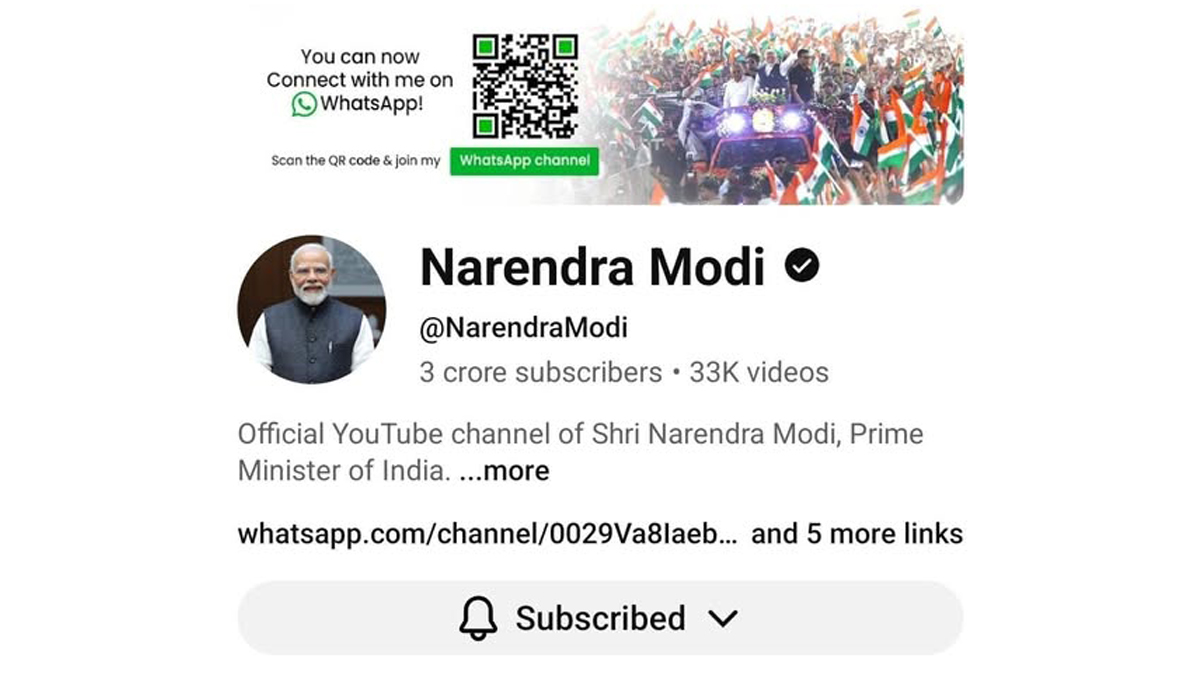
MUMBAI: PM Narendra Modi just clicked ‘subscribe’ on digital dominance because when your YouTube channel outpaces world leaders like a viral cat video, even politics gets binge-worthy. Prime Minister Narendra Modi’s Youtube channel has surged past 30 million subscribers, solidifying his status as the most-followed world leader on the platform, officials announced on 24 February 2026. This milestone leaves former Brazilian President Jair Bolsonaro second with about one-fourth of Modi’s count in the dust, while US President Donald Trump trails with roughly one-seventh the subscribers.
The achievement builds on Modi’s Instagram triumph last month, where he became the first global leader to cross 100 million followers. On Instagram, Modi towers over peers, Trump at 43 million, Prabowo Subianto at 15 million, Luiz Inácio Lula da Silva at 14 million, Recep Tayyip Erdoğan at 11 million, and Javier Milei at 6 million their combined totals still fall short of Modi’s solo mark.
Domestically, the gap is equally stark. Modi’s subscriber base is three times that of Congress leader Rahul Gandhi, and over four times the channels of the Aam Aadmi Party and Indian National Congress. On Instagram, Uttar Pradesh chief minister Yogi Adityanath has 16 million followers, while Gandhi counts 12 million.

Modi joined YouTube and Instagram in 2014, evolving both into powerhouses of digital outreach with governance highlights, cultural moments, and direct citizen engagement. In a world where likes and shares shape narratives, Modi isn’t just leading polls, he’s leading the scroll, turning policy into playlist gold.





iWorld
ICC #T20CreatorClub generates over 2.5 billion views during 2026 World Cup
JioStar-led initiative with 250 plus creators turns cricket moments into viral stories.
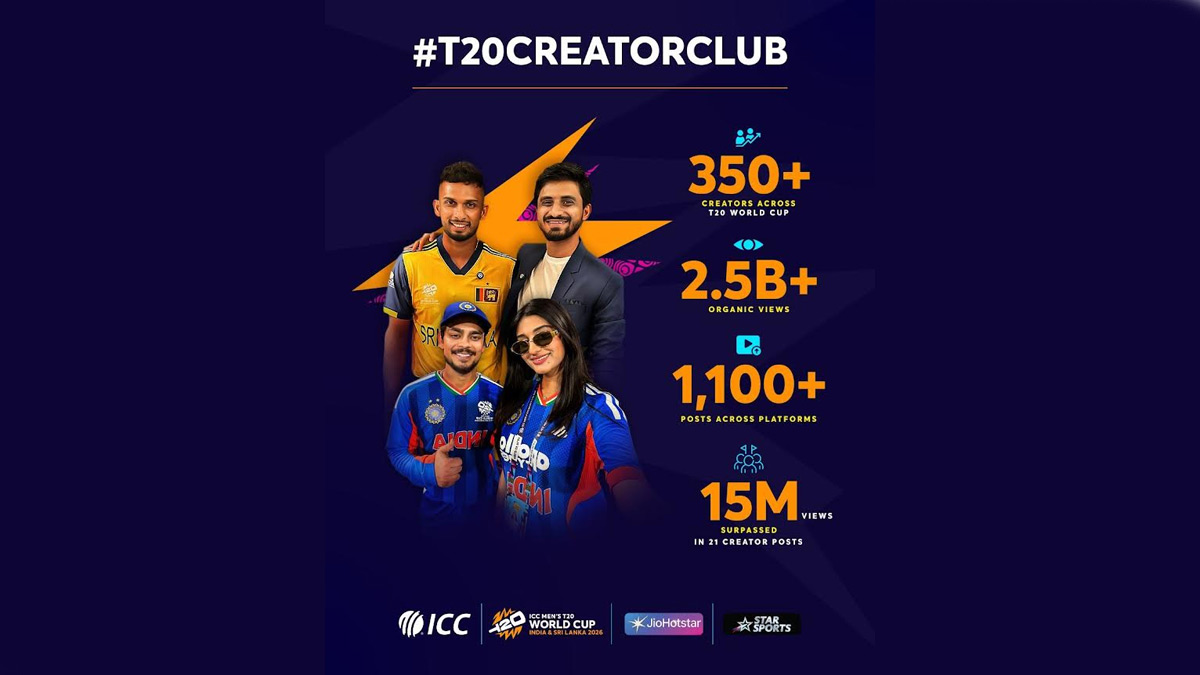
MUMBAI: The ICC #T20CreatorClub just smashed a record six because when 250 creators swing their content at the T20 World Cup, even the algorithms start cheering in the stands. The International Cricket Council’s #T20CreatorClub, significantly activated by JioStar, emerged as one of the largest creator-led programmes during the ICC Men’s T20 World Cup 2026 co-hosted by India and Sri Lanka. Bringing together over 250 creators across comedy, gaming, lifestyle, regional storytelling and Gen Z voices, the initiative transformed on-field moments into authentic, relatable digital stories that resonated deeply with fans.
The campaign generated more than 2.5 billion organic video views across platforms. JioStar’s content alone contributed over 1.66 billion views through more than 1,100 posts, with 21 individual creator posts each crossing 15 million views.
Creators experienced the tournament in varied ways. While many captured the electric stadium atmosphere, a select group of superfans received structured access near player areas. These moments were turned into high-impact stories that travelled far beyond the venues, bringing fans closer to their favourite teams and players.
JioStar, head of content for sports Siddharth Sharma said, “Cricket today is as much a cultural phenomenon as it is a sport. With the ICC Men’s T20 World Cup 2026, our ambition was not just to broadcast matches, but to build moments that live and travel across platforms. By scaling our creator partnerships through the ICC’s #T20CreatorClub, we’ve been able to drive deeper relevance, especially among younger and newer audiences, while amplifying the intensity of key match-ups.”
The diversity of creators and formats proved to be a defining strength, showcasing how the creator ecosystem is redefining fan engagement with sport. The initiative amplified the cultural conversation around a tournament that broke multiple viewership records.
In a World Cup where boundaries were smashed on the field, the #T20CreatorClub proved that the real sixes were being hit on social media turning every match moment into millions of views and cementing creators as the new MVPs of cricket’s growing global audience.






