iWorld
Match Group partners I4C to tackle romance scams on dating apps in India
Tinder, Hinge and The League roll out scam awareness tips with home ministry’s cybercrime unit


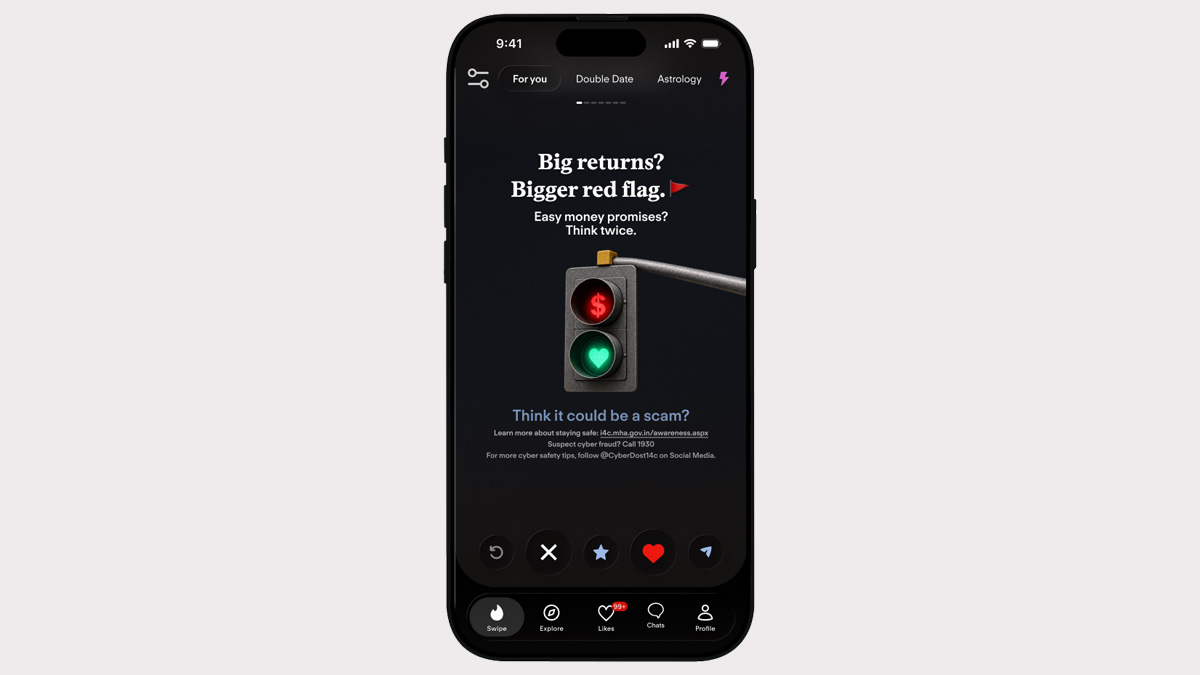
MUMBAI: Not every match is made in heaven, and some can lead straight into a financial trap. Match Group, the parent company of Tinder, Hinge and The League, has partnered with the Indian Cybercrime Coordination Centre (I4C), under the Ministry of Home Affairs, to launch a romance scam awareness campaign in India, aiming to help online daters spot fraud before affection turns into financial loss.
Announced at the second edition of the Trust and Safety Festival in India, the initiative will share guidance on recognising suspicious behaviour, identifying common scam tactics and reporting cybercrime through official channels. Tinder, Hinge and The League will distribute safety tips across their platforms and communication channels, with content adapted in collaboration with I4C to reflect local nuances and romance scam trends in the country.
The campaign focuses on five key warning signs: a new connection pushing conversations away from the dating platform, difficulties verifying someone’s identity, unsolicited investment advice, requests for money and attempts to build emotional trust before making financial demands.
The approach addresses a familiar pattern in romance fraud. Rather than immediately asking for money, scammers may spend weeks or even months building a relationship, creating a sense of intimacy before introducing a financial emergency or an investment opportunity. By the time the request arrives, victims may feel emotionally invested enough to lower their guard.
The money may be requested for an alleged medical emergency, travel costs, visa fees or urgent repairs. In other cases, fraudsters may steer conversations towards cryptocurrency or other investments, promising unusually high returns to make the proposition appear attractive. The campaign encourages users to treat such requests with caution, particularly when a person they have met online begins applying pressure to make quick financial decisions.
Moving a conversation off-platform is another warning sign highlighted by the initiative. While taking a chat to another messaging service is not, by itself, proof of fraud, scammers may use the move to escape the dating platform’s safety tools and reporting mechanisms. Users are also being encouraged to verify identities rather than relying solely on profile photographs or a convincing backstory.
“Building safer online dating experiences requires more than what any one platform can do on its own,” said Yoel Roth, senior vice president and head of Trust and Safety at Match Group.
Roth said the partnership brings together Match Group’s experience in trust and safety with local expertise to help people recognise potential scams and make more informed decisions when dating online.
The collaboration also reflects a broader challenge for dating platforms: safety cannot rely entirely on technology or on users identifying suspicious behaviour after a conversation has already developed. The campaign’s focus is on helping people recognise warning signs early, before an online relationship becomes a route to financial exploitation.
Match Group already offers a range of safety features across its platforms, including profile verification, tools to address harmful interactions and controls that allow users to block, report or disengage from unwanted contact. The latest campaign adds a public awareness layer to those measures, placing greater emphasis on the decisions users make while communicating with potential matches.
On Tinder, Face Check and Photo Verification are designed to support profile authenticity. The platform also uses prompts such as “Are You Sure?” and “Does This Bother You?” to help users reconsider potentially harmful interactions. Other features allow members to block, report or unmatch profiles, while Share My Date enables users to share their date plans and location information with trusted contacts.
Hinge has also introduced an updated experience for users in India, with greater emphasis on trust, privacy and respectful interactions. Some new users may be placed on a waitlist after creating their profiles, during which they can add photographs, complete prompts and verify their profiles.
Its safety measures include Face Check, a Block List feature available during onboarding and Screenshot Protection, which is intended to help safeguard user privacy. These tools complement the broader awareness campaign by giving users additional ways to manage their interactions and personal information.
Match Group’s safety education efforts in India also include initiatives designed to help people navigate dating and relationships more confidently. Tinder’s Dating Safety Guide, developed with the Centre for Social Research, is available in different regional languages. Its School of Swipe programme offers guidance on navigating online dating, while the Let’s Talk Consent course, developed with Yuvaa and Pink Legal, focuses on consent and respectful relationships.
The I4C partnership brings a more direct focus on financial fraud into that wider safety effort. While verification and reporting tools can help users manage interactions on dating platforms, awareness of the tactics used by fraudsters remains important when a conversation moves towards money or sensitive personal information.
“Trust must be accompanied by caution online. Scammers create false identities on dating apps/matrimonial websites to exploit emotions, win your trust and trigger urgent money transfers,” said Nishant Kumar, director of I4C.
Kumar urged users to verify identities, avoid sharing sensitive personal information and protect their financial credentials. He also advised people who fall victim to such scams to report incidents promptly rather than delaying action.
Victims can contact the National Cybercrime Helpline on 1930 or file a complaint through the official National Cyber Crime Reporting Portal. The channels provide a route for reporting suspected cybercrime, including cases in which a relationship initiated online has been used to solicit money fraudulently.
The campaign’s central message is that emotional connection and online caution need not be mutually exclusive. Users are being encouraged to question urgent financial requests, remain wary of investment promises and avoid allowing pressure or emotional manipulation to dictate their decisions.
For Match Group, the partnership places its dating platforms alongside a government cybercrime body in an effort to make scam awareness more visible to Indian users. For online daters, the advice is straightforward: verify the person behind the profile, keep financial details private and remember that a convincing story is not proof of genuine intentions. When romance starts coming with requests for money, it may be time to pause the conversation rather than follow the match.





