
eNews
Justice has gone missing with Zulfi, Zaid and their driver in Kenya
Last month, the case against their alleged killers was withdrawn by the Kenyan prosecution


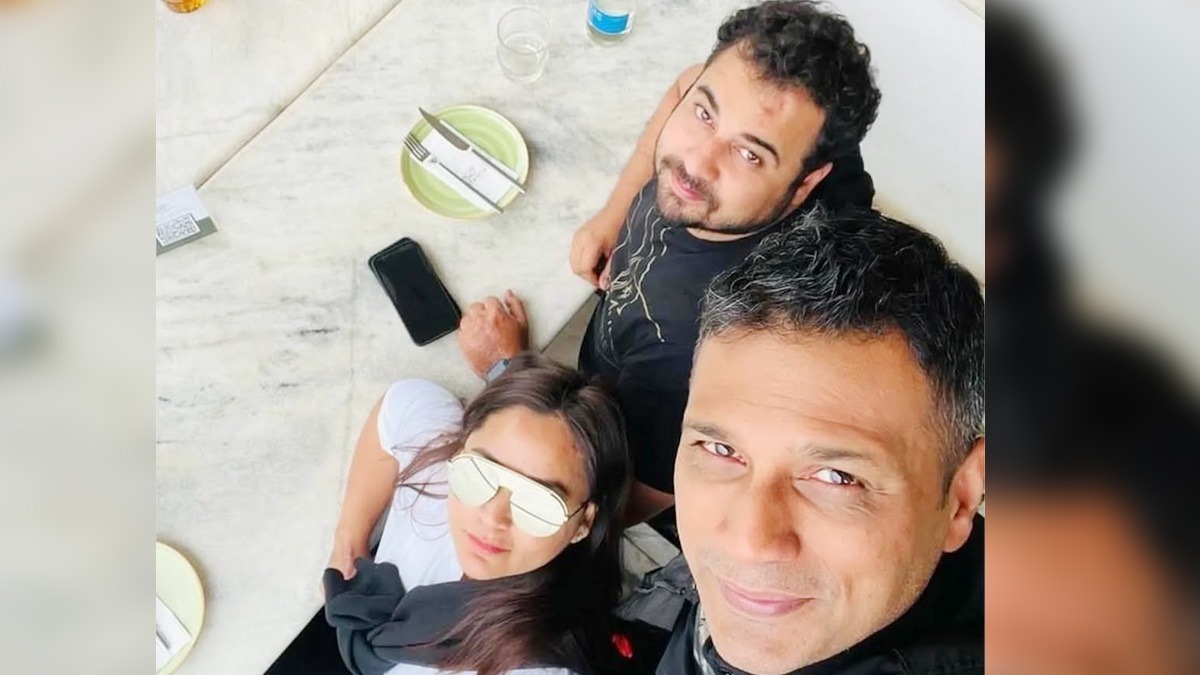
MUMBAI: Every once in a while, a story comes back and refuses to leave you alone.
You think you’ve moved on. The news cycle certainly has. New crises replace old ones. New headlines bury forgotten ones. Yet, every time you hear a familiar name, see an old photograph or remember an unfinished conversation, the story quietly returns.
For me, that story is about Zulfiqar Ahmad Khan, Mohamed Zaid Sami Kidwai and their Kenyan driver Nicodemus Mwania Mwange.
Three men.
Three families.
Three lives that simply… vanished.
This isn’t just another crime story. It isn’t even just another international incident. It is one of those rare cases that forces you to ask whether justice still means what we think it does.
Because almost four years after they disappeared on the night of 22 July 2022, we still don’t know the whole truth.
We don’t know exactly what happened after their taxi was intercepted on a Nairobi road.
We don’t know where their bodies are.
And despite years of investigations, arrests, court hearings and diplomatic engagement between India and Kenya, no one has been held accountable.
That should trouble every one of us.
I knew Zulfi.
Like most people in India’s television and digital media business, I knew him as someone who never seemed to stand still. His career had taken him through Star India, Eros Now, HOOQ and Balaji Telefilms, where he served as group COO. But titles never defined him.
People did.
He had that rare ability to walk into a room and lift its energy. He was equally comfortable discussing advertising revenues, digital strategy, cricket, wildlife photography or the best place to eat in a city you had never even heard of. He was a kind soul, always willing to go that extra mile to give a helping hand.
Work paid the bills.
Adventure fed his soul.
His passport was almost an extension of his personality.
When he stepped away from Balaji in 2022, he wasn’t escaping work. He was doing what he loved most. Travelling. Exploring. Collecting memories instead of meetings. He loved the mountains, the grasslands and the ocean.
His last photographs from Kenya tell their own story.
A roaring lion.
The golden grasslands of the Maasai Mara.
A man completely at peace with the world around him.
There is no hint in those photographs that within hours he would disappear.
This isn’t only Zulfi’s story.
It is equally the story of Mohamed Zaid Sami Kidwai.
Unlike Zulfi, Zaid stayed away from the spotlight. He was a technology and data specialist, respected for his analytical mind rather than his public profile. Friends describe him as thoughtful, understated and deeply committed to his family.
His wife, Ambreen, was with him during part of the Kenya visit.
On the night they disappeared, she sent him what must have seemed like the most ordinary text message in the world.
“When will you be back?”
His reply came almost immediately.
“Fifteen minutes.”
Think about those two words.
Fifteen minutes.
How many of us have sent that exact message to someone we love?
For Ambreen, those were among the last words she ever received from her husband.
He never returned.
And then there was Nicodemus Mwania Mwange.
A Kenyan taxi driver simply doing his job.
He wasn’t a political consultant.
He wasn’t a media executive.
He wasn’t a strategist.
He was taking passengers home.
History often remembers the well-known names.
It shouldn’t forget his.
Three very different men.
One shared fate.
According to investigators, the three left a restaurant in Nairobi’s Westlands district shortly before 1 a.m. on 23 July 2022. CCTV footage reportedly showed them getting into their taxi. Police later alleged that armed men travelling in unmarked SUVs intercepted the vehicle and forced them into another car.
That was the last confirmed sighting of them.
By sunrise, every phone had gone silent.
Families waited.
Friends worried.
Days became weeks.
Weeks became months.
Then came the first breakthrough.
In October 2022, Kenyan investigators arrested officers from the feared Special Service Unit, (SSU) an elite police squad that had already been accused of involvement in enforced disappearances and extrajudicial killings. President William Ruto disbanded the SSU as investigations gathered pace.
Court documents alleged that Zulfi, Zaid and Nicodemus had been driven to the Aberdare Forest, around 150 kilometres from Nairobi, where they were allegedly murdered. Search teams recovered clothing, belts and bone fragments, but no conclusive identification of the remains was ever established.
Still, there was hope.
In February 2025, fifteen security personnel—including thirteen former SSU officers, one National Intelligence Service officer and one Kenya Wildlife Service officer—were formally charged with murder.
For the families, it finally seemed that justice had begun to move.
It didn’t.
On 16 June 2026, around a month ago, Kenya’s Office of the Director of Public Prosecutions filed a nolle prosequi, informing the Kiambu High Court that there was insufficient evidence to continue with the prosecution.
The case was withdrawn.
The accused officers were released.
Legally, that is where the criminal trial ended.
Emotionally, nothing ended.
Because the questions that mattered most were never answered.
Who ordered the abduction?
Who executed it?
Why were these three men targeted?
Where are they?
What happened in those missing hours between the streets of Nairobi and the forests of Aberdare?
Over the years, different accounts have emerged about why Zulfi and Zaid were in Kenya. Some maintain they were tourists enjoying a holiday. Others, including members of President Ruto’s campaign team, have acknowledged that they informally assisted with digital communications and campaign messaging during the fiercely contested 2022 election.
Frankly, whichever version you believe changes very little.
Helping shape political messaging is not a crime.
Being in the wrong place at the wrong time should never become a death sentence.
No democracy can accept that.
No society should become comfortable with people disappearing into thin air.
India has consistently said it continues to monitor the case. The ministry of external affairs says it has remained engaged with Kenyan authorities. Friends and colleagues have campaigned tirelessly. Families have refused to give up hope.
Nor should they.
Because this is no longer just about Zulfi.
Or Zaid.
Or Nicodemus.
It is about whether the lives of ordinary citizens still matter when they collide with the machinery of power.
I hope the governments of both India and Kenya continue to pursue every legal avenue still available. I hope the surviving proceedings, including efforts to establish what happened to the missing men, are pursued with urgency and transparency. Most of all, I hope the families are not asked to quietly accept that this is simply one of those mysteries that history never solves.
Some stories deserve an ending.
This is one of them.
Zulfi deserved to come home.
So did Zaid.
So did Nicodemus.
If that is no longer possible, then at the very least they deserve the truth.
And their families deserve justice.
Justice is not merely about convicting people.
Justice is also about uncovering the truth.
Without truth there can be no closure.
Without closure there can be no peace.
What made this tragedy even more heartbreaking was that Zulfi wasn’t just another corporate executive whose disappearance briefly made headlines before fading into obscurity.
He was loved.
He was admired.
He mattered.
Back home, his disappearance sent shockwaves through India’s media and entertainment industry. Almost everyone who had worked with him had a story to tell. A meeting that turned into a friendship. A holiday recommendation. A cricket debate. A helping hand when it was needed the most.
People simply couldn’t believe that someone so full of life had disappeared without a trace.
Among those who refused to let the story fade was Ekta Kapoor. Zulfi had played a pivotal role in helping build Balaji Telefilms’ digital ambitions, and Ekta repeatedly used her public platform to ask the questions that mattered. What happened to Zulfi? Where was he? Why were there still no answers? Long after television cameras had moved on, she kept reminding people that one of her own was still missing.
Working quietly, but with equal determination, was one of Zulfi’s closest friends, Dabur’s Rajiv Dubey..
For Rajiv, this was never just another news story.
It was deeply personal.
He knocked on every door he could. He petitioned the government of India, wrote to senior officials, sought diplomatic intervention and relentlessly urged the authorities not to let the case lose momentum. He understood something all too well: investigations don’t always fail because evidence disappears. Sometimes they fail because public attention does.
Then there were Zulfi’s friends.
Scores of them.
Senior television executives.
Media professionals.
Entrepreneurs.
Former colleagues.
Friends from school and college.
People who had travelled with him.
People who had worked with Zaid.
Together, they created a digital movement that refused to let the story die.
Photographs were reposted.
Memories were shared.
Questions were asked.
Ministers were tagged.
Diplomats were urged to intervene.
Every court hearing brought fresh hope.
Social media became more than a platform.
It became a vigil.
A place where friends refused to let silence win.
But social media can keep memories alive.
It cannot deliver justice.
Only institutions can do that.
And that is why this story still refuses to leave me.
Because somewhere between Mumbai and Nairobi… between diplomacy and due process… between hope and heartbreak… three families are still waiting for the one thing every civilised democracy owes its citizens.
The truth.






