iWorld
Jai Ho on the go as Mumbai unveils melody road
500 metre stretch plays Slumdog hit at 70 to 80 km per hour.


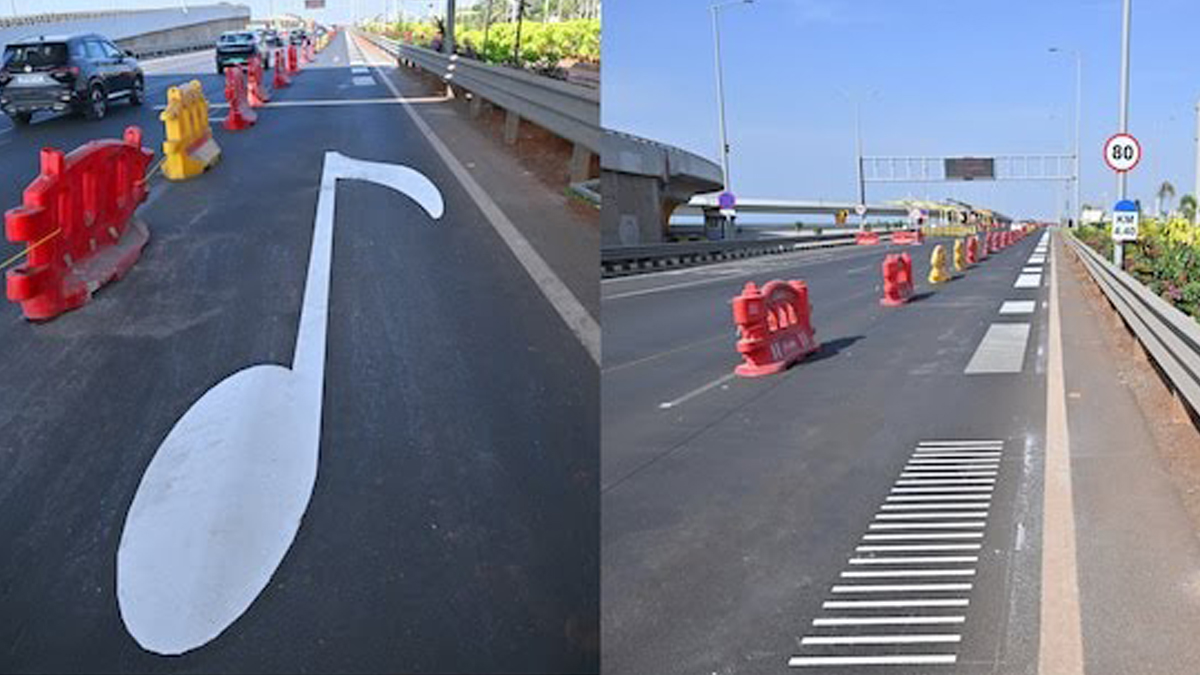
MUMBAI: Your daily commute in Mumbai just found its rhythm. In a first for India, the city has unveiled a 500 metre “melody road” on the northbound carriageway of the Mumbai Coastal Road, engineered to play the Oscar-winning track Jai Ho as vehicles glide over it at a steady 70 to 80 km per hour. The stretch, located between Nariman Point and Worli just after motorists exit the Coastal Road tunnel, turns tyres into instruments and asphalt into a score.
The installation was inaugurated by Maharashtra chief minister Devendra Fadnavis, who called it a pioneering initiative. “For the first time, we have come up with a melody road. It uses Hungarian technology and is a 500 metre stretch where music can be heard while driving. Based on its success, we will replicate it on other stretches as well,” he said.
The technology relies on precisely cut rumble strips laid along a 500 metre section adjacent to the central divider. When a vehicle drives over the grooves at the designated speed, the vibrations produced by the tyres create musical notes that resemble the rhythm of Jai Ho, the iconic anthem from Slumdog Millionaire. Officials say the tune is audible even inside vehicles with the windows closed.
To ensure motorists are not caught off guard, the Brihanmumbai Municipal Corporation has installed warning signboards at 500 m, 100 m and 60 m before the musical stretch, including within the tunnel itself. The idea is simple: maintain a steady speed, avoid abrupt braking and let the road do the singing.
The concept of a melody road dates back to 2007 when Japanese engineer Shizuo Shinoda discovered that grooves cut into pavement could generate musical tones at specific speeds. Since then, similar installations have appeared in Hungary, Japan, South Korea and the United Arab Emirates. Mumbai’s version is only the fifth such installation in the world and the first in India.
The project was conceptualised by former Member of Parliament Rahul Shewale and executed with technical support from Hungarian experts. Commissioned by the BMC, it carries an estimated cost of Rs 6.21 crore. Civic officials say the choice of Jai Ho was deliberate, intended as a tribute that evokes national pride while adding a touch of delight to the drive.
Beyond novelty, authorities insist there is a method behind the melody. A senior BMC official said encouraging drivers to maintain consistent speeds, especially on a high traffic urban expressway, could reduce sudden braking and improve traffic flow. Signage and advance warnings form part of what officials describe as a broader safety integration plan.
The melody stretch sits on the 10.5 km long Mumbai Coastal Road, a flagship infrastructure project featuring multiple lanes and tunnels that has significantly reduced travel time between South Mumbai and the western suburbs. The addition of a musical interlude adds a moment of levity to what is otherwise a high speed commuter corridor.
Reactions online have been a mix of curiosity and civic pride. A motorist who experienced the stretch, described it as surreal. “I don’t know if this feature has any safety benefits as claimed, but it’s enjoyable to hear a familiar and uplifting tune in the middle of my daily drive,” she said.
If feedback remains positive, experts believe similar melody roads could surface in other Indian cities. For now, Mumbai’s commuters have something few others in the world can claim: a road that quite literally sings back.