iWorld
India doubles 5G radiation limit to 10 watts, easing network expansion: Report
Revised EMF norms will allow telecom operators to expand coverage with fewer towers and reduce network costs as 5G traffic rises.


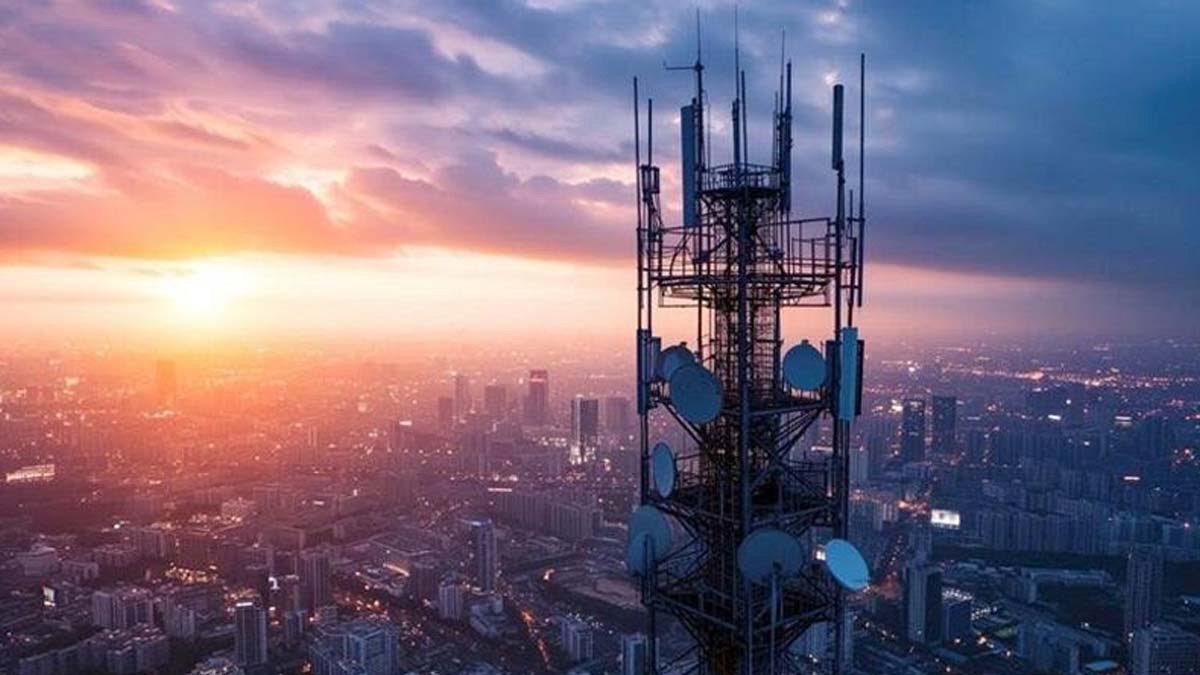
New Delhi: India is set to loosen its electromagnetic field (EMF) limits for mobile networks, potentially giving 5G operators more room to expand coverage with fewer towers. According to an Economic Times report, the government is raising the permitted power density for 5G base tower stations to 10 watts per square metre from the current 5 watts.
The revised radiation limits are expected to take effect next month, according to the report. The higher limit could allow signals to travel farther from individual sites, enabling operators to extend coverage while potentially reducing the number of additional towers required.
The move comes as telecom operators contend with rising 5G traffic and the higher costs of expanding network capacity.
According to ET, the relaxation has been a long-standing demand of the telecom industry, which has argued that India’s earlier EMF limits were making efficient 5G deployment more difficult.
EMF limits determine the maximum radio-frequency energy that mobile network equipment can emit. India has historically maintained stricter limits than those recommended by the International Commission on Non-Ionizing Radiation Protection (ICNIRP).
India initially followed a power density limit of 1 watt per square metre before raising it to 5 watts last year. The latest proposed limit of 10 watts would bring India in line with the ICNIRP recommendation.
The industry has maintained that the earlier limits were more suited to older generations of mobile technology and were less practical for 5G, which has different network and deployment requirements.
The change could be particularly significant for Vodafone Idea, which is in the process of rolling out its 5G network.
People familiar with the matter told ET that the operator could plan its 5G expansion around the higher limits, potentially allowing it to improve coverage without increasing its tower footprint at the same pace.
Bharti Airtel and Reliance Jio, which have already deployed much of their 5G networks, could also benefit.
For the two operators, the benefit could come through more efficient use of existing sites and lower incremental capital expenditure as they add capacity to meet growing demand.
According to ET, the new 10-watt limit is in line with norms followed in around 137 countries, including most European Union countries, the UK, Australia, Japan, South Korea and Singapore.
India adopted ICNIRP norms in 2008 but made them more stringent in 2012. The government subsequently began relaxing the limits, with the permitted power density increased to 5 watts per square metre last year.
The latest move would bring India’s limit closer to the international benchmark as operators increasingly shift their focus towards expanding and optimising 5G networks.
The Department of Telecommunications had not responded to ET’s query seeking confirmation of the development at the time of publication, according to the report.
For consumers, the change may not be immediately noticeable. Its bigger impact is likely to be on the economics and speed of network expansion, as operators seek to squeeze more coverage and capacity from every tower.
As India’s 5G traffic continues to rise, the higher EMF ceiling could give telcos more flexibility to build out networks while keeping the tower count and expansion costs in check.