Connect with us

iWorld

Facebook celebrates the power of people coming together to support one another in the next phase of its consumer marketing campaign for India


Published

on

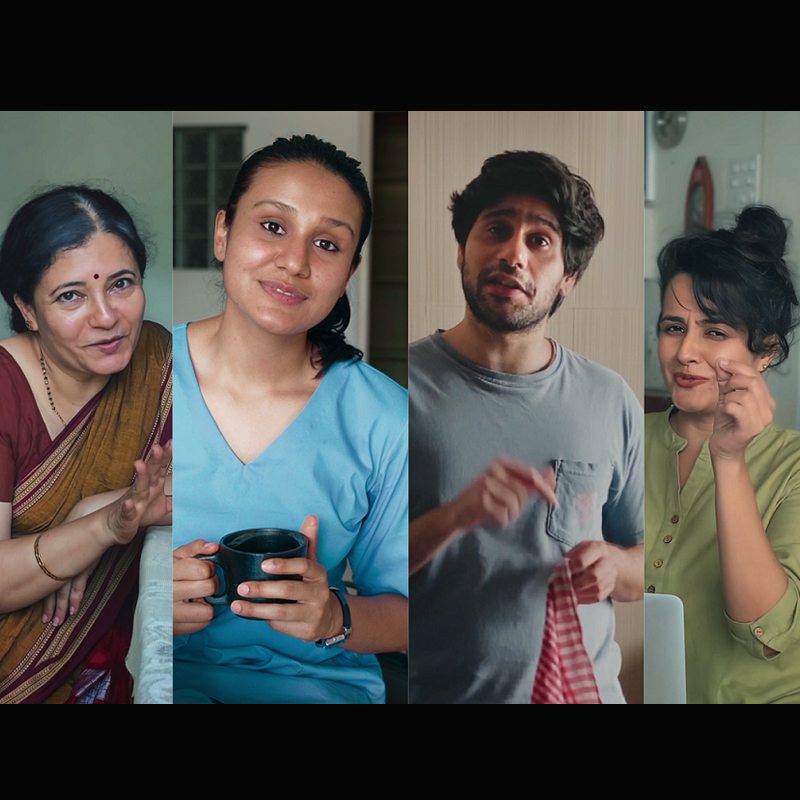
India, August 01, 2020: Facebook today launched the next phase of its consumer marketing campaign in India – ‘More Together’, to showcase how people across the country can do more together by harnessing the power of their connections on the platform – even more so in the current situation The latest campaign is inspired by real stories and celebrates the people who came together in these trying times to help and support one another.

As a part of Facebook’s priority of transparently communicating the role its services play in the world, the ‘More Together’ campaign showcases stories that celebrate and highlight the power of connections. The campaign includes four 30 second films featuring young parents, grandparents, two roommates and a doctor and depicts how they found support through their connections to help each other during these extraordinary times.

Speaking about the campaign, Avinash Pant, Director-Marketing, Facebook India, said, “At the core of this campaign is our brand belief that people can do more together than alone. Over the last several months, all of us have seen and heard many stories of people across India that have been the embodiment of this idea. People who were once strangers, connected with one another through Facebook, and together addressed many challenges that have surfaced in recent times. Through this campaign, we are shining a spotlight on the real stories that have inspired us, and hope more and more of our consumers will recognise that people are indeed each other’s best resources. Sometimes all you need to do is reach out to the world”.

Advertisement

The core campaign has been conceptualized and executed by Taproot Dentsu, the creative agency from the house of Dentsu Aegis Network (DAN) India. As part of the campaign, Facebook will leverage the power of its platform extensively to bring stories to life and has partnered with Dentsu WebChutney to craft the creative strategy and communication across digital and social  media.

Talking about the inspiration behind the campaign Pallavi Chakravarti, Executive Creative Director, Taproot Dentsu explains, “When it came to looking out for each other in the months gone by, we found that Facebook was a vehicle. People were the fuel. This is the simple truth the campaign tries to capture. When times are tough, we truly can do more together than we can alone.”

Agency credits:

Advertisement

●        Co-Founder, Taproot Dentsu and Creative Chairperson, Dentsu Aegis Network India: Agnello Dias

●        Co-founder and Chief Creative Officer: Santosh Padhi

●        Chief Executive Officer: Umesh Shrikhande

Advertisement

●        Executive Creative Director: Pallavi Chakravarti

●        General Manager: Ayesha Ghosh

●        Head of Strategic Planning: Shashank Lanjekar

Advertisement

●        Senior Creative Director: Neeraj Kanitkar

●        Group Head (Copy): Gauri Burma

●        Account Supervisor: Ana Iman

Advertisement

●        Associate Vice President: Radhika Sabherwal

Film credits:

Equinox Films

Advertisement

●        Director: Sandeep Modi

●        Executive Producer: Manoj Shroff

●        DOP: Mikhaeil Shah

Advertisement

●        Production Designer: Anna Ipe

●        Directors Assistant: Nisarg Vaidya

●        Costumes: Maiti Shahani

Advertisement
Click to comment

Leave a Reply

Your email address will not be published. Required fields are marked *

e-commerce

Visa report tracks rise of India’s affluent, experience-led spending

Affluent base doubles to 130 lakh, travel 58 per cent of elite spends.

Published

on

MUMBAI: In India’s new luxury playbook, it’s less about owning more and more about living better. A new whitepaper by Visa Consulting and Analytics (VCA) maps a decisive shift in India’s affluent economy, where spending is becoming more intentional, experience-led, and closely tied to personal identity rather than pure income growth.

Titled India’s Affluent Economy 2025–2026, the report draws on a Visa-commissioned Yougov study and VisaNet data across travel, dining, retail and lifestyle categories. The headline number is hard to miss: individuals earning over Rs 10 lakh annually have nearly doubled from 69 lakh to 130 lakh, significantly expanding the country’s discretionary spending base.

But it’s not just about scale, it’s about behaviour. As consumers move up the affluence ladder, discretionary categories are taking a larger share of credit card spends, positioning cards as key enablers of premium, lifestyle-driven consumption.

Advertisement

The geography of wealth is shifting too. Affluence is no longer confined to metros such as Mumbai, Delhi and Bengaluru, with cities like Ahmedabad, Surat, Jaipur and Lucknow increasingly mirroring metro consumption patterns.

The report highlights a clear pivot from ownership to access. More than 50 per cent of affluent consumers now use cards for elite memberships, while 7 in 10 are drawn to limited-edition drops and curated collections. Increasingly, luxury is defined by seamless access be it concierge-led travel or curated dining where time saved is as valuable as money spent.

Spending patterns reinforce this shift. Among the ultra-elite, travel accounts for 58 per cent of discretionary spends, far outpacing retail and luxury combined at 28 per cent. Cross-border spending penetration stands at 63 per cent, signalling a growing global outlook among India’s affluent.

Advertisement

Closer home, indulgence is becoming routine. Nearly 4 in 5 affluent consumers dine at premium establishments at least three times a year, while 1 in 4 visit luxury venues more than five times annually. Dining spends are also climbing, with Rs 20,000 emerging as a new entry-level benchmark per experience and Rs 50,000 marking premium territory.

Retail, meanwhile, is becoming more selective. Three in four affluent consumers make a high-end purchase at least once a quarter, while one in four shops premium every two weeks. Luxury retail intensity is also rising, with 2 in 5 consumers spending over Rs 5 lakh annually, and a smaller but significant segment exceeding Rs 10 lakh.

Technology and wellness are carving out new roles in this ecosystem. High-end gadgets now see average spends of Rs 60,000 or more per purchase, while ultra-elite consumers are eight times more likely to visit spas and show five times higher engagement with cosmetic stores than non-affluent groups.

Advertisement

The broader takeaway is structural. Affluent consumers are no longer buying products, they are buying ecosystems. Integrated experiences across travel, dining, wellness and payments are becoming central to how this segment lives and spends.

As India’s affluent base expands beyond metros and aligns more closely with global consumption patterns, the real opportunity lies not just in size, but in speed. For brands, the message is clear: relevance will be defined by how early and how seamlessly, they plug into this evolving lifestyle economy.

Advertisement
Continue Reading

Advertisement News18
Advertisement
Advertisement
Advertisement
Advertisement Whtasapp
Advertisement Year Enders

Indian Television Dot Com Pvt Ltd

Signup for news and special offers!

Copyright © 2026 Indian Television Dot Com PVT LTD