iWorld
Bharat 6G Symposium charts India’s roadmap for next generation networks
Three day event secures five international MoUs and releases ten white papers as India pushes for inclusive 6G development


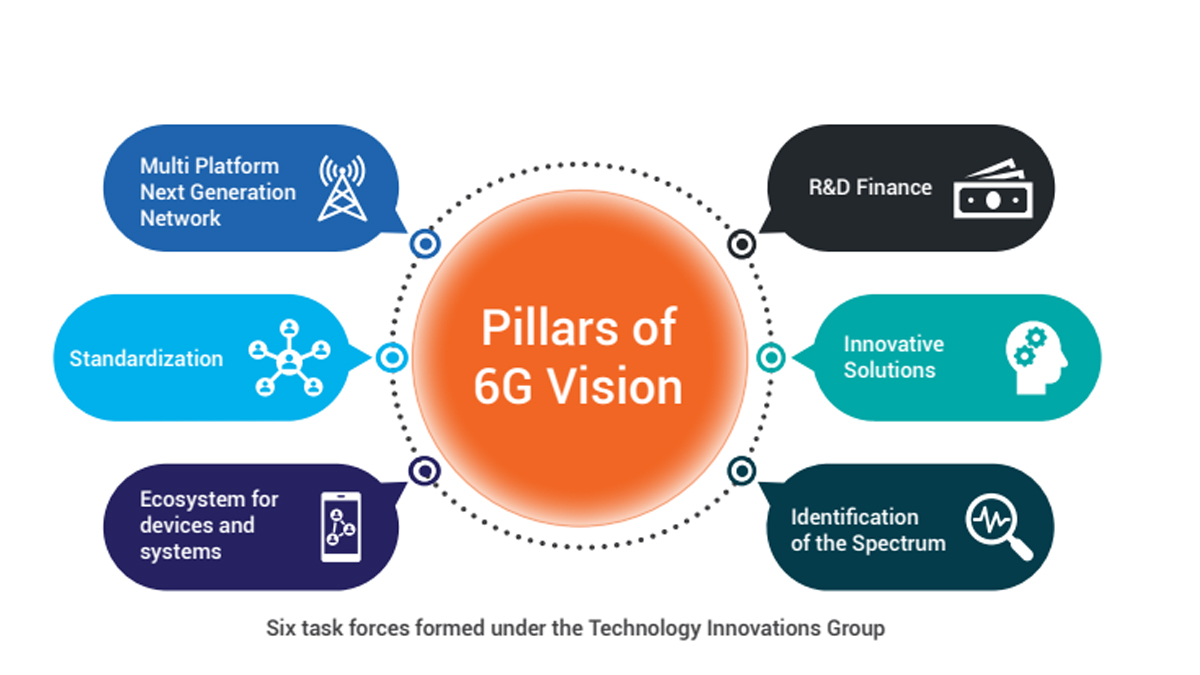
MUMBAI: India’s 6G ambitions are gathering signal, with global partnerships and home-grown research taking centre stage as the country looks beyond faster connectivity towards smarter, more inclusive networks. The 3rd International Bharat 6G Symposium 2026 concluded at Yashobhoomi in Dwarka, New Delhi, with a push to strengthen India’s role in global telecom technology, backed by five new international memoranda of understanding (MoUs) and ten white papers and reports.
Organised by the Bharat 6G Alliance (B6GA) alongside India Mobile Congress 2026, the three-day symposium brought together telecom leaders, policymakers, standards organisations, industry representatives, academics and researchers to discuss the roadmap towards IMT-2030 and beyond.
Delivering the valedictory address, Union minister of state for communications and rural development Chandra Sekhar Pemmasani congratulated the alliance for organising the event and bringing together more than 75 speakers, including over 30 international experts.
Pemmasani said India was moving from being one of the world’s largest telecom markets to becoming an important telecom technology nation. He argued that indigenous innovation and international collaboration were complementary, with stronger domestic capabilities enabling India to become a more valuable global partner.
One of the symposium’s key outcomes was the exchange of five new MoUs with GSMA, one6G, GTI Alliance, 6G Innovation Forum (6G IF) Taiwan and VOICE. The agreements are intended to strengthen opportunities for international cooperation, joint research, trials and knowledge exchange.
B6GA also released ten white papers and reports, including a Progress Report on 6G Joint Principles. The publications reflect ongoing efforts to develop a future 6G ecosystem that is secure, open, resilient, inclusive and sustainable by design.
The discussions covered 5G-Advanced as a foundation for 6G, global standards, spectrum and the World Radiocommunication Conference 2027 (WRC-27), international trials and testbeds, artificial intelligence-native networks, sustainability, startups, academia and industrial applications.
The central message was that developing 6G cannot be a country-by-country exercise. Global interoperability will depend on coordinated standards, harmonised spectrum, collaborative research and large-scale testing across industries and research institutions.
Beyond technology development, Pemmasani stressed that the next generation of networks must not create another digital divide while existing gaps in connectivity remain.
He said affordability, accessibility and coverage needed to be built into network design from the beginning rather than treated as afterthoughts. Integrating terrestrial and satellite networks, he added, could extend connectivity beyond conventional tower coverage to remote villages, islands, oceans and other locations that traditional infrastructure struggles to reach.
The minister said India was prepared to test these technologies at scale and share its learnings internationally. He linked the country’s telecom ambitions to the national vision of Viksit Bharat, or a developed India, by 2047, the centenary of independence.
The emphasis on inclusive connectivity places the spotlight on a key challenge for 6G: ensuring that advances in network intelligence and performance also translate into practical access for communities beyond major urban centres.
The symposium’s valedictory session also featured a curtain-raiser for the Emerging Science, Technology and Innovation Conclave (ESTIC) 2026, presented by the Department of Telecommunications (DoT).
The second edition of the national science and technology platform is scheduled to take place from 27 to 29 October 2026 at Bharat Mandapam in New Delhi. Guided by the Office of the Principal Scientific Adviser and organised by the Council of Scientific and Industrial Research (CSIR) in collaboration with 12 participating departments and ministries, the conclave will follow the theme “Creative Minds, Catalyzing Science, Empowering Technologies”.
The three-day event will feature plenary talks, nine thematic technical sessions, panel discussions, presentations by science and technology leaders and deep-tech startups, exhibitions, and business-to-business and business-to-government meetings.
The DoT will lead a thematic session titled “Intelligent Networks and Quantum Communication” on 28 October. The session will examine technologies shaping future digital infrastructure and secure communications.
It will feature a keynote by Tata Consultancy Services vice-president N. G. Subramaniam, presentations by deep-tech entrepreneurs and technology leaders, and a panel discussion involving experts from IIT Kanpur, IIT Delhi, HFCL, Reliance Jio and Bharat 6G Alliance. The discussion will be moderated by C-DOT chief executive Rajkumar Upadhyay.
The Bharat 6G Symposium’s outcomes place international collaboration, indigenous research and inclusive network design at the heart of India’s next telecom chapter. The challenge now is to turn research principles and partnerships into technologies that can be tested, deployed and made accessible at scale.