iWorld
44% adults used Internet TV via STBS in the last 12 months: Ofcom


MUMBAI: Close to 44 per cent (over four in ten) adults in the UK had used an internet connected TV – most via set-top boxes such as TiVo or Sky – in the last 12 months. Some 34 per cent had watched catch-up TV services via connected TVs or set-top boxes.
Moreover, Ofcom’s research into UK audience attitudes to content on TV and radio showed that households surveyed owned two TV sets on average.

This research covered what people find offensive on TV and radio, their awareness of and attitudes towards regulation and their understanding of advertising and product placement.
The report also includes research on consumers’ access to and views on internet ‘connected devices’, which are used to watch services like the BBC iPlayer, 4oD, ITV Player, YouTube and Netflix.
The research further found that nearly half (49 per cent) of adult TV viewers felt the quality of TV programmes had stayed the same in the past year, three in ten (30 per cent) felt they had got worse, and around 16 per cent said TV had improved.
Among those who thought programmes had got worse, the top reasons were repeats (57 per cent), a lack of variety (43 per cent), a general lack of quality (32 per cent) and too many reality shows (30 per cent). Among those who said programmes had improved, the top reasons were a wider range of shows (50 per cent), improved quality (48 per cent), more entertaining shows (37 per cent) and better dramas (33 per cent).
Offensive material on TV
Close to 79 per cent people had not been offended by anything on TV in the past year. However, one in five had found something offensive, rising to a third (33 per cent) for people aged 65 and over. Those aged between 16 and 24 were least likely to be offended (nine per cent compared with 33 per cent of over 65s).
Of those who had been offended, bad language (44 per cent), violence (41 per cent) and sexual content (41 per cent) were the top concerns. Adults below 45 years old were more likely to say they had been offended by some type of discrimination (29 per cent compared with 19 per cent of over-45s).
On average, about half of all people thought current levels of sex (57 per cent), violence (47 per cent) and swearing (52 per cent) on TV were acceptable. Four in ten felt there was too much violence (43 per cent) and swearing (40 per cent), while nearly three in ten (28 per cent) said there was too much sex.
Attitudes differed by age: younger adults were more likely to feel there is an acceptable amount of violence, swearing and sex, while older adults tended to feel there is too much.
High awareness of regulation
The vast majority of adult TV viewers (90 per cent) knew about the 9 pm watershed, with over half (57 per cent) saying about 9 pm was the right time while around a quarter (27 per cent) said the watershed should be later.
The report found a clear understanding about what broadcast content is regulated, with over eight in ten (82 per cent) adults aware that TV is regulated. Most adults felt the current levels of TV and radio regulation were about right (61 per cent), or did not have an opinion (18 per cent for TV and 33 per cent for radio).
The research showed that 14 per cent of adult TV viewers could identify the ‘P’ symbol, which is designed to let viewers know the channel, or the programme-maker, has been paid to include products in that programme.
Protecting viewers
Ofcom has a duty to protect viewers from harmful and offensive material on TV and radio, as well as ‘TV like’ content on internet connected devices. When broadcasters break the rules, Ofcom takes robust enforcement action and has issued guidance to broadcasters on how they should enforce the watershed.
The majority of viewing today is live on the TV and many of the programmes delivered over the internet to connected devices in the UK were first aired on TV; because of this, they are subject to Ofcom’s rules.
However, people now watch programmes in a variety of ways, and on different devices, which poses challenges for parents and regulators. Hence, Ofcom is working with government, other regulators and industry to bring about a common framework for media standards.






iWorld
Prime Video bets big on India with global originals, films and franchise expansion
Execs highlight scale, travelability and new IP bets as India anchors global strategy
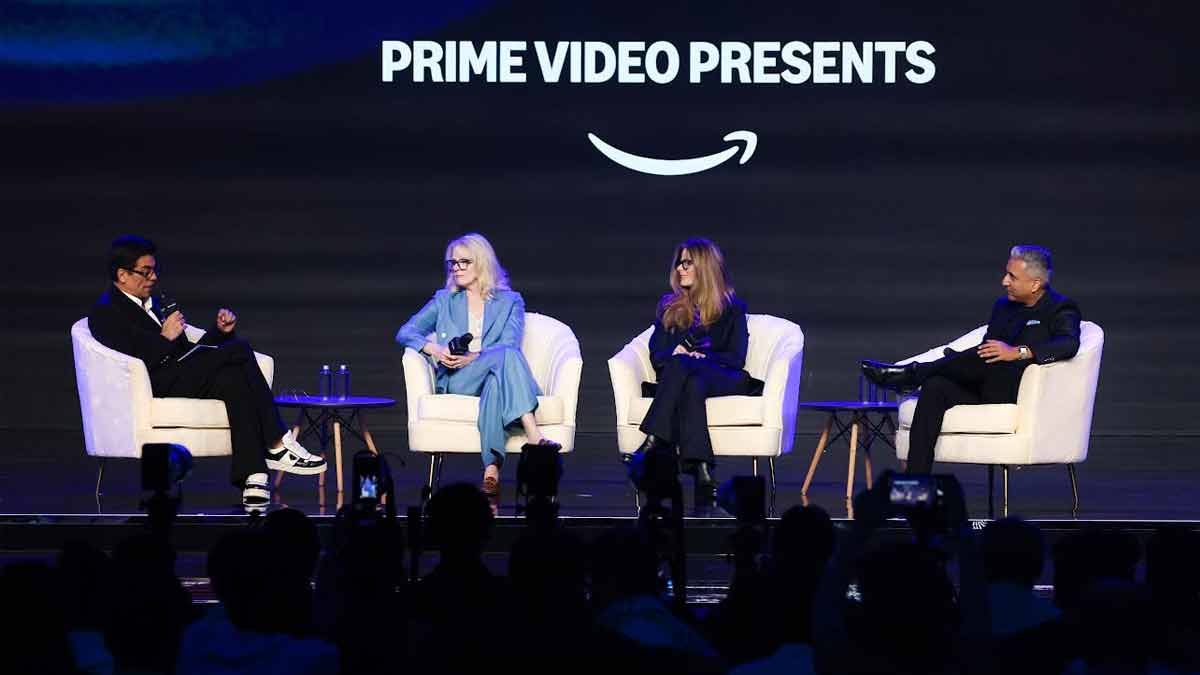
MUMBAI: At Prime Video Presents 2026, the message was clear and confident. India is not just part of the plan, it is central to it.
In a lively fireside chat hosted by filmmaker Karan Johar, Kelly Day, vice president of prime video and amazon mgm studios international, Nicole Clemens, vice president of international originals, and Gaurav Gandhi, vice president for Apac and Anz, laid out an ambitious roadmap. Think bigger stories, wider reach and a sharper focus on building franchises that travel.
Kelly Day, a regular visitor to India, set the tone early. Calling the country “one of the most important markets globally”, she pointed to the sheer scale and diversity of audiences as a driving force behind Prime Video’s growth. Indian Originals, she said, are not just local hits but global engines powering subscriptions and engagement.
That global appeal is already visible. According to Clemens, around 25 percent of viewership for Indian content now comes from outside the country. Shows rooted deeply in local culture are finding fans worldwide, proving that specificity, when paired with universal themes, travels well. From gritty dramas to sharp thrillers, Indian storytelling is increasingly crossing borders with ease.
Clemens, who joined recently to lead international originals, was particularly upbeat about India’s creative range. She highlighted a growing slate of over 100 shows in development and production, with more than 60 percent returning for multiple seasons. For her, the formula is simple. Authentic stories, told well, resonate everywhere.
Adding to the buzz, she teased new and returning titles, alongside a fresh superhero universe, the Kalyug Warriors. It signals a push into new genres while doubling down on familiar fan favourites.
If content is king, distribution is the clever courtier. Day outlined Prime Video’s layered business model in India, which blends subscription, rentals, add on channels and ad supported viewing through Amazon MX Player. The idea is straightforward. Give viewers choice, whether they want premium, free or pay per view.
India, she noted, has also become a testing ground for innovation. Tiered pricing, mobile only plans and language diversity have all been sharpened here before being exported to other markets. In many ways, the India playbook is now influencing global strategy.
For Gaurav Gandhi, the next chapter is about scale with intent. He outlined four priorities. Making Prime Video more accessible, pushing Indian content globally, building stronger franchises and supercharging the films business.
On films, the platform is moving beyond licensing into co productions and now theatrical releases in partnership with amazon mgm studios. These films will eventually stream on Prime Video, creating a full circle from cinema halls to living rooms across 240 countries.
Franchise building remains another key pillar. With hits like The Family Man, Mirzapur and Panchayat already enjoying multi season success, the focus is now on creating the next wave of enduring IP. Newer titles are already lining up for second seasons, signalling a steady pipeline.
What stood out through the conversation was a shared belief. Streaming in India is still in its early innings, and the runway is long. With a mix of local flavour and global ambition, Prime Video is betting that stories from India will not just stay at home, but travel far and wide.
Or as the executives seemed to suggest, the world is watching and India has plenty more to show.







