ITV News
Warner Bros–Paramount deal faces outdated opposition amid streaming reality
Antitrust concerns overlook the streaming reality reshaping modern entertainment.

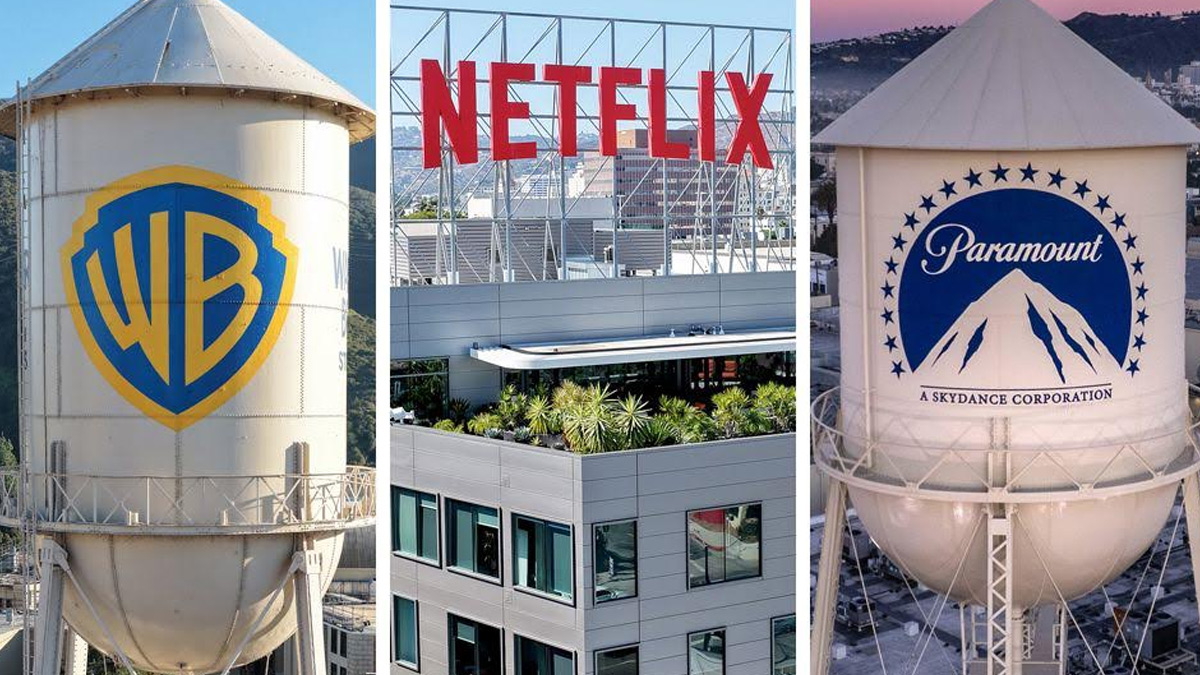
HOLLYWOOD- Just as Hollywood reaches for a shield against the streaming giants, regulators appear ready to conduct a thorough inspection of the shield’s paperwork. The growing campaign against Paramount-Skydance’s proposed acquisition of Warner Bros. Discovery is being framed as a defence of competition, workers and consumer choice.
The rhetoric is dramatic, the warnings apocalyptic and the legal threats increasingly aggressive. Yet beneath the noise lies a far simpler question: are regulators examining the entertainment industry as it exists today, or as it existed several decades ago?
States led by California and New York are reportedly preparing antitrust action against the deal, proving once again that in modern America, building scale to compete globally is often treated with the same suspicion usually reserved for constructing a supervillain’s headquarters. Apparently, the greatest threat facing an industry under siege from trillion-dollar technology firms is two century-old film studios deciding they might work better together.
The concerns being raised are not entirely without merit. Opponents argue that combining Warner Bros. Discovery and Paramount would reduce competition among major studios, diminish bargaining power for creative workers and concentrate too much media influence under a single corporate roof. Hollywood guilds and artist associations have echoed similar fears, warning that the merger could weaken opportunities for writers, actors, directors and production crews.
Before dismissing those concerns, they deserve to be examined seriously.
The combined company would indeed control an enormous collection of assets, including film studios, television networks, streaming platforms and some of the most recognisable intellectual property in entertainment. Any transaction of this scale warrants scrutiny.
The problem is that much of the criticism appears to rest on a definition of competition that feels increasingly detached from reality.
Many opponents continue to analyse Hollywood as though its primary competitors remain other traditional studios. That might have been true twenty years ago. It is certainly not true today.
The modern entertainment battlefield is dominated by streaming and technology giants with vast financial resources, global reach and direct access to hundreds of millions of consumers. Netflix, Amazon Prime Video and Apple TV+ are no longer fringe challengers disrupting the status quo; they are among the status quo’s most formidable competitors.
Hollywood is no longer fighting a war against itself. It is fighting for relevance in an ecosystem where technology platforms, social media networks, gaming companies and streaming services compete for every minute of audience attention.
Much of the opposition therefore feels as though it has been transported directly from a textbook published when cinema tickets were bought with pocket change and “streaming” referred to what happened in rivers after heavy rain.
Theatrical cinema continues to face structural pressure. Audience habits have changed. Streaming has fragmented viewing patterns. Technology companies with market capitalisations larger than the GDP of many nations can spend billions on content without blinking.
Against that backdrop, preventing traditional studios from achieving greater scale does not necessarily preserve competition. It may simply weaken the competitors that remain.
There is a curious modern tendency to celebrate disruption when it comes from Silicon Valley, while regarding survival strategies from legacy industries as evidence of dangerous consolidation. Scale is innovative when a technology platform pursues it. Scale becomes suspicious when a film studio attempts the same thing.
That contradiction sits at the heart of the debate.
Warner Bros. Discovery enters this deal with one of the most valuable collections of intellectual property anywhere in the entertainment business. The company controls cultural juggernauts such as Harry Potter, Batman, Superman, the wider DC universe, The Lord of the Rings film rights, The Matrix, Looney Tunes and The Conjuring franchise.
These are not merely successful brands. They are global cultural institutions with decades of audience loyalty.
Paramount contributes a similarly impressive catalogue, including Mission: Impossible, Star Trek, Transformers and other internationally recognised properties.
Combining these assets is not simply about corporate ambition. It creates opportunities for stronger theatrical releases, broader international distribution, more efficient production pipelines and enhanced competitiveness against streaming rivals that already operate at extraordinary scale.
A larger combined company would have greater capacity to invest in blockbuster films, premium television and emerging distribution models. That is precisely the sort of flexibility traditional studios need if they are to remain viable in a rapidly evolving market.
The opposition also struggles to explain a rather awkward precedent.
The Disney-Fox merger was ultimately permitted despite significantly reshaping Hollywood’s competitive landscape. At the time, critics forecast many of the same consequences being predicted today. Yet while the merger undoubtedly transformed the industry, Hollywood did not collapse into a creative wasteland.
Streaming competition intensified. Content production expanded. Consumers gained additional viewing options.
Apparently consolidation was a tolerable business strategy then but has somehow evolved into an existential threat to civilisation now.
Supporters of the current opposition argue that circumstances have changed. They are correct.
The irony is that those changed circumstances arguably strengthen the case for the merger rather than weaken it.
Competition today is broader, more intense and more global than it was when Disney acquired Fox. Traditional studios face greater challenges, not fewer. If scale was deemed necessary then, it is difficult to argue that it has suddenly become unnecessary now.
The concerns raised by artist associations deserve the most thoughtful consideration of all. Fewer major buyers for talent can, in theory, reduce bargaining leverage for writers, actors and directors. Nobody should dismiss those fears outright.
However, the logic behind some of the warnings becomes less convincing when viewed through the lens of industry history.
Previous media consolidations have certainly produced layoffs and restructuring within individual companies. Yet they have not consistently reduced overall content production across the broader industry. In many cases, output actually increased as merged entities expanded programming investments and sought new audiences.
One could be forgiven for thinking, from some of the more dramatic statements, that every major merger is one board meeting away from turning Hollywood into an abandoned film set. History has stubbornly refused to cooperate with that prediction.
Indeed, a stronger Warner-Paramount organisation could generate benefits for many of the very groups currently opposing it.
Greater financial stability could support more productions.
A larger streaming footprint could create new opportunities for creators.
A stronger theatrical business could help sustain cinemas that continue to face pressure from changing consumer habits.
More competitive positioning against technology giants could preserve jobs that might otherwise disappear if legacy studios continue to struggle independently.
The broader debate also reveals something increasingly common in modern American discourse. There is a tendency to mistake size for power and power for harm, while paying surprisingly little attention to whether the underlying market has fundamentally changed.
America increasingly finds itself arguing yesterday’s battles with yesterday’s vocabulary even as entire industries are reshaped by competitors that scarcely existed when those arguments were first written down.
Regulators are right to ask difficult questions. Scrutiny is healthy. Blind approval is no more desirable than blind opposition.
But there is a growing difference between protecting competition and protecting an outdated vision of what competition is supposed to look like.
Netflix, Amazon and Apple are often treated as unavoidable forces of nature inevitable, unstoppable and beyond question while traditional studios are interrogated for daring to assemble enough resources to remain relevant.
That imbalance is becoming harder to ignore.
If opponents ultimately succeed in blocking the Warner Bros.–Paramount deal, they may discover that preserving yesterday’s market structure does little to address tomorrow’s challenges.
And in trying to save Hollywood from consolidation, they may end up accelerating the very decline they claim to fear.