
ITV News
Apple’s new iPhone is a bigger engineering story than a design story
From variable-aperture cameras and vapour-cooled silicon to its first foldable iPhone, Apple is betting that the next smartphone race will be won inside the hardware, not just on the screen


CALIFORNIA: Apple has never been particularly interested in being first. It would rather arrive late, polish the technology, wrap it in an ecosystem and then convince the market that this is how the category should have been built all along. Its latest launch makes that strategy hard to miss.
The iPhone 18 Pro brings mechanical control back to smartphone photography, the A20 Pro pushes Apple further into high-performance local computing, and a new vapour chamber tackles one of the industry’s oldest problems: how to keep a powerful phone running hard without turning it into a pocket-sized radiator. Then comes the bigger statement. iPhone Duo marks Apple’s entry into foldables, taking on a category that Samsung, Google and Honor have spent years shaping.
The interesting part is not any single specification. It is the direction of travel. Apple is increasingly treating the smartphone as a piece of engineered computing infrastructure, where optics, silicon, thermal design, software and artificial intelligence have to work as one system.
The camera is becoming hardware again
For years, smartphone photography moved in one direction: more computation, less mechanical complexity. Fixed apertures became the norm while software increasingly simulated depth, exposure and image characteristics.
The iPhone 18 Pro reverses part of that trend.
Its 48MP Fusion Main camera gets a genuine variable aperture, with four settings ranging from ƒ/1.48 to ƒ/4.0. The aperture can be adjusted automatically for lighting and depth of field, while Apple’s new Pro controls give users manual control over aperture, shutter speed and white balance, alongside a histogram.
That matters because computational photography is extraordinarily good at reconstructing an image, but physics still has its advantages. A physical aperture changes how much light reaches the sensor and affects the depth of field before software gets involved. In low light, the wider aperture can help. In situations where greater depth of field is desirable, stopping down can keep more of the scene sharp.
For creators, the bigger shift is control. Apple is moving the iPhone camera closer to a traditional photographic tool without abandoning the computational machinery that made smartphone photography so powerful in the first place.
The rest of the Pro camera system is equally telling. All three rear cameras are 48MP, with the telephoto offering 4x and 8x optical-quality options. Apple is also pushing Pro video further, with Dolby Vision recording at up to 4K 120fps, post-capture Cinematic effects and new Audio Mix capabilities.
For filmmakers, journalists and social video creators, the iPhone is no longer merely a convenient camera. Apple is clearly trying to make it a production device.
Then there is the authenticity problem
The camera push also addresses a problem that did not exist at anything like this scale a few years ago: proving that an image is genuine.
Apple Reference Image allows the iPhone 18 Pro’s Main camera to sign the pixel data it captures. In Reference mode, signed sensor data is used to create an unalterable reference image through Private Cloud Compute. Users can then compare that reference with the edited image, effectively giving them a digital negative against which changes can be checked. (Apple)
That is potentially significant for photojournalists, publishers and broadcasters. In an era when generative AI can create convincing images in seconds, the camera itself becoming part of the chain of authenticity could prove more valuable than another incremental megapixel increase.
Apple is also preparing support for SynthID for identifying AI-generated or edited imagery. Together, these tools suggest that image provenance is becoming a hardware and software problem, not merely a media-literacy problem.
A20 Pro is about sustained performance, not just benchmarks
The other major story is inside the phone.
The A20 Pro combines a six-core CPU, seven-core GPU with Neural Accelerators, hardware-accelerated ray tracing and a dual 16-core Neural Engine. More importantly, Apple has paired that silicon with a next-generation vapour chamber designed to handle sustained workloads.
That distinction matters. Peak performance makes for good launch-event slides. Sustained performance is what matters when a device is recording long-form 4K video, rendering content, running games or handling increasingly sophisticated on-device AI.
The thermal architecture is therefore more than an engineering footnote. It is becoming a competitive weapon.
The same philosophy extends to battery life. The iPhone 18 Pro Max offers up to 43 hours of video playback, according to Apple, while the company says the A20 Pro and vapour cooling are designed to support intensive AI workloads.
Apple is effectively betting that consumers will increasingly ask their phones to do computer-class work, and that the hardware underneath must evolve accordingly.
The Dynamic Island gets smarter, not merely smaller
Apple has also redesigned the Dynamic Island to accommodate up to three Live Activities simultaneously. That sounds like a small interface change, but it reflects a broader shift in smartphone design.
The screen is becoming less about displaying one app at a time and more about surfacing multiple streams of live information. Sports scores, navigation, music and other activities can coexist without forcing the user to repeatedly jump between applications.
It is a modest example of Apple’s broader strategy: make the device feel more useful without making it feel more complicated.
And then Apple finally folds
If the iPhone 18 Pro represents Apple’s refinement strategy, iPhone Duo is its category bet.
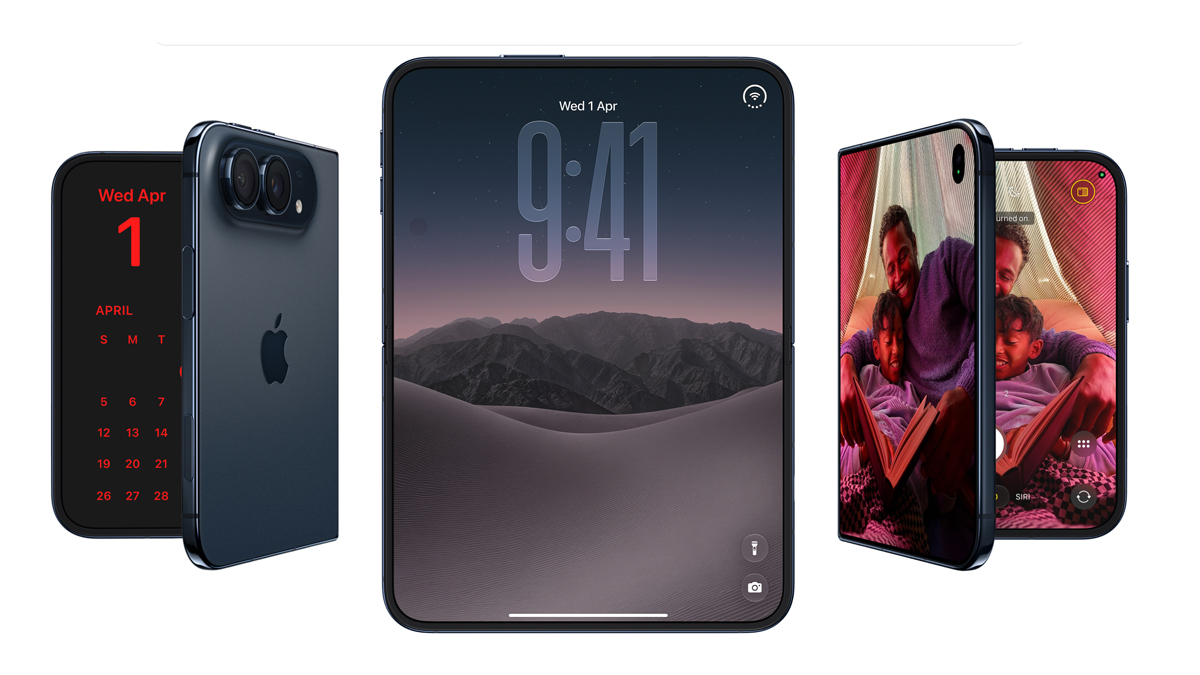
Apple’s first foldable iPhone opens into a 7.6-inch display and closes around a 5.4-inch outer display. At 5.2mm when open, it is the thinnest iPhone Apple has produced, while its titanium construction and precision hinge are designed around durability and portability. It weighs 254g.
The engineering challenge is obvious. Foldables have spent years fighting three enemies: thickness, weight and the crease. Apple is not entering the market simply to replicate an existing Android form factor. It is trying to make the foldable feel like an iPhone first and a foldable second.
That distinction could matter more than the hardware itself.
The inner display has a nano-texture finish designed to minimise glare, while the outer display retains a familiar smartphone experience. Both screens support ProMotion up to 120Hz. iPhone Duo also supports Apple Pencil via USB-C, giving the large internal display a more obvious productivity role.
The foldable design also creates new camera possibilities. Smart Take uses on-device AI to help capture group photographs, while Duo Preview lets subjects see the camera’s live framing on the external display. The device can also be positioned for hands-free photography and video calls.
This is where Apple’s hardware-software integration becomes particularly interesting. The hinge is not merely a mechanical component. The two displays, cameras, iOS 27 and Apple Intelligence are all being designed around the fact that the device can change physical form.
Apple is not chasing Samsung. It is chasing the category
The competitive question is unavoidable.
Samsung has years of experience with foldables. Google has brought its software expertise into the category. Honor has pushed aggressively on thinness. Apple’s advantage is different: its ecosystem.
That is why the iPhone Duo matters strategically. Apple does not need to invent the foldable category. It needs to make consumers who have never wanted a foldable believe they now want an iPhone that happens to fold.
The Indian pricing makes that positioning clear. iPhone Duo starts at Rs 2,99,900 in India, putting it firmly into luxury-device territory. The iPhone 18 Pro starts at Rs 1,64,900, while the 18 Pro Max starts higher depending on configuration.
This is not a volume play. It is a halo product designed to push the boundaries of Apple’s premium ecosystem.
The rest of the ecosystem is getting smarter too
Apple’s launch was not just about iPhones.
Apple Watch Series 12 and Apple Watch Ultra 4 introduce the new Health Sensing System, with higher-frequency heart-rate and heart-rate-variability measurements and a new readiness experience. The Ultra 4 uses the S11 chip and can deliver up to 50 hours of regular battery life, while Max Extended Workout mode can track outdoor workouts for up to 45 hours.
The significance is less about turning the Watch into a medical device and more about making it a continuous computing and sensing platform. Apple’s strategy is increasingly to collect useful signals, interpret them locally and turn them into actionable information.
AirPods 5 follow the same formula.
The new open-ear design brings Active Noise Cancellation, a new multiport acoustic architecture, next-generation Adaptive EQ and Live Translation. Apple says the new ANC can remove up to 50 per cent more external noise than AirPods 4 with ANC. The standard model starts at $129, while the Wireless Charging Case version costs $149 in the US.
The pattern is difficult to miss. Apple is putting intelligence everywhere, but it is trying to make that intelligence disappear into the experience.
The bigger bet is local computing
Perhaps the most important takeaway from this launch is that Apple is no longer selling hardware simply on the basis of what it can display or capture.
The company is building devices that can sense, calculate, interpret, authenticate and respond increasingly on-device.
That has implications far beyond consumer convenience. For media companies, broadcasters and creators, the smartphone is becoming a compact production workstation. High-resolution cameras, manual exposure controls, computational video, AI-assisted editing, audio processing and image-authentication tools increasingly sit inside the same device.
For Apple, this also strengthens the ecosystem. A more capable iPhone makes the Watch more useful. Better AirPods make the iPhone more useful. Apple Intelligence ties the devices together. The foldable Duo adds a new form factor without asking users to leave the ecosystem.
That is the real strategy behind the hardware.
Apple is not merely adding features to the iPhone. It is turning the iPhone into the centre of an increasingly intelligent personal-computing system.
The iPhone 18 Pro may be the safer bet, with its variable aperture, A20 Pro, vapour cooling and professional camera controls. The iPhone Duo is the bolder one, taking Apple into a category it has watched from the sidelines for years.
But together they point in the same direction.
The next smartphone race will not be won by who adds the loudest feature. It will be won by who can make optics, silicon, AI, thermal engineering, displays and software behave like one machine.
Apple thinks it has just built one.






