DTH
Dish TV encores profits in 2nd quarter post merger, proposes maiden dividend of 50%

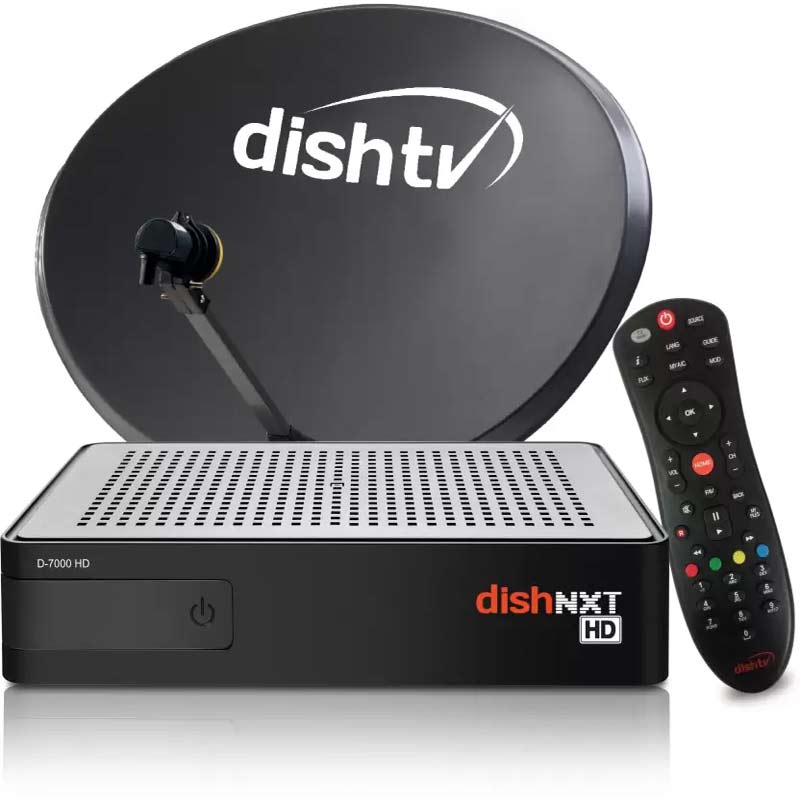
BENGALURU: Indian direct to home (DTH) behemoth Dish TV India Ltd (Dish TV) reported profit after tax (PAT) of Rs 19.7 crore for the quarter ended 30 September 2018 (Q2 2019, quarter under review) as compared to PAT of Rs 22.5 crore in the immediate trailing quarter Q1 2109. Dish TV and Videocon d2h were merged on 22 March 2018 and hence Q1 2019 was the first full reporting quarter for the merged entity. The board of directors of the company have proposed a dividend of Rs 0.50 per fully paid up subscriber and issued equity share of Re 1 each. This is the first ever dividend proposed by the DTH major.
Since results of the year ago quarter are not comparable, a quarter on quarter (q-o-q) comparison of the numbers of the joint entity has been done here. Dish TV’s operating profit or EBITDA in Q2 2019 was Rs 540.6 crore, 2.9 percent lower than Rs 556.8 crore in Q1 2019. The company reported a 3.7 percent q-o-q decline in operating revenue for the quarter under review at Rs 1,594.3 crore as compared to Rs1,655.6 crore in Q1 2019.
Dish TV’s subscriber additions picked up speed during the first quarter. The net number of 301 thousand additions took Dish TV’s subscriber base to 2.33 crore in Q1 2019. The company picked up another net 200,000 subscribers in Q2 2019 to ramp up its subs base to 2.35 crore.
Subscription revenue declined 2.4 percent q-o-q increase in Q2 2018 to Rs 1,453.6 crore from Rs 1,489.3. ARPU for the quarter declined to Rs 207 from Rs. 214 the previous quarter. Advertisement revenue for the quarter under review declined 34.8 percent q-o-q to Rs 22.6 crore Rs 34.6 crore. Bandwidth charges (revenue) reduced 3.4 percent q-o-q to Rs 37.4 crore in Q2 2019 from Rs 38.7 crore. Other income declined 26.4 percent q-o-q in Q2 2019 to Rs 80.7 crore from Rs 93.1 crore.
Company speak
Dish TV CMD Jawahar Goel said, “We remain extremely confident about our business and our strong financials give us the courage to compete against anyone in this space. That said, we continue to focus on growth with profitability keeping in mind our objective of maximising shareholder returns while aggressively investing in the business.”
Talking about future competitive scenario in the TV distribution space, Goel, said, “With limited takers for fibre or fixed line broadband, watching television through IPTV is going to be even scarce. In fact, post running an internal analysis, we see less than 1 percent of our subscriber base to be vulnerable to any kind of IPTV threat in the forseeable future. Our competitive strength in the rural market ring fences our subscriber base almost completely.”
Talking about the current technological buzz, Dish TV group CEO Anil Dua, said, “There is change but a lot of exaggeration as well. We acknowledge the new choices that the television consumer is getting exposed to but you can’t undermine the unique dynamics of India as a consuming nation. The television consumer likes flexibility but not at the cost of affordability. We still are a nation with 98 percent of the households having a single TV at home and with more than 79 percent CRTVs. Our soon to be launched ‘SMRT Stick’ will be the ideal value for money offering for TV households to convert their CRTVs into smart TVs and experience OTT content.”
Let us look at the other numbers reported by Dish TV
The merged Dish TV’s consolidated total expenditure reduced 4.1 percent q-o-q in Q2 2019 to Rs 1,053.7 crore from Rs 1,098.9 crore. Cost of gods and services in Q2 2019 reduced 1.9 percent q-o-q to Rs 867.2 crore from Rs 884.1 crore. Personnel cost during the quarter under review increased 8.6 percent q-o-q to Rs 62.6 crore from Rs 57.7 crore in Q1 2019. Other expenses in Q1 2019 reduced 21.2 percent q-o-q to Rs 123.8 crore from Rs 157 crore from Rs 195.97 crore.






