Cable TV
MPA issues Asia Pacific pay TV slowdown warning


MUMBAI: Digital pay TV is slowing down in Asia. That was the key takeaway from Media Partners Asia (MPA) executive director Vivek Couto’s annual report on the Asia Pacific market during the Asia Pacific Operators Summit in Bali, last week.
MPA estimates are that entire Asia Pacific pay television ecosystem added 26 million net new customers in 2013, the lowest annual growth since 2007. This reflects a marked deceleration in China and India as well as softer growth in Southeast Asia, especially Thailand, which was the weak link in the region.

MPA which was until this year bullish on the digital pay-TV universe in Asia Pacific seems to have turned cautious if not bearish. It says that net new additions will accelerate in APAC over 2015-16, largely due to some gains in India associated with next, delayed phase of digitisation but the general trend is one of deceleration. Overall, MPA has downgraded pay TV growth for the region at 9 per cent CAGR until 2018. Adjusted for multiple subscriptions, the data firm indicates that pay-TV penetration will increase from 52 per cent market share in 2013 to 60 per cent by 2018.
In India, phase I and II of digitisation boosted growth in 2012 but with that done and amidst various structural factors plus the macro environment along with currency depreciation, growth slowed in 2013. “Now we see the next delayed phase of digitisation that is phase III, boosting net new subscribers to 8 million a year in 2015 and 7 million in 2016 before decelerating again by 2018,” informed Couto.
He estimates that on an active paying basis, India has more than 60 million paying digital subscribers. Of this, while 37 million come from DTH, 23 million is from cable.
“Over the last 24 months, it’s been a transitionary process for the cable industry in India. While in the analogue regime, the multi system operators were at Rs 11 per subscriber, in the digital era, the MSOs are now getting anywhere between Rs 50-70 in Mumbai and Delhi. They will now need to get to Rs 100-110 to start breaking even on video excluding carriage,” said Couto.
Net additions in southeast Asia slowed by almost half last year from 3.7 million to 1.9 million and the two big DTH platforms in Indonesia in particular and Malaysia contributed more than 45 per cent to that growth. According to MPA, the net additions will reaccelerate in southeast Asia to about 2 – 2.5 million a year driven largely by Indonesia, steady growth in Malaysia and the Philippines but the expectation is that disruption to continue in Thailand and only incremental growth to show up in Vietnam while Singapore will remain somewhat flat.
The brakes have been slammed on cable TV growth in China – the other large TV market globally – courtesy direct competition from IPTV, internet TV (the most popular of which are services provided by Wasu, LeTV, XiaoMi and BesTV’s own OTT service platform), and to some extent, online video. Couto said that IPTV in China saw a steady growth of 5.6 million net additions in 2013, driven by content and increasing broadband reach.
North Asia, consisting of Hong Kong, Taiwan, Japan and Korea, saw a rise last year only because of Korea, which contributed 80 per cent to growth due to new customers on IPTV and DTH in a market where penetration exceeds 100 per cent.
“Looking at the macro landscape, you can see pay-TV penetration marginally improve in China over the next five years and this will deliver real pay models, driven largely by IPTV. It might improve further as operators become challenged by the new regulatory policy that establishes a set-top box internet-TV model. A number of online video operators have formed partnerships to enter into the internet TV space,” informed Couto.
In China, India and Indonesia too, the growth in TV houses and wireless broadband users will drive increases in consumption of content. Fixed broadband subscribers across the APAC region will increase too, from 310 million in 2013 to 400 million by 2018 – driven by China, India, Thailand, Philippines and Australia.
For Couto, the growth of video on demand (VOD) is now starting to take shape. “Our metrics just cover pay-TV but this 13 per cent average annual growth to almost US$ 4 billion is driven by China, Korea and Japan while in southeast Asia, Malaysia is the clear market leader with Astro being the best,” he said.







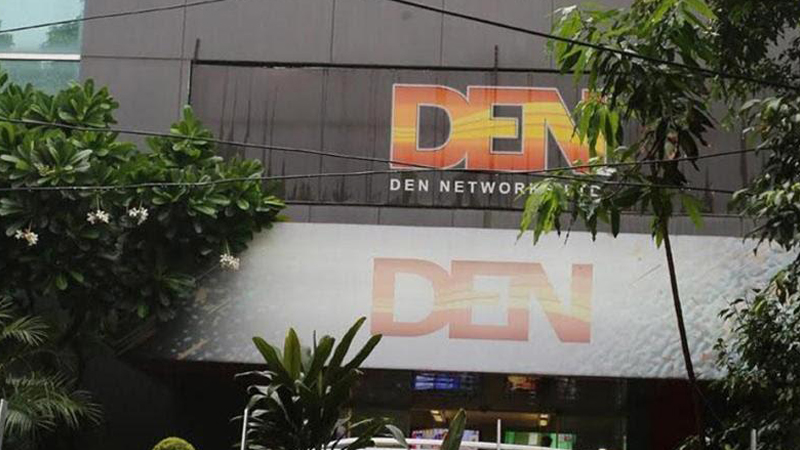
MUMBAI: When margins wobble, liquidity talks and in Q3 FY25-26, cash did most of the talking. Den Networks Limited closed the December quarter with consolidated revenue of Rs.251 crore, marginally higher than the previous quarter but down 4 per cent year-on-year, even as profitability stayed resilient on the back of strong cash reserves and disciplined cost control.
Subscription income softened to Rs.98 crore, slipping 3 per cent sequentially and 14 per cent from last year, while placement and marketing income offered some cheer, rising 15 per cent quarter-on-quarter to Rs.148 crore. Total costs climbed faster than revenue, up 7 per cent QoQ to Rs.238 crore, driven largely by higher content costs and operating expenses. As a result, EBITDA dropped sharply to Rs.13 crore from Rs.19 crore in Q2 and Rs.28 crore a year ago, pulling margins down to 5 per cent.
Yet, the bottom line refused to blink. Profit after tax stood at Rs.40 crore, up 15 per cent sequentially and only marginally lower than last year’s Rs.42 crore. A healthy Rs.57 crore in other income helped cushion operating pressure, keeping profit before tax at Rs.48 crore, broadly stable quarter-on-quarter despite the tougher cost environment.
The real headline-grabber, however, sits on the balance sheet. The company remains debt-free, with cash and cash equivalents swelling to Rs.3,279 crore as of December 31, 2025. Net worth rose to Rs.3,748 crore, while online collections accounted for 97 per cent of total receipts, underscoring strong cash discipline across operations, including subsidiaries.
In short, while Q3 showed signs of operating strain, the financial backbone remains solid. With zero gross debt, steady profits and a formidable cash war chest, the company enters the next quarter with flexibility firmly on its side proving that in uncertain markets, balance sheet strength can be the best growth strategy.






