Cable TV
Cable confusion confounded – On the CAS Conundrum

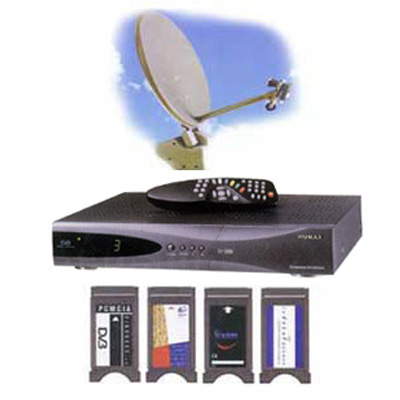
The Indian cable industry goes through another churning. Revenue collections fall, defiant consumers get strident as CAS plods towards a deadline.
A clutch of 35-odd representatives of MSOs and cable operators are grinning from ear to ear. They have just returned after an all-expenses paid holiday to South Africa and having witnessed the thrilling India-Pakistan clash at the ongoing cricket World Cup. The host: Sony Entertainment Television India. Stated reason: relationship-building efforts.
Even as the conditional access implementation issue meanders towards the deadline of 14 July with some MSOs like Hathway and Siti Cable firming up plans for CAS, the relationship between broadcasters, MSOs and cable operators seem to have breached the ‘truce area’. The skirmishes are on the upswing again.
Cable and broadcast industry sources do chuckle that it may sound unkind, but extending sops to MSOs (multi-system operators) and cable operators by broadcasters, as the financial year is coming to a close end-March, is an attempt to give a fillip to falling subscription revenue collections.
 A senior executive of Zee Telefilms’ cable arm Siti Cable, arguably the largest MSO in the country, grudgingly admitted, “Collection of subscription revenue from cable operators has fallen since January after the new rates of channels were made effective by broadcasters.”
This may certainly fly in the face of the assertions made by SET distribution head Shantonu Aditya that he was expecting distribution to bring in Rs 2.25 billion this fiscal. Aditya says that as of February-end the One Alliance had 6 million paying subscribers and was the number 1 distribution network as far as actual collections (as opposed to billings) were concerned.
Aditya may assert that his collections are going northward and everything is hunky-dory, but what can explain the ultimatum SET has given to the Hinduja group MSO INCableNet to pay outstandings of Rs 12.1 million that have piled up till 15 March 2003 or face disconnection of services? And, if this is the kind of resistance the World Cup network is facing, then for others the problems could have only been compounded.
And it is not as if it’s only the broadcasters that are having trouble getting money from the ground.
A Hathway executive explained, “A large number of cable ops are refusing to pay up according to new rates and we, in turn, are unable to pay increased amounts to broadcasters as is being demanded by them.”

Though Siti Cable will not admit it officially, industry sources indicate that Siti’s subscription revenue collection has fallen between 30-35 per cent in places like Delhi now compared to, say, December. In Delhi, till last year, India’s biggest MSO on an average used to collect subscription revenues around Rs 18.7 million per month. That was till 1 January, 2003 when the new increased rates of pay channels and various bouquets came into effect. After that, it’s been bad on the collection front for all concerned.
Points out a small cable operator in Delhi, “How can we pay the increased amount? The consumers are becoming more militant, refusing to pay up anything extra and daring us to cut their lines. We cannot absorb the cost and pay the MSO what it is demanding from us.”
Yes, as the cable scene in India undergoes another churning, with everybody in the industry and the government hoping that the churning may throw up the amrit or nectar (like it happened during the churning of the sea, as per Indian mythology) in the form of CAS, another dimension that has been added to the whole scenario is the consumer who has become aggro.
 |
These last few months have thrown up more and more cases of resident welfare associations at loggerheads with their local cable service providers over demands that the monthly subscription rates be hiked (to Rs 360 a month in some cases like in Vasant Kunj in Delhi).
As things stand today, it is not uncommon to see residents denied access to pay channels and making do with only FTA channels (again the example of Vasant Kunj comes to mind) as the service provider(s) is not willing to continue with the “free lunch” service to the subscribers.
The cable operators do have a problem. The average Indian cable subscriber is now showing his unwillingness to cough up the increased fees – at times the opposition takes physical form with violence erupting – despite being told that the rates of channels have been increased.
“I wanted to renew my contract with Star India as per last year’s rate, but the company would not agree and cut me off. After days of negotiations, I had no option, but to pay up and additional Rs 40,000-odd and get Star bouquet signals back,” said Viccki Chowdhry, an independent Delhi cable operator, servicing an upmarket residential area, and president of the National Cable & Telecom Association.
No wonder then that several court cases are being fought around the country between cable operators and broadcasters. Defiance seems to be the order of the day. May be the broadcasters had a case when they alleged that under-declaration by cable operators is so rampant that the former got less than a double digit share of the subscription money, in sharp contrast to global trends.
Meanwhile, as in the cricket World Cup, the twists and turns in the Indian cable industry too are numerous. Though MSOs are asserting that they are unable to firm up business plans for a post-CAS regime in the absence of maximum retail price of pay channels and also the basic tier of free to air channels, some of them are quietly doing just that.
 Take the case of Rajan Raheja-controlled Hathway Cable and Datacom (Star holds 26 per cent stake in the company), for example. The company’s board has approved the rollout of digital CAS with an investment of around $30 m in the first phase, according to media reports.
“The cable TV network has decided to adopt the digital route as it is more secure. Broadcasters are wary of analogue systems as they can easily be hacked into and signals stolen”, Hathway’s chief executive K Jayaraman has been quoted in the media as saying.
Hathway expects to market 600,000 set top boxes in the first phase covering Mumbai, Delhi and Chennai. It has also short-listed eight vendors for the new conditional access technology including Motorola, Scientific Atlanta (which offer complete end-to-end package), a News Corp company NDS (for conditional access and SMS software) and France-based Canal Plus that offers CA solutions.
Siti Cable too has shortlisted three companies for various conditional access requirements, including Nagra, and the MSO expects to make an announcement soon on its alliance as also tie-up the hardware part of CAS too.
It seems MSOs are waiting to coincide their announcements with the next task force on CAS meet scheduled for later this month (21 March) where the price of the basic tier may become clearer.
Clearly, right down the cable distribution value chain there are problems of collections being faced, which is just the reason why CAS is being looked upon as the succour.
For that to happen, the government must lay out the regulatory ground rules for this process to go forward faster. And this means more than just warnings like the one information and broadcasting minister Ravi Shankar Prasad issued recently at a task force meet, saying that the government would not tolerate any delays in the implementation of CAS.
But muddying the waters and noble government intentions further are statements like the one that Consumer Guidance Society of India president Anant Patwardhan has been putting out. Patwardhan has put forth the specious argument that with the Convergence Communications Bill around the corner (?), there is no need for instituting CAS at all.
It all makes for a perfect recipe for chaos and confusion. It’s quite possible a battle for control of the local fiefdoms will commence under CAS with cable ops encroaching on each others’ turf in order to sign on more customers with the lure of lower pricing and better service. Hopefully, there will be fewer blood baths than were there earlier with some cable ops being hacked or gunned to death.
($ 1 = Rs 47.66)!