Hindi
Festival of patriotic films commences with Naidu stressing of filmmakers of that time

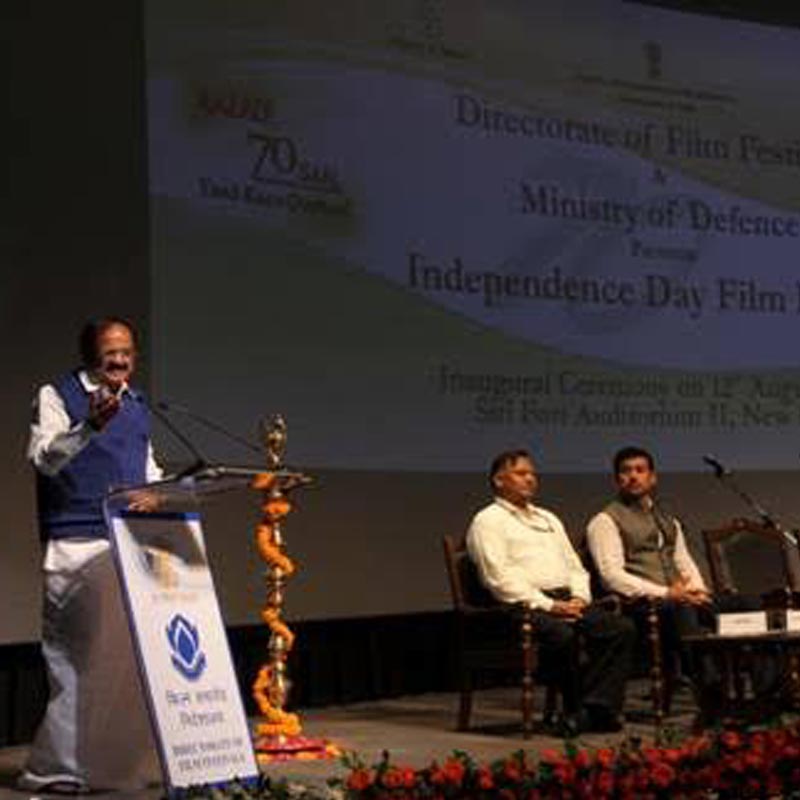
NEW DELHI: A film festival on patriotic films opened here today with Information ad Broadcasting Minister M Venkaiaih Naidu stressing that Indian Cinema not only played a vital role during the freedom movement but facilitated in spreading the message regarding the great deeds and valour of eminent leaders and personalities related to freedom movement.
He said these films had a social message and had a profound impact on the minds and social behavior of people.
The opening of the week long “Independence Day Film Festival” at Siri Fort Auditorium was also attended by Minister of State Rajyavardhan Rathore and I and B Secretary Ajay Mittal, apart from noted film personalities Chitraarth and A K Bir.
The Minister said the 70th year of Independence offered an opportunity to take the country from Swaraj to Suraaj under the leadership of Prime Minister Naendra Modi. This would enable the country to fight the long standing ills plaguing the society and take the nation to newer heights.
He added that every Indian Citizen was equal and there was no room for anybody to discriminate against any other individual. For the nation to achieve faster progress in all fronts, every section of the society irrespective of caste, creed, religion, region and language should be part of the growth story.
All Indians should believe only in oneness of the country and nothing else should be allowed to cause obstacles in India’s march ahead. He urged that civil society and people should strive to foster harmony and build bridges across the communities.
Speaking on the philosophy of the Indian Freedom Struggle, Naidu said that many countries fought for their freedom and became independent but the Indian Freedom Movement was unique in the sense that it showed to the world the power of non-violence and democratic principles. He said that people from different walks of life from different parts of the country contributed to the freedom movement including educationists, lawyers, leaders, farmers, artists and ordinary men & women.
Referring to the rich history of Indian cinema and the context in which the movies were produced, the Minister mentioned that India’s victory in 1965 war had fired the imagination of then young film actor Manoj Kumar in Mumbai which lead to the making of ‘Upkar’ in 1967.
Remembering the unsung heroes who contributed to freedom movement, the Minister said the 1959 Tamil Film “Veerapaandiya Kattabomman” directed by B R Panthulu was the story and valour of Kattabomman – an 18th century local leader from Tirunelveli in Tamil Nadu, who refused to accept the sovereignty of East India Company.
While remembering the towering personalities of our freedom movement and founding fathers of the Republic of India, the Minister said Sardar Vallabhai Patel played a leading role in integration of the country into a united and independent nation. The film “Sardar” which portrays the life of Sardar Patel would be screened at the Film Festival. He also referred to the sacrifices made by Veer Savarkar during the freedom struggle.
The Minister said the festival provided an opportunity to school children especially from public schools who attended the festival to be inspired by the history of these great leaders and freedom fighters.
The opening Film for the festival was ‘Gandhi’ directed by Sir Richard Attenborough. The festival will continue till 18 August and 20 films are being screened. The festival has been organized by the Directorate of Film Festivals in collaboration with the Defence Ministry.