Brands
Ola shutting down TaxiForSure, adds value-based services for customer convenience
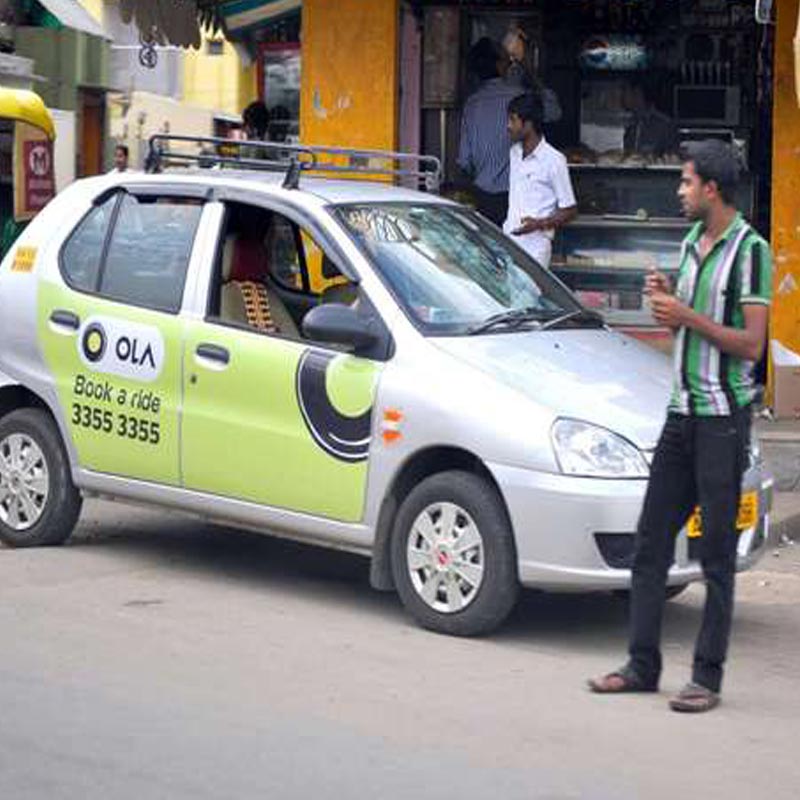
MUMBAI: Ola has taken a leap in saving cash burn rate by shutting down TaxiForSure, the Banglore-based cab service it acquired last year. It has removed about 700 employees in the process of reworking its business model.
Ola is taking measures to widen its lead over Uber and crown itself as the space leader in India.
The web based cab service has launched value added services like providing free WiFi for customers of its premium Prime service. It also launched the mini cab service, the cheapest cab option.
In the process of shutting down TFS, employees from call centres, business development and driver relations were removed from their positions. The Integration is complete with TFS driver-partners and customers coming on board the Ola app.
According to the management, they have employed as many TFS employees for open roles in Ola to support our growth. For positions that cease to exist as a result of this transition, Ola has offered a three-month salary compensation.
Ola, backed by Softbank acquired TFS in 2015 at the cost of $200 Million with the intention of competing with Uber and widen its presence.
The competition is expected to intensify further in the coming months as Uber expands its focus on the Indian market after selling off its China operations to Didi Chuxing. Interestingly, Didi is a minority investor in Ola and also shares a common investor in SoftBank.
The functions of TFS slowed down right after taking over. It is learnt that the company has been unclear about brand positioning of TaxiForSure and so the TFS fleet was transferred to Ola supply. Insiders say the incentive for Ola was more lucrative for Ola than TaxiForSure. According to reports, the company will save about Rs 30 crore every month by shutting down TFS. The option for TaxiForSure will phase out from Ola App over time.

Brands
Devyani International Ltd plans three-subsidiary merger to streamline operations
QSR operator moves to streamline structure and unlock operational synergies
Devyani International is tightening its corporate kitchen. The quick-service restaurant operator has approved a scheme to merge three subsidiaries—Sky Gate Hospitality, Blackvelvet Hospitality and Say Chefs Eatery—into the parent company in a bid to simplify its structure and sharpen operational efficiency.
The decision was cleared at a board meeting on March 10 and disclosed in a regulatory filing to the stock exchanges. The merger will take effect from April 1, 2025, subject to statutory approvals.
All three transferor companies are direct or indirect wholly owned subsidiaries, meaning no fresh shares will be issued and the shareholding pattern of Devyani International will remain unchanged once the scheme is completed.
The subsidiaries together operate more than 100 outlets—including dine-in restaurants and cloud kitchens, spread across over 40 cities such as Delhi NCR, Mumbai, Kolkata and Bengaluru.
Devyani International, the largest franchisee of Yum Brands in India, said the consolidation is aimed at generating operational synergies, optimising resource utilisation and reducing layers within the corporate structure.
Financially, the move brings together businesses of varying scale. As of March 31, 2025, Devyani International reported a net worth of Rs 10,381.02 million and turnover of Rs 33,493.33 million. Sky Gate Hospitality posted a net worth of Rs 761.14 million with turnover of Rs 2,657.57 million, while Blackvelvet Hospitality and Say Chefs Eatery reported smaller operations and negative net worth.
The merger will consolidate these operations under a single corporate umbrella as the company sharpens its focus on scale and efficiency.
Devyani International currently runs more than 2,000 outlets across over 280 cities in India, Nigeria, Nepal and Thailand. Its portfolio includes franchise rights for brands such as Pizza Hut, KFC, Costa Coffee, Tea Live, New York Fries and Sanook Kitchen, alongside its own food brands.
With the paperwork underway and approvals pending, Devyani is essentially clearing the corporate clutter—turning three subsidiaries into one tighter, leaner operation. In the QSR world, even the back office needs a spring clean.