MAM
Ad world remains positive on eighth day of demonetisation despite inconvenience


MUMBAI: India entered the eighth day of limited demonetisation in the backdrop of rejection of a petition by the Supreme Court, and still a majority of the nation is without access to cash.
Unending queues are thronging the banks, with most of the ATMs either dysfunctional or running out of cash at the speed of light. Local shops are struggling to function with the newly-introduced Rs 2000 note amid this cash flow issue.
The unorganised sector which mostly operates in cash has suffered the most.

To ease the situation, the government has allowed use of high-value notes for some purposes — at milk booths, petrol stations and railway stations, up to 24 November.
Indiantelevision.com takes a look at how the advertising world is coping with the cash crunch, whether any advertising campaign has felt the impact or any ad film shoots have been stalled.
“We are not facing any difficulty as most of our work is with retainers. Moreover, our transaction is in white, nothing in black and grey, and mostly kept transparent by using cheques for transactions.
The production houses may face problems during shoots but, so far, we have managed the show, and haven’t heard of an issue,” said Leo Burnett south Asia CEO Saurabh Verma.
“Of course we will all get impacted by it eventually if the economy slows down in the next few months but we need to wait and watch,” Verma added.
Similarly, The Glitch co-founder Rohit Raj agrees that there is no immediate impact on the industry. “For campaigns, which are pre-scheduled, money comes in cycles. Therefore, there is always some buffer. During shoots too, we mostly operate through cheques, Raj explained. The Glitch has an in-house studio and production unit for its video content. Luckily, for them, there was only one shoot that fell during this period, and hence the agency didn’t have to go through much hassle.
Not just the big and well known agencies, but small and medium-sized players in the market have also been cashless in their operations, as explained by corporate films and TV promos video director Avi Sandhu.
“We mostly operate electronically because that is how agencies pay us.
Even the spot boy is paid through NEFT transfer. It is to ensure that we have a transaction trail. Sometimes, for props etc., we might need cash. In that case we either go with the available denomination or the company calls in the bank requesting to liquidate the required cash for daily use,” he shared adding that most banks are separately looking at corporate accounts.
About the models who work on fee per shoot basis, Sandhu admitted that the industry is banking on the usual cycle of paying them after 40 to 45 days when the agencies distribute the payments that comes from the client, by when the situation will normalise.
When it comes to advertising, the most unorganised sector is perhaps out of home. Asked if there is any challenge in operating, Milestone Brandcom’s Nabendu Bhattacharya explained that there is no issue from the agency’s end. “Our business is mostly cashless. We wire the money when we buy the spaces. But, agencies and vendors working on the selling side might have a different story.”
The story remained mostly the same, except for some unique variations.
“We mostly operate cashless as the clients prefer so. The only issue is — we are unable to deposit the cash which is already with us because of the serpentine queues. Because it is all billed money, I am not worried about it, but banking is a hassle these few days,” shared Pioneer Publicity director Sunil Vasudeva.
Another out-of-home vendor, who wasn’t happy with how things were hampering the business, hesitated to share his plight in public in fear of repercussions from the government.







Brands
Google nears Nvidia in race for world’s most valuable company
Market cap gap narrows as Google hits $4.65 trillion, Nvidia at $4.86 trillion.
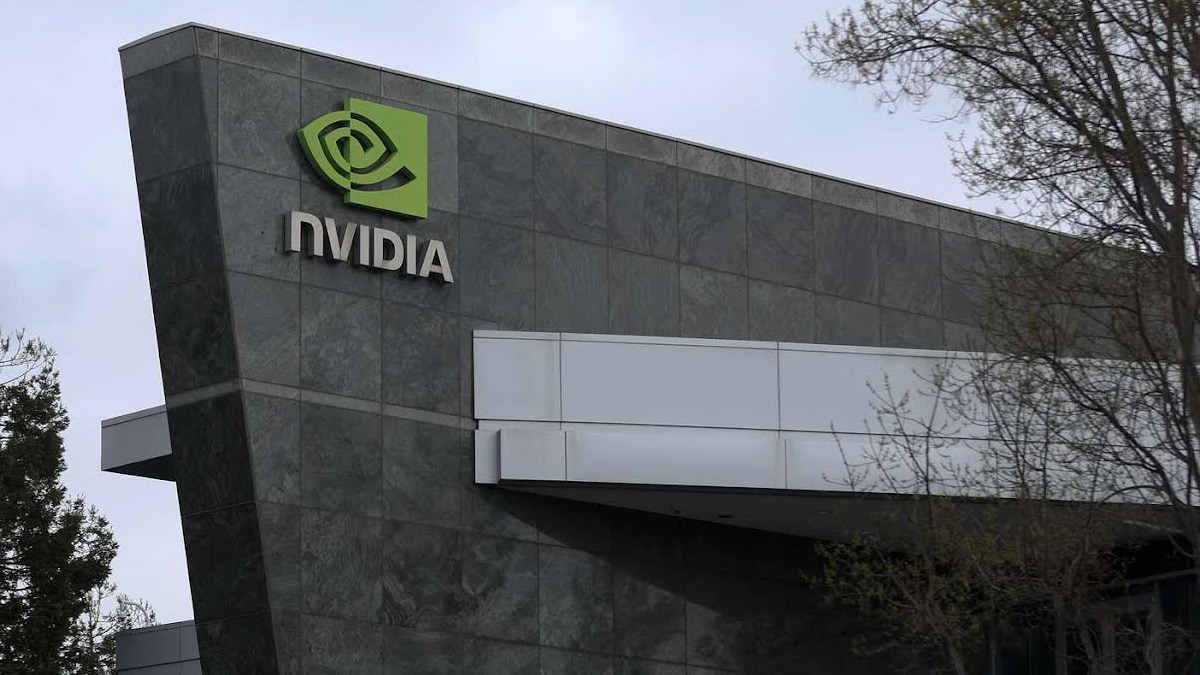
MUMBAI: In the AI gold rush, even the giants are sprinting and Google is suddenly gaining ground. Google is rapidly closing in on Nvidia in the race to become the world’s most valuable publicly listed company, with the gap between the two narrowing sharply amid diverging stock momentum. The tech giant’s market capitalisation has surged to around $4.65 trillion, following a more than 140 per cent rise in its share price over the past year.
That rally has added over $2.6 trillion in value in just 12 months, including nearly $900 billion since January alone. Its stock recently hovered at $381.80, slipping marginally by 0.04 per cent, but still reflecting strong upward momentum.
Nvidia, meanwhile, continues to hold the top spot with a valuation of approximately $4.86 trillion. The chipmaker crossed the $5 trillion milestone in October last year and peaked at $5.27 trillion on 27 April. However, its shares have largely plateaued over the past six months, rising just 0.2 per cent recently to $199.99.
The contrast in trajectories is striking. While Nvidia has seen relatively flat movement, Google has gained over 36 per cent in the same six-month period. Barron’s estimates suggest that if current trends hold, the valuation gap could shrink to as little as $190 million by the time Nvidia reports its first-quarter earnings on 20 May.
Daily momentum paints a similar picture. Nvidia recorded average daily gains of about 0.66 per cent last month, compared to Google’s stronger 1.42 per cent, an edge that could prove decisive in the short term.
Driving Google’s resurgence is its aggressive push into artificial intelligence across its ecosystem, from search and YouTube to cloud computing. The company has already invested $144 billion in capital expenditure over the past two years and plans to deploy a further $490 billion over the next two.
Its cloud division is also gathering pace. Google Cloud reported an order backlog of nearly $220 billion in the latest quarter, with total backlog touching a record $462 billion, around half of which is expected to be realised within two years. The company’s entry into chip sales is also beginning to factor into its growth narrative.
The last time Google briefly topped the S&P 500 by market value was in February 2016, when it edged past Apple for just two days. This time, the stakes and the numbers are far higher.
At the heart of the contest lies a single force: artificial intelligence. As both companies pour billions into infrastructure, chips and platforms, the leaderboard is no longer just about size, it is about who can scale the future faster.