eNews
Youth for Digital India: Theme of National Youth Festival starting on 12 Jan

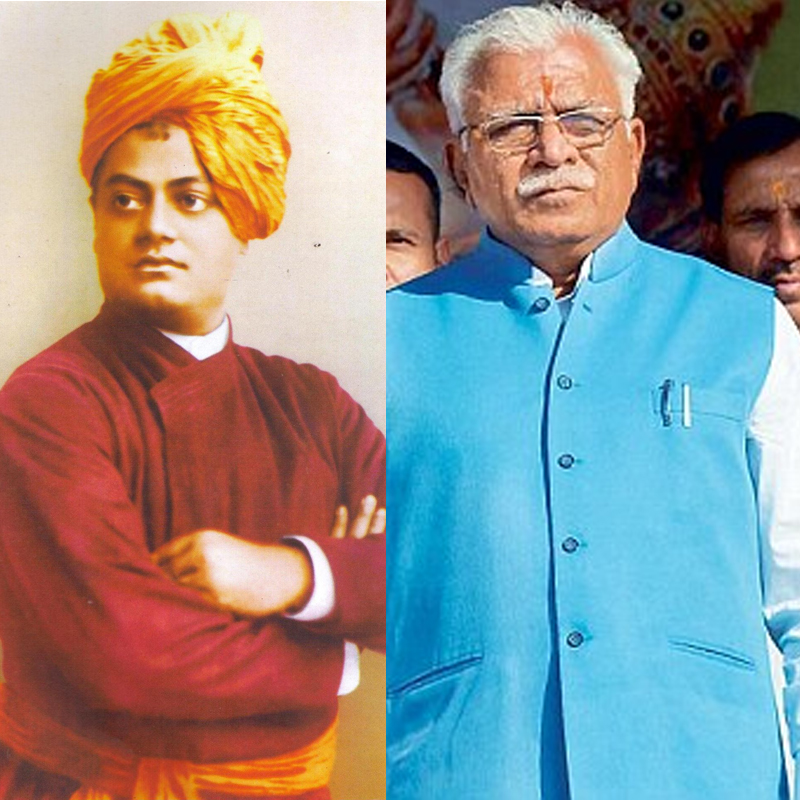
NEW DELHI: ‘Youth for Digital India’ will be the theme of the National Youth Festival commencing this week. The department of youth affairs of the youth affairs and sports ministry organises the festival every year on the birth anniversary of Swami Vivekananda.
Youth affairs and sports minister Vijay Goel said the Festival from 12 to 16 January at Rohtak in Haryana will also be addressed by the prime minister Narendra Modi via video conferencing during the opening ceremony. Home Minister Rajnath Singh will be the chief guest in the presence of Haryana chief minister Mahohar Lal.
The theme had been chosen keeping in view the most critical and crucial importance of the thrust accorded to the area of Digitalisation and Skill Development by Government of India and realise the proclaimed national goal for ‘Make in India Campaign’ and the PM’s vision of ‘Youth Led Development’.

To achieve the proclaimed national goal, it has been decided to project the various widely acclaimed initiatives of Ministry of Skill Development and Entrepreneurship, NSDA, NSDC, DGET & MoMSME etc. through Skill Development Exhibition, Lectures and Workshops for the benefit of thousands of participants of the Festival and local youth.
The Mascot of the festival was decided in view of the long standing skewed sex ratio, especially in a state like Haryana. The selection of ‘Lado’ reflects the sensitivity of the state government towards the gender inequality in the state and to bring women at par with men which both the government is committed to combat.
The Festival will also witness a Defence exhibition where various aspects and initiatives of the defence forces, display of equipment, and avenues for recruitment into Armed Forces will be projected for the benefits of thousands of young participant.
A performance by a renowned artist on the life and ideology of Swami Vivekanand on the opening ceremony will be the highlight of the festival. During 13 to 16 January 2017, the Festival will have a variety of cultural programmes (both competitive and non-competitive), Youth Convention, Suvichar (a lecture series), Exhibitions and adventure programmes, Hasya Kavi Sammelan, Haryanavi Nights etc. followed by Cultural Evening by Hansraj Hans and Raftaar.
India being one of the youngest nations in the world with about 65% of its population under the age of 35, Goel expects that this “demographic dividend’ offers a great opportunity for the country to revolutionize itself and achieve the vision of a clean India, a skilled India and most importantly an incredible India . He urges the Youth of the Nation to strive and work endlessly in the process of nation building following the paths shown by Swami Vivekanada.
The delegates from the different states have already started arriving for the event. It is expected that about 5000 youth delegates from different States/UTs will attend.
Also Read:
TRAI ideas on public WiFi in three weeks; Mumbai gets 500 hotspots
MAM 2016: When marketing, advertising hopped on to Digital India




eNews
PNB partners Kiwi to launch credit-enabled UPI for users
Targets 180 million customers; RuPay card offers 0.5 per cent to 1.5 per cent cashback

MUMBAI: Swipe, tap, or scan credit is quietly slipping into the rhythm of everyday payments, and Punjab National Bank wants in on the action. The state-run lender has partnered with Kiwi to roll out credit-enabled UPI payments for its 180 million customers, marking a significant push to blend traditional banking with India’s fast-evolving digital payments ecosystem.
At the centre of the collaboration is the launch of the PNB Kiwi Credit Card on the RuPay network. The card is designed with a digital-first approach, offering fully online onboarding and seamless integration with UPI, allowing users to transact via scan-and-pay while accessing credit.
The offering also brings in a rewards layer, with cashback ranging from 0.5 per cent to 1.5 per cent on online transactions, positioning the product as both a convenience play and a spending incentive.
The move comes as UPI continues to dominate India’s digital payments landscape, increasingly blurring the lines between debit-led transactions and credit access. For PNB, which operates over 10,000 branches around 60 per cent in semi-urban and rural areas, the partnership signals a targeted effort to extend formal credit to segments that have traditionally remained underserved.
The collaboration also reflects a broader industry shift, where banks and fintech platforms are converging to embed credit directly into payment flows, reducing friction while expanding access.
With RuPay credit cards gaining traction and UPI evolving beyond peer-to-peer transfers, the PNB–Kiwi tie-up positions both players at the intersection of scale, accessibility, and the next phase of digital finance in India.