Brands
Stryder Bikes achieves milestone of 50 lakh bicycles
Mumbai: Stryder Bikes, part of the esteemed Tata Group, and a pioneer in providing sustainable mobility solutions, has surpassed a global sales milestone of over 50 lakhs during May 2024. This achievement underscores the brand’s commitment in delivering innovative, eco-friendly mobility solutions to customers in India & overseas. Since its inception in 2012, Stryder has grown its presence to over 4000 retail outlets across India and expanded its export operations to SAARC, Africa, and Middle Eastern countries.
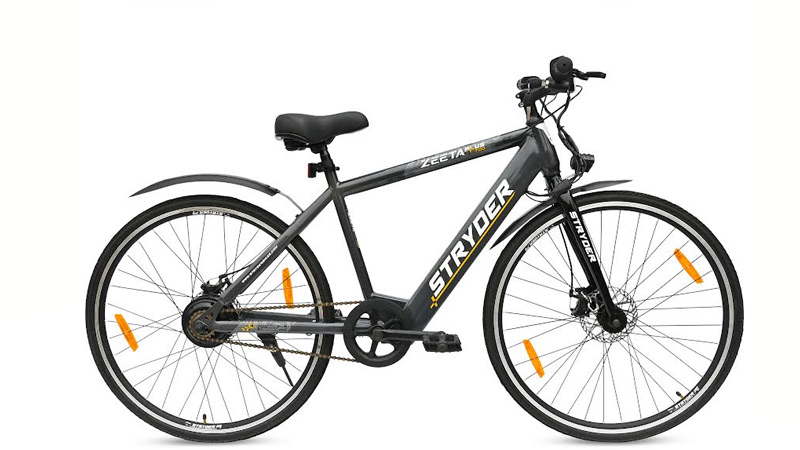
“To celebrate this milestone, Stryder launches two new e-bike models– Zeeta and Zeeta Plus 700C on World Bicycle Day. These e-bikes will be offered at an introductory discount of up to 20% to all customers with an aim to promote sustainable living in a world that is being challenged by rapid climate change. Our commitment to customer centricity and innovation has been the driving force behind our journey to this remarkable achievement. We have seen robust demand coming from urban, rural centers and global markets,” said Stryder Cycles business head Rahul Gupta.
The new models, Zeeta and Zeeta Plus 700C are designed with cutting-edge technology and superior performance to meet the growing demand for sustainable commuting. To make sustainable commuting more accessible, Stryder is offering introductory discounts on both models. Zeeta is priced at Rs. 24,995, and Zeeta Plus 700C at Rs. 27,795, for a limited period.
Zeeta, targeting adventure-seeking individuals offers a range of up to 25 km, while Zeeta Plus 700C, catering to young professionals, boasts a range of up to 30 km. Both models feature dual disc brakes, key-enabled power buttons, with extremely frugal running cost of seven paise per kilometer.
To avail this limited-period offer, and experience the world of Stryder visit www.stryderbikes.com.

Brands
Kwality Wall’s reports standalone losses following strategic HUL demerger
Ice cream major faces Rs 64 crore Ebitda loss amid commodity inflation and muted Q3 sales
MUMBAI: Kwality Wall’s (India) Limited (KWIL) has released its first set of financial results as a standalone entity, revealing a challenging start to its independent journey. Following its successful demerger from Hindustan Unilever Limited (HUL) on 1st December 2025 and its subsequent listing on 16th February 2026, the company is navigating a transition period marked by structural changes and high input costs.
For the quarter ended 31st December 2025, the company reported revenue of Rs 222 crores. Despite the revenue base, the bottom line was impacted by several factors, resulting in an Ebitda loss of Rs 64.2 crores. When calculated on a Pre-IND AS 116 basis, the Ebitda loss stood at Rs 83.8 crores.
Organic Sales Growth (OSG) declined by 6.5 per cent year-on-year during the quarter. Volume growth, however, saw a marginal increase of 1.2 per cent. The company reported a gross margin of 41.5 per cent. Additionally, exceptional expenses amounting to Rs 94 crores were recorded, primarily linked to non-recurring costs during the transition phase.
Performance across portfolios and channels was mixed. Within the impulse portfolio, brands such as Magnum and Cornetto recorded mid-single digit volume growth, indicating steady demand in on-the-go consumption. However, the in-home portfolio, which includes take-home packs, experienced muted consumption. The company is planning a relaunch of this category with improved offerings ahead of the 2026 season.
Quick commerce (Q-Com) continued to emerge as a strong growth driver, delivering robust double-digit growth during the quarter. Meanwhile, the company also expanded its physical distribution network by increasing the number of company-owned cabinets across markets.
Margin pressure during the quarter was driven by a combination of one-off factors and broader cost inflation. Gross margins were impacted by around 600 basis points due to trade investments made for stock liquidation. Additionally, cocoa price inflation contributed to another 400 basis points of pressure on margins.
Deputy managing director Chitrank Goel attributed the muted performance partly to prolonged monsoons and transitional challenges linked to the GST framework. Operating expenses also increased as the company invested in establishing its standalone supply chain, operational systems and corporate infrastructure following the demerger.
Looking ahead, the management remains focused on a volume-driven growth strategy. To restore profitability, the company has initiated a cost productivity programme aimed at reducing non-consumer-facing costs. It is also working on building regional manufacturing networks to optimise logistics expenses and improve operational efficiency.
The commodity outlook for the near term remains mixed. Dairy prices are expected to remain firm due to tight supply conditions and rising fodder costs. Sugar prices may also move higher following increases in the Minimum Selling Price (MSP). While cocoa prices have moderated recently, currency depreciation has offset some of the potential cost relief for the company.